Material
Cast PMMA with mirror coating
Sources
Taiwan (Golden, Silver) · JB Series (5 colours)
Surface
Mirror-coated one side · Protective film both sides
Thickness
3mm
Standard Sheet Size
4×8 ft
Heat Deflection
95°C
Density
1.19 g/cm³
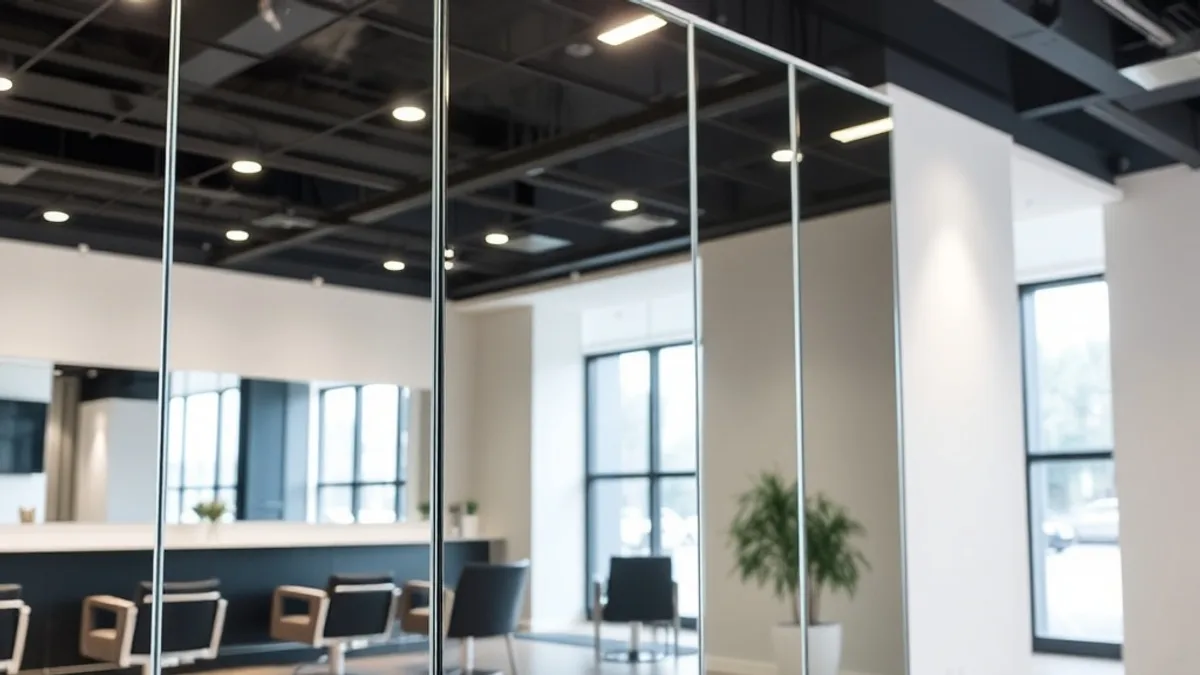
Mirror acrylic panels installed as wall feature in a salon

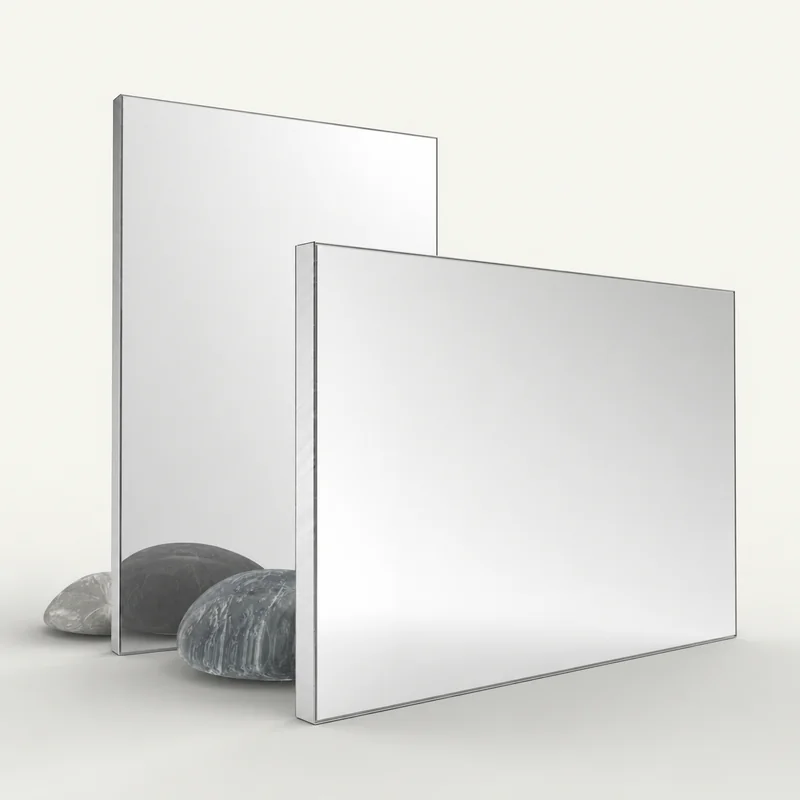
FIDAR System carries mirror acrylic from two sources: Taiwan-manufactured golden and silver mirrors with premium surface quality, and JB-series mirrors in five colour tones. All sheets are 3mm cast acrylic with a high-reflectivity mirror coating applied to one side.

Taiwan Mirror Series

  • Golden Mirror — warm gold reflective finish; premium interior décor and signage accent
  • Silver Mirror — cool, high-clarity silver reflection; the closest to real glass mirror

JB Mirror Series

  • JB-029 BrightGrey — bright metallic grey reflective finish
  • JB-008 Gold — antique-style gold mirror tone
  • JB-004 Brown — warm brown-bronze tinted mirror
  • JB-001 Silver — standard silver mirror, JB grade
  • JB-039 Rose Gold — contemporary rose gold reflective finish

Applications

  • Feature walls and interior cladding
  • Retail display backgrounds and shelving backs
  • Decorative signage and logo panels
  • Event and photography backdrops
  • Furniture accents and cabinet inserts

Fabrication Notes

Mirror acrylic is more sensitive to surface scratches than standard acrylic. Keep masking on both sides until the part is installed. Use a fine-tooth blade or laser for cutting to avoid chipping the mirror coating at the edges. Avoid abrasive cleaners — use a soft cloth with mild soap only.

Retail & Visual Merchandising

Retail Display Backgrounds & Shelving

Mirror acrylic is used as a backing surface for retail display shelving, jewellery cases, and product display walls - creating depth and visual interest behind merchandise. Silver and gold mirrors are the most common choices for luxury retail environments.

Interior Design

Interior Décor & Feature Walls

Interior designers specify mirror acrylic for feature wall cladding, backsplash panels, and decorative elements where a mirrored surface is desired but the weight or breakage risk of glass is not suitable. Rose gold and gold mirrors are popular for contemporary hospitality and residential interiors.

Signage & Graphics

Decorative Signage & Logo Panels

Mirror acrylic is used for cut-out logo panels and decorative signage elements - the reflective surface creates a premium visual effect. Mirror silver and golden mirror are the most used for corporate lobby signage and reception area branding.

Events & Photography

Event Décor & Photography Backdrops

Event designers use mirror acrylic for photo booth backdrops, table centrepieces, and decorative installations. The lightweight nature and cut-to-size flexibility make it practical for temporary installations where glass would be unsafe or impractical.

Furniture & Cabinet Making

Furniture Accents & Cabinet Inserts

Custom furniture makers and cabinet shops use mirror acrylic as inserts for wardrobe doors, bedside table panels, and decorative furniture elements - particularly rose gold and bronze tones for contemporary furniture designs.

How to Fabricate Mirror Acrylic Sheets

1

Handle with Care

Mirror acrylic is more susceptible to surface scratches than standard acrylic. Keep both sides masked throughout handling and fabrication. Lay the sheet on a clean, flat surface - face side down on a soft material. Never stack sheets without protective backing between them.

2

Score or Saw

For straight cuts, score the non-mirror side deeply with an acrylic scoring knife and snap cleanly. For complex shapes, use a fine-tooth jigsaw blade or circular saw at low feed rate to minimize mirror coating chipping at the cut edge. Cut from the back (non-mirror) side where possible.

3

Smooth Cut Edges

Sand cut edges lightly with 220-grit sandpaper to remove burrs - do not flame-polish (heat can distort or delaminate the mirror coating). For a finished edge appearance, edge-tape or cover visible cut edges in final installations.

4

Drill Clean Holes

Use acrylic drill bits at slow speed. Position a backer board under the sheet to prevent breakout on exit. Drill from the non-mirror face side. Keep the bit cool - heat causes micro-cracking around holes in mirror acrylic.

5

Clean & Install

Remove masking only at time of installation. Clean with a microfibre cloth and mild soap solution only - no abrasive cleaners, solvents, or paper towels. For wall installation, use foam mounting tape or panel adhesive to avoid point-load stress.

Comparison between Mirror Acrylic Sheets and Gloss Acrylic
PropertyMirror Acrylic SheetsGloss Acrylic
ReflectivityHigh - mirror-coated acrylic surfaceLower - standard gloss acrylic
Weight~1.19 g/cm³ - lightweight vs glass mirrorHeavy - ~2.5 g/cm³
Breakage riskFlexible - will not shatter like glassBrittle - shatters on impact
FabricationCan be laser cut, routed, scored (coating may chip)Requires wet saw - complex to cut
Colour optionsGold, Silver, Rose Gold, Brown, BrightGreySilver only

Both are 3mm cast acrylic with a mirror coating applied to one side. The Taiwan-manufactured Golden and Silver mirrors are premium-grade with a higher reflectivity and surface quality - closer to a true glass mirror appearance. The JB series offers a broader colour range (BrightGrey, Gold, Brown, Silver, Rose Gold) at a lower price point. For applications requiring the highest possible mirror clarity, the Taiwan series is preferred; for colour variety and value, the JB series is a solid choice.

Mirror acrylic can be laser cut, but with caution. The laser cuts through the acrylic substrate cleanly, but the reflective mirror coating at the cut edge may show some distortion or chipping depending on the laser settings and the direction of the cut. Use a lower power setting and test on a scrap piece first. Routing and scoring/snapping are also effective methods. Do not use a CO2 laser to cut from the mirror-coated side - always cut from the back.

The Taiwan silver mirror is the closest to a glass mirror in reflectivity, but mirror acrylic generally has slightly lower reflectivity and more diffuse reflection compared to high-quality glass mirrors. For most decorative applications - display, décor, and signage - the difference is not visually significant. For applications requiring the highest optical reflectivity, such as scientific or precision imaging, glass mirror is the correct choice.

Use a soft, lint-free cloth (microfibre) with a small amount of mild soap and water or a plastic cleaner designed for acrylic. Never use abrasive cleaners, paper towels, or harsh solvents. The mirror coating on the back is protected by a film - avoid exposing the back coating to aggressive chemicals.

All mirror acrylic at FIDAR System is stocked in 4×8 ft sheets, 3mm thickness. Cut-to-size service is available. Contact us for custom dimensions and pricing.