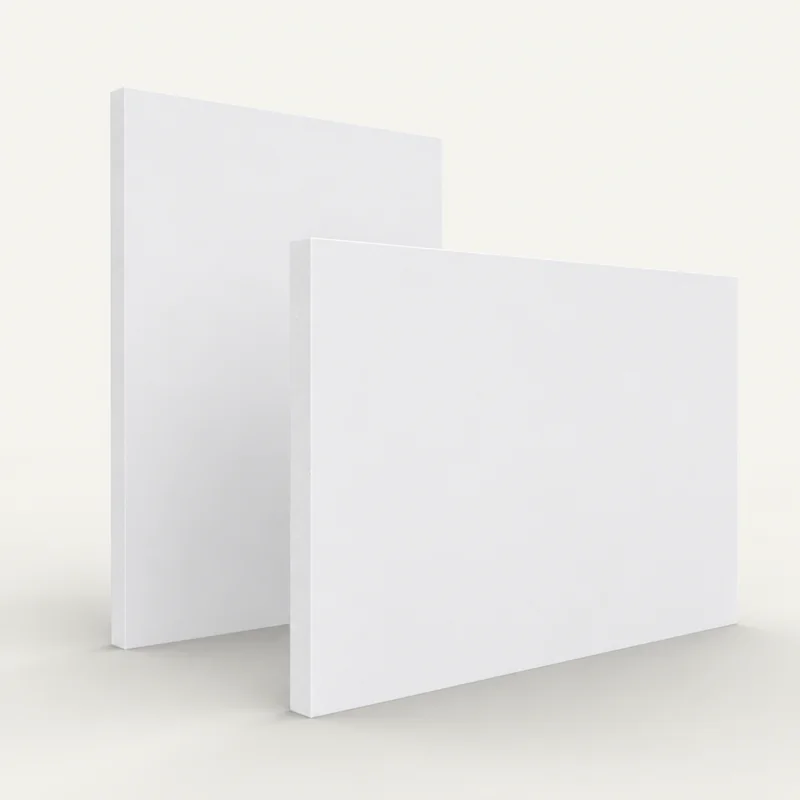
Material
Closed-cell rigid PVC
Colours
White · Black
Surface
Smooth, both sides
Density
~0.55 g/cm³
Moisture Resistance
Excellent — closed-cell structure
Standard Sheet Size
4×8 ft
Thickness Range
White: 3mm–24mm · Black: 3mm–18mm
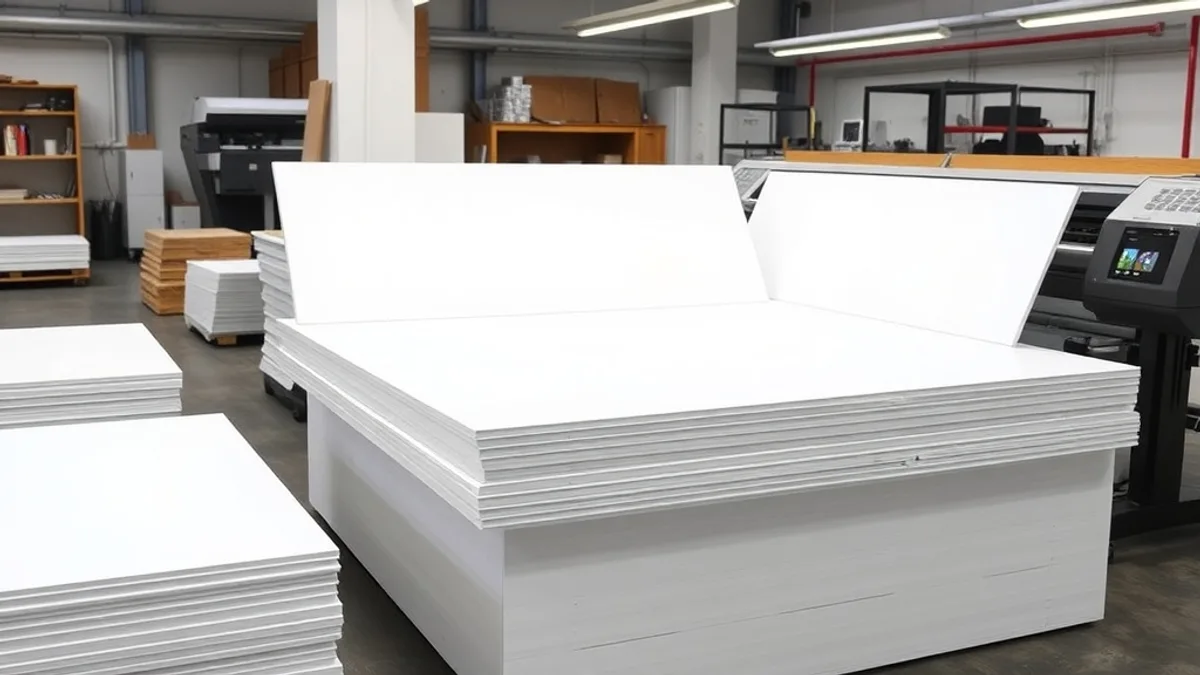
White PVC foam board panels prepared for large format printing

FIDAR System's white PVC foam sheets are a closed-cell rigid PVC product — lightweight, moisture-resistant, and easy to cut, route, or laser-process. The smooth white surface is print-ready and accepts most adhesive films and vinyl wraps without priming.

Properties

  • Closed-cell structure — does not absorb moisture
  • Lightweight: approximately 0.55 g/cm³ (less than half the weight of acrylic)
  • Smooth white surface on both sides
  • Excellent for CNC routing, laser cutting, and scoring
  • Print-ready — accepts solvent, UV, and latex inks

Applications

  • Flat-cut sign blanks and substrates
  • Foam board display mounting
  • Architectural model-making
  • Exhibition and trade show panels
  • Point-of-sale and retail display structures
  • Bathroom and wet-area panelling

Fabrication Notes

PVC foam cuts easily with a sharp utility knife, circular saw, or CNC router. Laser cutting is possible but produces some off-gassing — ensure adequate ventilation. For clean edges, use a carbide-tipped blade or O-flute router bit. PVC foam bonds well with contact cements and most acrylic adhesives.

Signage & Graphics

Flat-Cut Sign Panels & Substrates

White PVC is the most common substrate for flat-cut sign panels in Canada. Sign shops use 6mm and 10mm sheets for vinyl-applied directional signs, flat-panel corporate signs, and indoor signage systems. The smooth white surface accepts vinyl films, digital prints, and painted finishes without priming.
Events & Exhibitions

Exhibition & Trade Show Panels

Trade show display builders use white PVC for panel walls, curved display structures, and branded exhibition components. The lightweight nature (~0.55 g/cm³) reduces shipping weight and allows large-format panels to be handled and installed without heavy equipment.

Architecture & Design

Architectural Model Making

Architectural and interior design studios use white PVC foam board for scale models and concept models. The material cuts cleanly with a utility knife, router, or laser cutter, and the white surface provides the clean appearance required for architectural presentations.

Construction & Renovation

Bathroom & Wet-Area Panelling

White PVC's closed-cell structure makes it moisture-resistant and suitable for wet-area applications like bathroom wall panels, shower surrounds, and splash backs where wood-based products would fail over time.

Retail & Printing

Foam Board Replacement

White PVC is a rigid, durable alternative to foam board for mounting prints, photos, and graphics in retail display, point-of-purchase, and indoor advertising applications - without the risk of warping or delamination over time.

How to Fabricate PVC Sheets

1

Measure & Mark

Mark cut lines directly on the protective film with a marker. PVC has a consistent white surface - a pencil or fine marker shows clearly. For large-format cuts, snap a chalk line or use a straight edge clamped to the sheet.

2

Score & Snap or Saw

For sheets up to 6mm, score multiple passes with a sharp knife along a metal straight edge and snap cleanly. For 10mm–24mm, use a circular saw with a fine-tooth or carbide-tipped blade, or a CNC router with an O-flute upcut bit. Keep feed rates high to prevent melting at the cut edge.

3

Route or CNC-Cut

CNC routing is the preferred method for complex shapes. Use a single-flute O-flute upcut bit - this evacuates chips efficiently and prevents material buildup at the cutter. PVC routing produces smooth, clean edges that rarely need sanding.

4

Clean & Prepare Surface

Wipe the surface with isopropyl alcohol before applying vinyl films, adhesives, or accepting direct print. PVC is chemically compatible with most sign-grade pressure-sensitive vinyls and requires no primer for most applications.

5

Bond or Fasten

Bond pieces with contact cement (apply to both surfaces, allow to tack, press firmly) or a two-part epoxy for structural assemblies. For mechanical fastening, use screws or bolts with wide washers - PVC's lower density means screw pull-out strength is lower than solid materials.

Thickness Selection Guide

PVC Sheets thickness guide
ThicknessBest For
3mm (~1/8")Sign faces, thin substrates for vinyl application, display mounting, interior wall-mounted panels
6mm (~1/4")Standard signage substrate, flat-cut sign blanks, foam board replacement, exhibition panels
10mm (~3/8")Thicker sign panels, structural signage bodies, model-making, display components requiring rigidity
12mm (~1/2")Thick display structures, large-format flat-cut letters, dimensional signage elements
18mm (~3/4")Thick-panel signage, cabinet panels, structural display structures
24mm (~1")Maximum-thickness structural panels, dimensional letter bodies, thick display bases
Comparison between PVC Sheets and White Acrylic
PropertyPVC SheetsWhite Acrylic
Weight~0.55 g/cm³ (very lightweight)1.19 g/cm³ (heavier)
Optical qualityOpaque - not for clear or see-through applicationsAvailable clear, frosted, or opaque
Moisture resistanceExcellent - closed-cell, waterproofGood, but not moisture-proof at edges
Print compatibilityExcellent - accepts solvent, UV, latex inksRequires primer for most direct printing
Laser engravingPossible but produces off-gas - use ventilationExcellent laser engraving result
PriceLower per sheet - cost-effective for signageHigher per sheet
Thickness range3mm to 24mm2.8mm to 18mm

PVC foam board (closed-cell rigid PVC) is lighter (~0.55 g/cm³ vs. 1.19 g/cm³ for acrylic) and less expensive, making it the standard choice for flat-cut sign panels, exhibition displays, and vinyl-applied substrates. Acrylic is harder, more optically attractive, and produces better laser engraving results - making it the choice for display cases, awards, and applications where surface quality and appearance matter more than weight or cost.

White PVC has moderate outdoor weathering resistance. For short-to-medium term outdoor signage (1–3 years), standard white PVC performs adequately. For extended outdoor exposure, UV-protective laminate or UV-stabilized ink systems are recommended to prevent yellowing and surface degradation.

Yes, but with an important caution: laser cutting PVC produces chlorine gas (HCl off-gassing), which is corrosive to laser optics and harmful if inhaled. Ensure your laser cutter has a high-capacity fume extraction system designed for PVC cutting. Some laser operators prefer to cut PVC with a CNC router to avoid this issue entirely.

FIDAR System stocks white closed-cell PVC in six thicknesses: 3mm, 6mm, 10mm, 12mm, 18mm, and 24mm on 4×8 ft sheets, priced from $25.57 to $169.57 CAD per sheet.

Yes. White closed-cell PVC has a smooth, consistent surface that accepts solvent-based, UV-cured, and latex wide-format inks directly without priming. It is a standard substrate for wide-format digital print applications in the signage and display industry.