

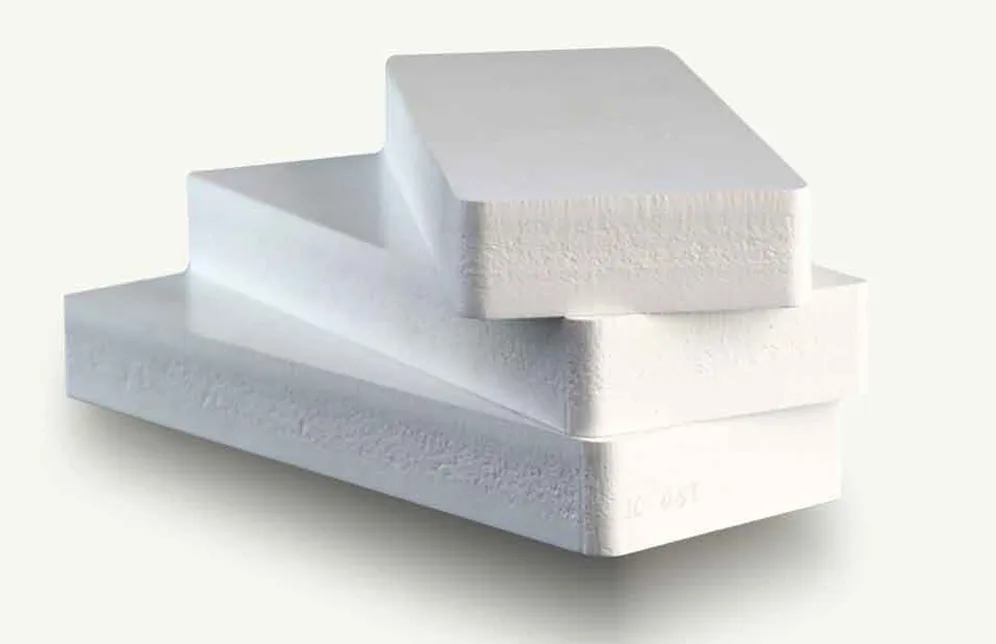
If you've been searching "where can I buy PVC sheets" in Canada, the straightforward answer is: from a specialty plastic material supplier. The more useful answer involves understanding what type of PVC you actually need, what quality looks like versus what mediocre looks like, and how supplier choice affects your project outcomes in ways that aren't obvious until something goes wrong.
PVC sheet is one of the most misunderstood materials in the Canadian fabrication and construction market. Buyers often treat it as a commodity (any white plastic board will do) and then discover that not all PVC behaves the same under cutting, printing, or outdoor conditions. The practical differences between grade levels and suppliers are significant enough to affect both the appearance and longevity of finished work.
This guide covers the full picture for Canadian business buyers: what PVC sheet is, the product types that actually matter, where to source it reliably, and what to look for in a supplier. For installation guidance once you've sourced your material, our PVC sheets installation guide covers the full process.
What PVC Sheet Is (And What It Isn't)
PVC sheet (rigid polyvinyl chloride in flat panel form) is fundamentally different from the flexible PVC used in pipes, cables, and films. Rigid PVC sheet is a structural material that cuts, drills, and fabricates with woodworking tools, holds fasteners reliably, and doesn't require special handling beyond basic safety practices.
It is not the same as acrylic/plexiglass (which is clear and used for transparency applications), polycarbonate (impact-resistant transparent material), or HDPE board (softer, used in food contact and cutting surfaces). Confirm you're ordering the right material family before comparing prices across suppliers.
The properties that make rigid PVC sheet useful in Canadian applications:
- Waterproof: Doesn't absorb moisture, doesn't swell or warp with humidity changes
- Chemical resistant: Handles most acids, alkalis, and cleaning chemicals without degradation
- Lightweight: Significantly lighter than cement board, aluminum, or steel for equivalent panel applications
- Machinable: Cuts, routes, drills, and finishes with standard woodworking equipment
- Printable: Accepts vinyl graphics, direct print (with appropriate primer/coating), and paint
PVC Sheet Types: What You Need to Know
Not all PVC sheet is the same product. The type you need depends on your application:
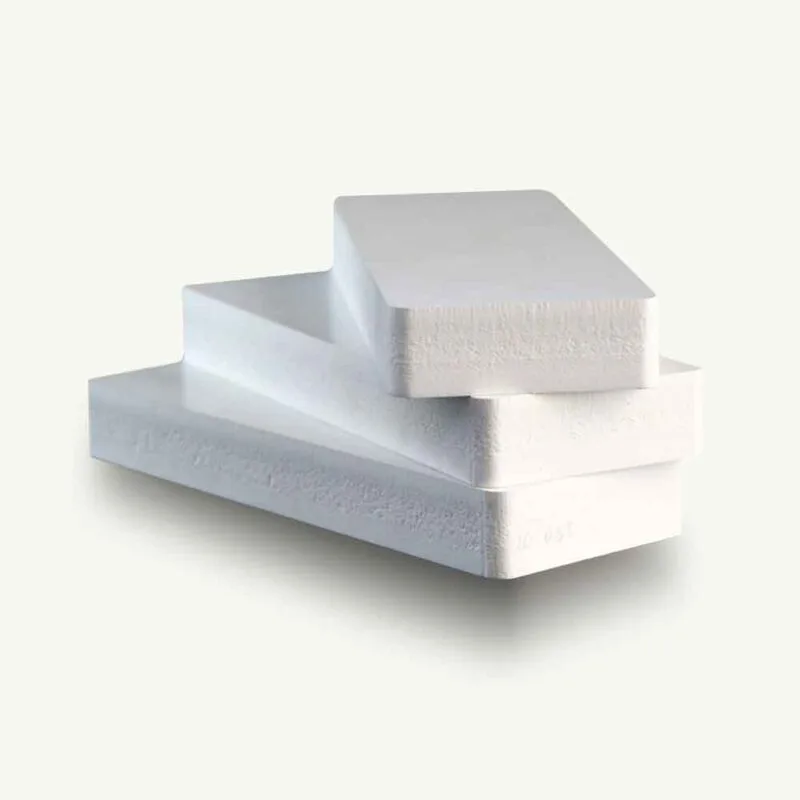
Expanded (foam) PVC, the signage standard: The most common type in Canadian signage and display applications. Has a closed-cell foam core between solid PVC skins. Very lightweight, easy to cut, excellent print adhesion with appropriate surface preparation. Available in 3 mm, 5 mm, 6 mm, 10 mm, and 13 mm. This is the "sintra" or "foamex" you see at sign shops, and our complete PVC foam board guide for Canada and Sintra board buyer's guide break down pricing, thickness selection, and fabrication in full. Not structural: don't use it where load-bearing is required.
Rigid solid PVC: Dense, heavy, mechanically strong. Used for structural applications, chemical tanks, machine guards, wet-area wall cladding where impact resistance matters. More expensive than foam PVC. Available in a wider thickness range.
UV-stabilized PVC: Contains UV absorbers for outdoor use. Standard PVC degrades under UV exposure: becomes brittle, discolors (yellows), and eventually cracks. For any exterior application in Canada, UV-stabilized grades are required. The additional cost is minimal relative to the performance difference.
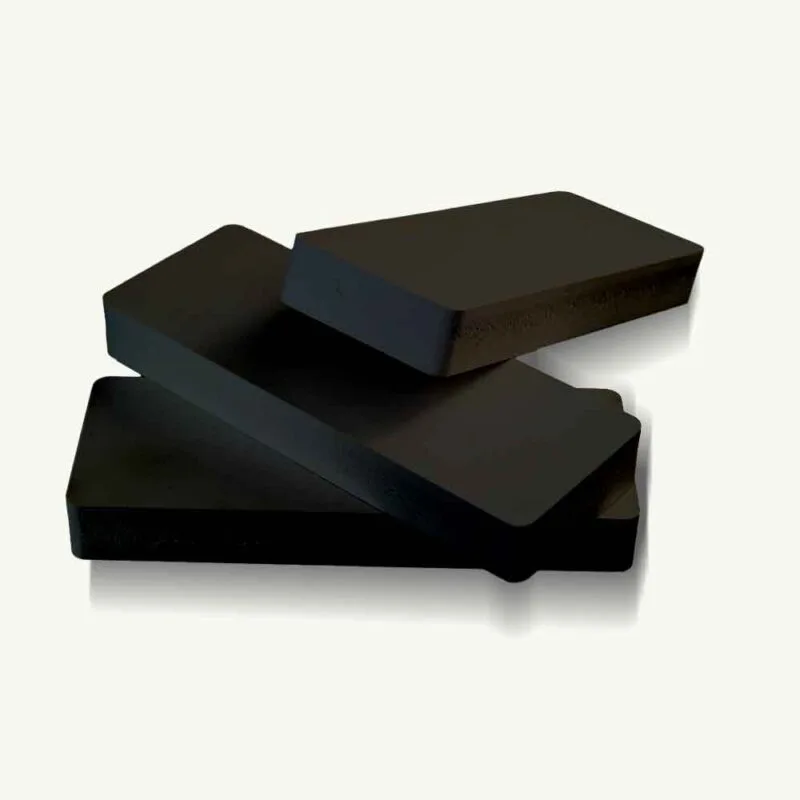
White vs. black PVC: White is standard for signage because it provides the brightest base for printed graphics. Black PVC is used for industrial applications, shadow reveals in architectural applications, and as backing material where aesthetics aren't relevant.

Where to Buy PVC Sheets in Canada
Specialty Plastic Material Suppliers (Best Option)
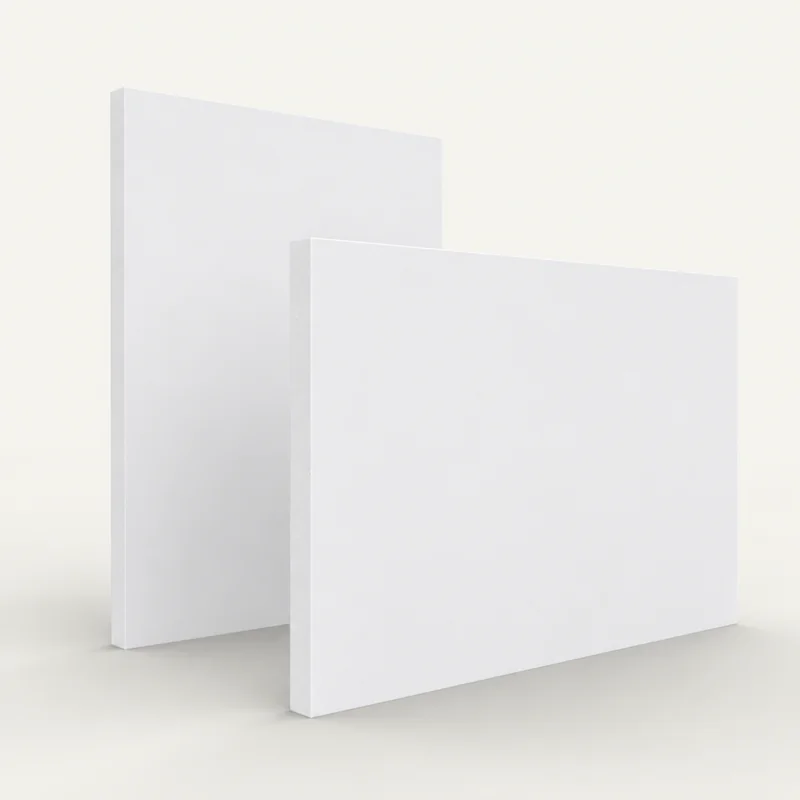
Specialty suppliers (companies whose core business is plastic sheet materials) are the most reliable source for commercial PVC sheet buying in Canada. They carry the full product range, understand the material, offer cut-to-size service, and provide commercial pricing for business buyers.
What to expect from a good specialty supplier:
- Foam and solid PVC in multiple thicknesses
- White, black, and select color options in stock
- UV-stabilized grades available
- Cut-to-size service with professional equipment
- Commercial pricing for business accounts
- Same-day or next-day availability for in-stock products
FIDAR System in North York, Toronto, stocks white and black PVC sheet in standard thicknesses, with Canada-wide shipping for orders requiring freight delivery.
Industrial Distributors
Large industrial distributors (like Grainger or similar) carry PVC sheet alongside hundreds of other materials. Good for very large volume or if you're already consolidating supply through an industrial account. May not provide the same PVC-specific product range or service depth as a specialty supplier.
Hardware Stores (Limited)
Home Depot and similar retailers occasionally carry thin foam PVC board (typically 3 mm, in small format) in their lumber or building materials sections. Suitable for small one-off purchases. Not practical for commercial quantities, and the product selection is too narrow for most professional applications.
Online Suppliers
For specialty PVC products not stocked by local suppliers, online ordering is an option. Disadvantages include shipping cost (PVC is heavy), transit damage risk, and inability to inspect material before accepting delivery.
Canadian PVC Sheet Market Growth
Steady growth in Canadian PVC sheet demand reflects expansion in commercial signage, where the PVC foam board vs acrylic choice comes up on nearly every job, digital printing services, and construction activity. The shift from wood-based substrates to PVC in wet-area cladding and commercial signage has been a consistent trend throughout this period.
How to Evaluate PVC Sheet Quality
The quality differences in Canadian PVC sheet supply are real and affect fabrication and finished product performance. Key indicators:
Density consistency: Quality foam PVC has uniform density across the sheet surface. Low-quality foam PVC often has inconsistent density: variations in the foam structure that cause surface irregularities when planed or routed. This matters for direct-print applications where surface flatness is critical.
Surface smoothness: Quality PVC has a smooth, even surface with no visible grain or texture variation under raking light. The surface should feel consistent across the full sheet.
Flatness: Large-format PVC sheets should be flat: no bowing, curling, or warping. Some warp is normal in very thin sheets stored improperly, but a quality product stored correctly should lie flat.
Cut quality: A quality PVC sheet cuts cleanly with a sharp blade or saw without excessive burring or chipping at the cut edge. Poor-quality PVC may chip, melt, or produce ragged edges.
Weight per sheet: For foam PVC, if a sheet feels heavier than expected for its stated thickness, it may be denser-than-specified material: not necessarily worse, but not what you specified.
Buying PVC Sheets for Commercial Projects
For businesses buying PVC sheet for commercial production (sign shops, fabrication businesses, construction contractors), the supply relationship matters as much as the product itself.
Volume pricing: Most commercial PVC sheet suppliers offer volume discounts. Ask about pricing tiers: the break points where price per sheet drops. For sign shops using 30-50 sheets of foam PVC per month, volume pricing can represent 15-25% savings.
Consistent material lot: For production applications, consistent material from the same manufacturer lot reduces variability in fabrication behavior and print adhesion. Ask your supplier about lot consistency for ongoing supply.
Lead times: For a production business, a supplier who can reliably fill orders within 24-48 hours is worth more than a slightly cheaper supplier with 5-day lead times. Time on job sites and in production workflows is real cost.
Custom cutting: Many commercial projects benefit from cut-to-size service: receiving panels pre-cut to installation dimensions eliminates in-shop cutting labor and material waste. A professional supplier who offers this is more useful than one who doesn't.
Installation and Handling Tips
Transport large sheets flat. Thin foam PVC will crease and crack if bent sharply during transport. Support it along its full length.
Pre-drill all fastener holes. Never drive screws directly into PVC without pilot holes: it cracks around the entry point. Use pilot bits appropriately sized for your fastener.
Allow for thermal expansion. PVC expands with temperature, particularly for large outdoor panels. Leave 2-3 mm gaps at edges and joints; use slotted mounting holes.
Clean before bonding. IPA (isopropyl alcohol) wipe before applying adhesive or vinyl: removes manufacturing release agents that interfere with adhesion.
Use PVC-compatible adhesives. Not all construction adhesives are compatible with PVC. Check compatibility; some adhesives attack PVC and cause surface damage or bond failure.
Where to Buy PVC Sheets in Canada: Summary
For commercial and professional buyers in Canada:
- First choice: Specialty plastic sheet supplier with local inventory and commercial pricing (FIDAR System, North York, Toronto)
- Second choice: Industrial distributor for very large volume or consolidated industrial supply
- Alternative: Online specialty supplier for products not stocked locally
- Last resort: Hardware store for small, urgent, one-off needs only
FIDAR System Unit 29, 601 Magnetic Drive, North York, ON, M3J 3J2 Phone: +1 (416) 857-7555 Sales: +1 (416) 726-2428 Email: info@fidarsystem.com
Related Resources
Further reading from FIDAR System:
- Complete PVC Foam Board Guide for Canada: the full pillar reference on the material, grades, thickness, pricing, and fabrication
- PVC Sheets Installation Guide for Canada: how to install and work with PVC sheet in signage, cladding, and outdoor applications
- What Is ACM Panel? Complete Guide for Canada: alternative panel material for commercial exteriors and storefront applications
- Complete Guide to Buying Acrylic Sheets in Canada: when a transparent plastic alternative is needed instead of PVC
Regulatory and industry references:
- Health Canada: Canadian guidelines on plastic materials in construction and consumer applications
- Plastics Industry Association: North American plastics industry data, material resources, and standards for PVC and rigid plastic sheet
Frequently Asked Questions
Written by
Red Seal Fabricator · 15 yrs hands-on experience
James is a Red Seal certified fabricator with 15 years of practical experience cutting, shaping, and installing acrylic, PVC, and composite panels. He writes practical, tool-in-hand guides for sign shops, fabricators, and serious DIYers who want real answers from the shop floor.
Reader Reviews
Loading reviews…