

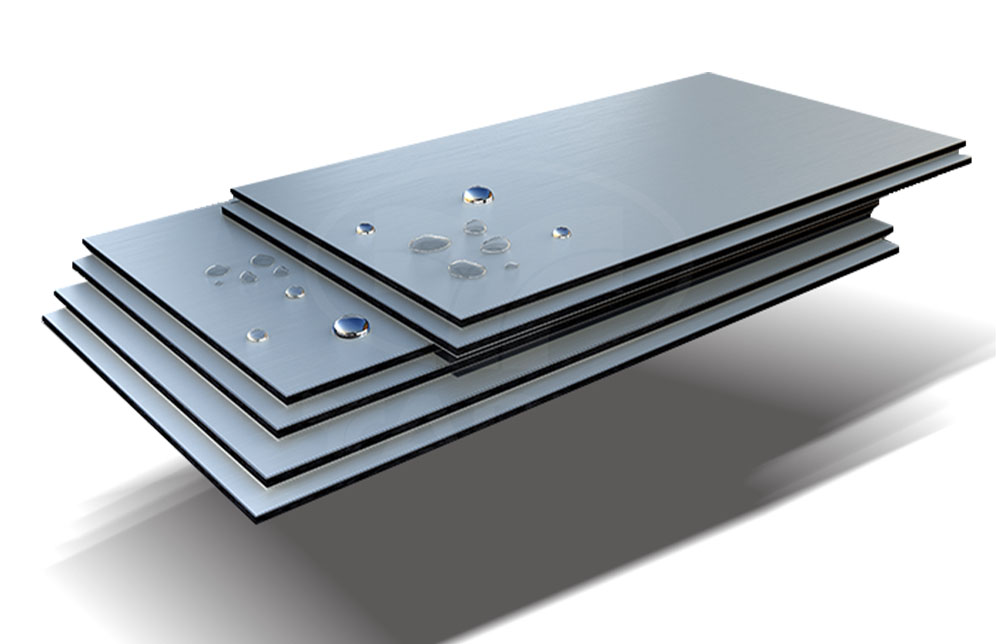
So, what is ACM panel? Two thin sheets of aluminum glued under heat and pressure to a plastic or mineral core, sold as a flat, stiff, painted board. That is the whole idea. Everything else, from the price to where the building code lets you put it, comes from what those three layers are made of.
You have seen it hundreds of times without noticing. The smooth white fascia over a pharmacy, the grey panels wrapping a new car dealership, the sign on the plaza pylon, the brushed wall behind a hotel front desk. In the trade it goes by ACM, ACP, or a brand name like Alucobond, Reynobond, Alpolic, or Dibond, and people use all of them for the same thing.
We sell ACM from our North York warehouse every week, mostly to sign shops and fit-out crews, and the same few questions come up again and again. This guide answers them in plain terms.
Key takeaways:
- ACM material is a sandwich: aluminum skin, core, aluminum skin. Sign grade is usually 3mm with 0.2 to 0.3mm skins, architectural grade usually 4mm with 0.5mm skins.
- The core is the decision that matters. Polyethylene core is fine for signs and interiors. Occupied multi-storey facades generally need a fire-retardant core, and the code decides, not the buyer.
- ACM cladding hangs on a subframe with a drained cavity behind it and has to be free to move. A 4 metre panel grows and shrinks by about 5.5mm across a Canadian year.
- On a renovation site, ACM can also mean asbestos-containing material. Worth checking before anyone picks up a saw.
What is ACM Panel? Structure Explained
Aluminum composite material is built in three layers, bonded in one continuous line at the factory:
- Front skin. Aluminum, coil-coated before it is laminated. Sign grade runs 0.2 to 0.3mm, architectural grade usually 0.5mm. The paint is polyester on most sign panels and PVDF (often sold as Kynar 500) on architectural ones.
- Core. Low-density polyethylene on standard panels, or a mineral-filled compound on fire-retardant grades. On a 3mm panel the core is most of the thickness.
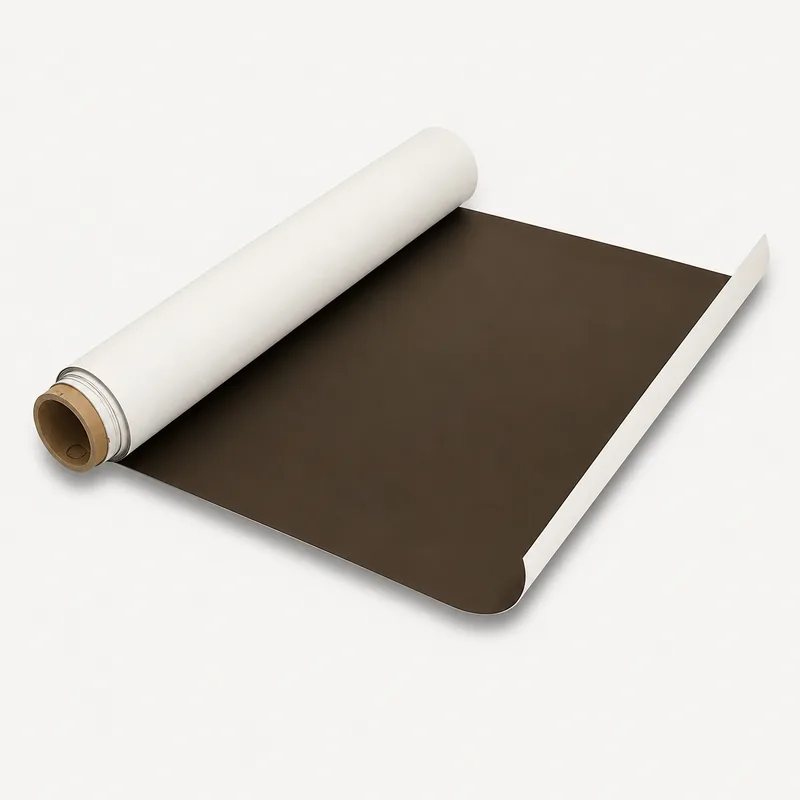
- Back skin. Aluminum again, usually with a plain service coat, although many sign panels are finished on both faces so either side can be used.
The trick is the same one an I-beam uses. Two thin skins held apart by a light core give you most of the stiffness of a much thicker metal sheet, for a fraction of the weight. That is why a 1220 by 2440mm panel stays flat on a wall where a sheet of 1mm aluminum would ripple.
How much lighter? Here are real figures, not brochure ones. The top bar is what our own 3mm sheets actually weigh, measured at about 10.6 kg for a full 4x8. The others are worked out from aluminum's density of 2.7 g/cm3.
The gap between our sheets and architectural panels is worth noticing. Plenty of spec sheets quote 5.5 kg per square metre for "ACM" as if there were only one kind. That number belongs to the 4mm facade grade. A sign-grade 3mm sheet weighs about two thirds of that, which matters when you are working out freight or how many panels one person can carry up a ladder.
What Does ACM Mean in Construction?
Two different things, and mixing them up is not a small mistake.
On a new build, a sign job, or a cladding drawing, ACM means aluminum composite material, the panel this whole guide is about. ACP (aluminum composite panel) is the same product under another name, and so are the brand names you will see on masking film: Alucobond and Dibond from 3A Composites, Reynobond from Arconic, Alpolic from Mitsubishi Chemical. If you typed "what is ACM panel" into a search bar, this is the one you meant.
On a renovation, a demolition, or in a building condition report, ACM almost always means asbestos-containing material. That use is everywhere in Canadian health and safety paperwork, and in Ontario asbestos work on construction projects is governed by O. Reg. 278/05. Old drywall compound, pipe lagging, floor tile and some cement boards are the usual suspects.
So if a site notice says "ACM present, do not disturb", nobody is talking about the fascia panels. When the letters come up and the context is not obvious, ask. It takes ten seconds and it is the kind of question nobody minds.
Core Types: The Most Important Specification Decision
Two panels can look identical from the street and behave completely differently in a fire. The core is the reason.
Polyethylene (PE) Core
The standard core, and what most sign and interior panels use, ours included. It is light, cheap, easy to rout and fold, and it bonds well to the skins. It is also combustible. Polyethylene burns, and once a fire gets into a PE-core facade the panels can feed it and carry it upward.
Where PE core belongs: signs, fascia and sign bands on buildings where combustible cladding is permitted, interior wall panels, displays, exhibit builds, and machine covers.
Where it does not: any exterior wall that the building code requires to be noncombustible or to pass a full-scale fire test. That is a design question, and it depends on the building's height, area, occupancy, sprinklers and distance to the property line, not on a simple storey count.
Fire-Resistant (FR / A2) Core
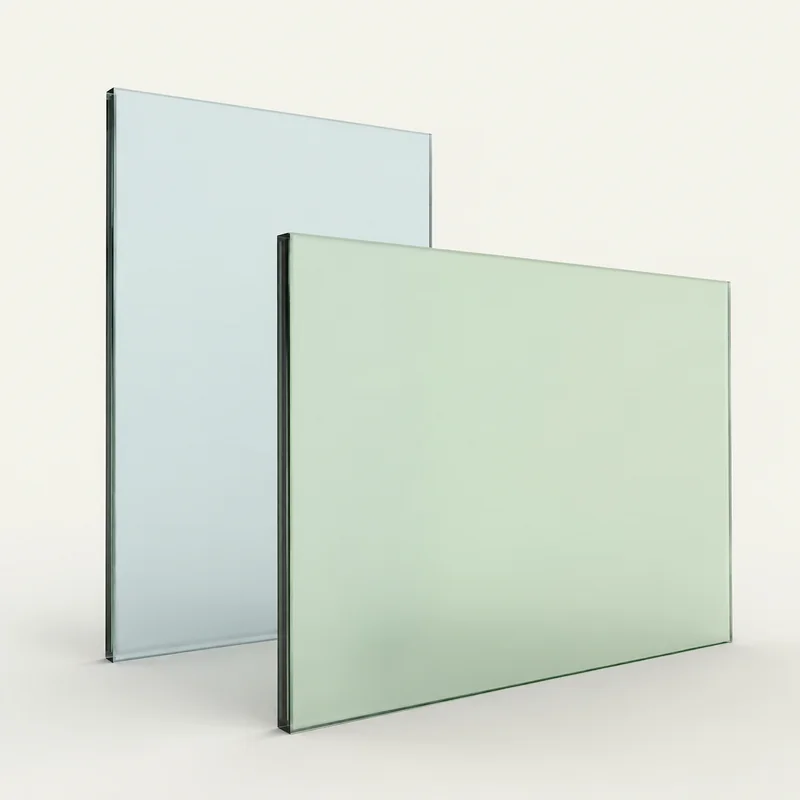
FR and A2 panels replace most of the polyethylene with a mineral filler, typically aluminum hydroxide or magnesium hydroxide, bound in a small amount of polymer. The more mineral, the less there is to burn. "A2" comes from the European classification system, where A2-s1,d0 means limited combustibility.
The reason this gets so much attention is Grenfell Tower. On 14 June 2017 a fire spread up the outside of the London block and killed 72 people. The cladding was Reynobond PE, aluminum sheets bonded to a polyethylene core. Codes and insurers everywhere, Canada included, looked much harder at combustible cladding after that.
In Canada, exterior wall fire performance is set by the National Building Code and the provincial codes built on it, which you can find through Codes Canada at the National Research Council. Where combustible components are allowed on a wall that would otherwise need to be noncombustible, the code points to a full-scale wall test, CAN/ULC-S134. The practical rule for a buyer is short: if the panel is going on an occupied building, the architect or engineer names the core, and you order what they name.
We stock polyethylene core, and we say so up front. It is the right panel for signs and interiors. For a regulated facade, we pre-order the FR or A2 core the designer names, since we do not hold it on the rack.

ACM Cladding: How the Systems Work
ACM cladding is not the panel alone. It is a system: panels fabricated into shapes, a subframe to hang them on, a cavity behind them, and joints that let everything move. When people search for ACM wall cladding systems, this is what they are really asking about. If you want the whole wall handled, we design and install metal cladding from our North York shop.
Route and return cassettes
Most facade panels are not flat sheets screwed to a wall. The fabricator routes a V-groove through the back skin and core, folds the edges back to make a shallow tray, and adds corner clips or stiffeners. That tray, often called a cassette, hangs on pins or clips so no fastener shows on the face.
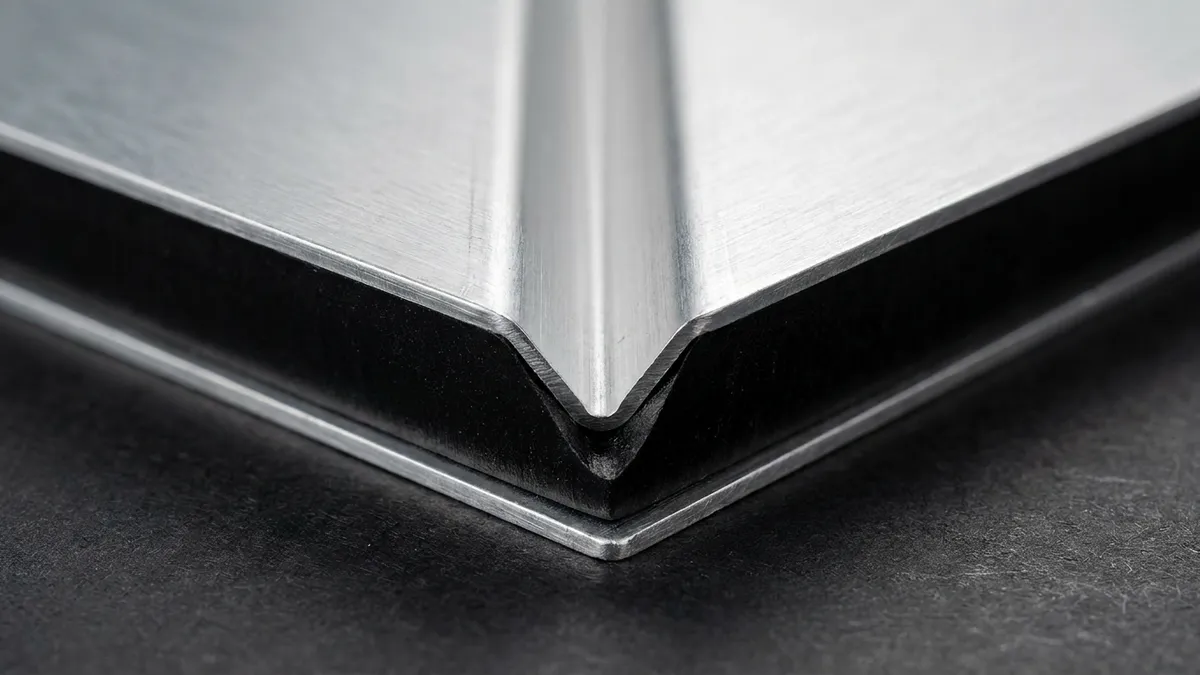 A routed V-groove leaves the front skin intact so the panel folds into a clean return.
Rainscreen and the drained cavity
Behind the panels there is an air gap, and it is there on purpose. Water will get past the joints in a storm, so the design lets it drain out at the bottom and dry out through ventilation, instead of pretending the face is sealed. That is the rainscreen principle, and it is how most modern ACM facades in Canada are built.
Open or closed joints
Open-joint systems leave a visible reveal, typically 10 to 20mm, and rely on the cavity to manage water. Closed-joint systems fill the joint with a gasket or sealant for a tighter line. Open joints forgive movement better and need less maintenance; closed joints give the smoother look some designs want.
Thermal movement
Aluminum expands about 0.023mm per metre for every degree Celsius. A 4 metre panel that swings 60°C between a January night and a sunny July afternoon moves roughly 5.5mm. Slotted holes, floating clips and proper joint widths absorb that. Pin a panel tight on all sides and it will bow or pop a fastener within a season or two.
For the definitions and fire rules in more depth, the aluminium composite panel overview is a fair starting point. For the building itself, the system supplier's installation manual and the project engineer are the authority, and anyone telling you otherwise is guessing.
Cutting ACM for a sign band or fascia?
We stock 3mm ACM in eight finishes in North York and cut it to your drawing on our own CNC router. Send the sizes and finish and we will price it.
Applications in Canada
ACM does four jobs well, and the core and coating decide which of them a given panel is fit for.
Building Facades and Exterior Cladding
On commercial buildings ACM earns its place through flatness, colour consistency and weight. A crew can hang large panels without heavy lifting gear, and a whole elevation comes out of the crate in one factory colour. The PVDF coating is what makes it last outside: it resists UV and chalking far better than polyester, which is why architectural panels use it almost without exception.
Retail and Commercial Signage
This is where most 3mm PE-core panels end up. Fascia signs, sign bands, pylon faces, wayfinding panels and channel letter backers all use it, because it is flat, rigid, weatherproof and happy to take vinyl, paint or direct UV print. Sign shops fold returns with the same V-groove trick cladding fabricators use. Our ACM sign fabrication guide goes through the blades, router bits and groove depths step by step.
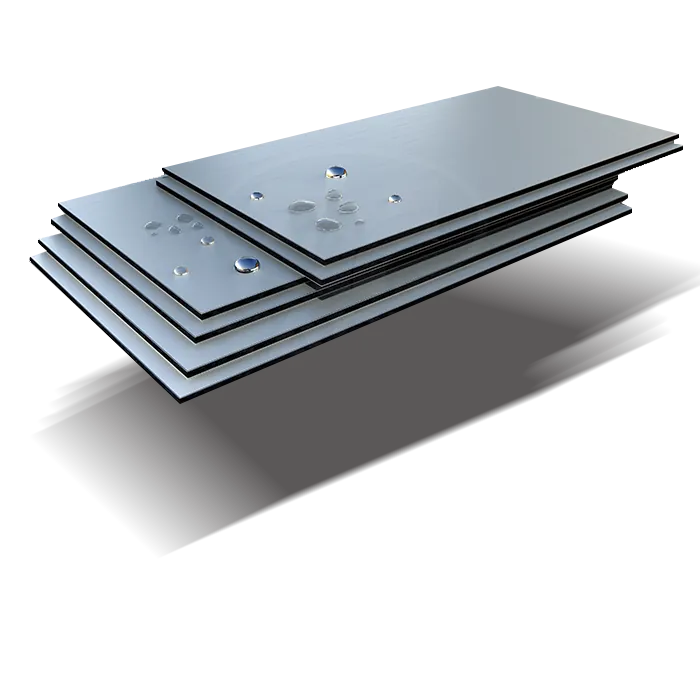 The coated aluminum face sheds water, which is why ACM is at home on exterior signs.
Interior Wall Panels and Feature Walls
Inside, ACM gives a flatter, more even finish than painted drywall, and it does not crack at the joints. Reception walls, elevator cabs, lobby features and retail fixtures all use it. Brushed and gloss faces are popular here, and because there is no weather to fight, sign-grade 3mm panels are usually all the job needs.
Industrial Applications
Machine guards, equipment enclosures, clean wall cladding in food and packaging plants. The painted face wipes clean and the panel is light enough to lift off for maintenance. Chemical exposure needs checking case by case: the coating holds up to a lot, the cut aluminum edge less so.
ACM vs Solid Aluminum Sheet
| Property | 3mm ACM (sign grade) | 3mm solid aluminum |
|---|---|---|
| Weight | About 3.56 kg/m² (measured) | About 8.1 kg/m² |
| Flatness over a large panel | Excellent | Good, can oil-can |
| Folding | V-groove and fold by hand | Press brake |
| Finish | Factory painted, both faces on many panels | Mill finish unless painted or anodized |
| Fire behaviour | Depends on the core | Non-combustible |
| Where it wins | Signs, fascia, interiors, cladding where permitted | Structural parts, marine work, non-combustible walls |
For most signage and interior work ACM is the easy choice. Solid plate earns its cost where the metal has to carry load, where the wall must be non-combustible without relying on a core rating, or where a spec simply calls for it.
What ACM Panels Cost in Canada
Price follows the same three variables as everything else: core, coating and skin thickness. PE-core sign panels are the cheapest way in, PVDF architectural panels cost more, and fire-retardant cores cost more again.
For real numbers, our own 3mm ACM panels run from $63.18 to $140.18 CAD per 4x8 sheet depending on finish. The ACM panel pricing and supplier guide lays out every finish with its per-square-foot cost and how ordering and cutting are priced.
How to Choose ACM Panels and a Supplier
Ask four questions before you order anything, and expect straight answers:
- What is the core? Polyethylene or fire-retardant, in writing.
- How thick are the skins? 0.2, 0.3 or 0.5mm makes a real difference to denting and routing.
- What is the coating? Polyester or PVDF, and what the finish warranty says.
- Is it on the shelf? A catalogue listing and a sheet on a rack are not the same thing.
A supplier who answers "it's good quality" to any of those has told you something too. Our own answers are on the aluminum composite panels page: eight finishes, 0.2 or 0.3mm skins, polyethylene core, all in stock in North York and cut to size on our router. The panels are Alcosheet, our own brand, and its colour chart and full data sheet are public. If you are comparing ACM panel suppliers on price and service rather than spec, the ACM supplier guide covers what to ask.
Not sure which ACM finish fits the job?
Tell us what the panel is for and where it is going. We will tell you whether our stock suits it, and say so plainly if it does not.
Get a free quote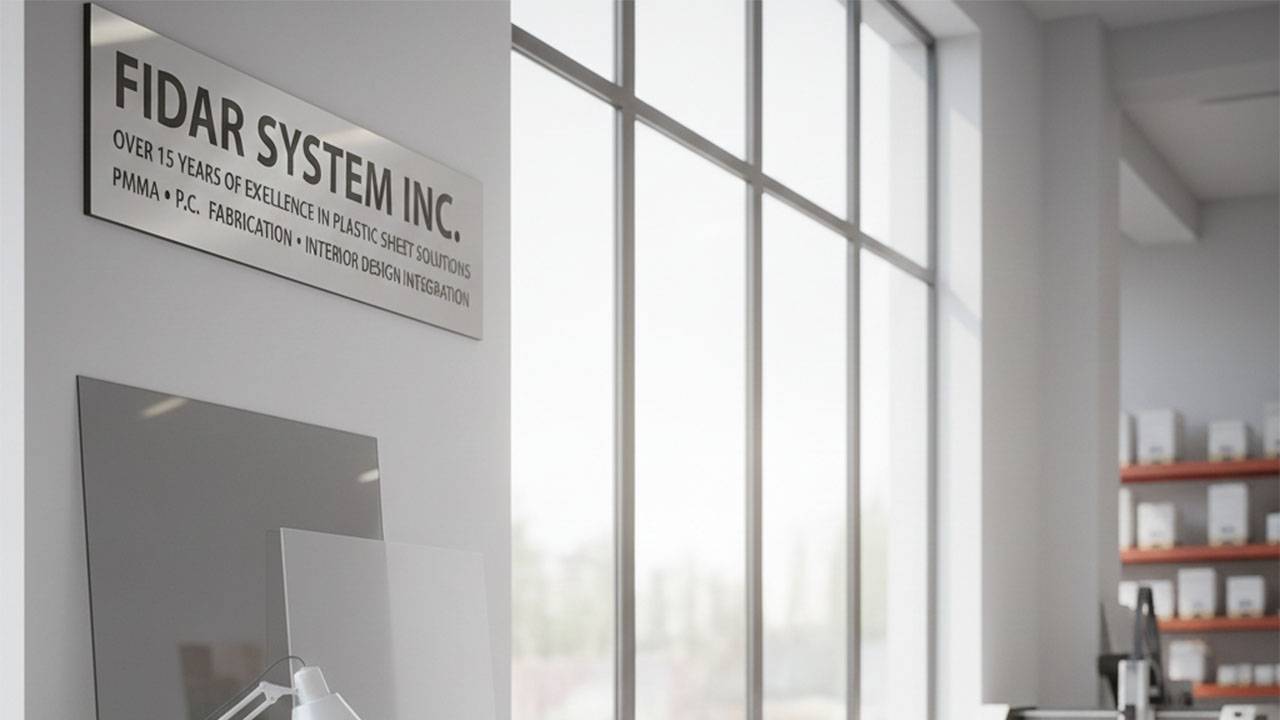 Our North York office and warehouse, where the ACM stock is held and cut.
TORONTO: Unit 29, 601 Magnetic Drive, North York, ON, M3J 3J2 Phone: +1 (416) 857-7555 Office: +1 (416) 726-2428 Email: info@fidarsystem.com
Related Resources
Further reading from FIDAR System:
- ACM Panels for Signs: Fabrication Guide: cutting, V-grooving and printing sign-grade ACM
- Honeycomb Composite Panels in Canada: the translucent structural panel we stock alongside ACM
- PVC Foam Board Sheets in Canada: the lighter indoor substrate buyers often weigh against ACM
- Plastic Sign Board Materials in Canada: ACM, acrylic, PVC and polycarbonate compared job by job

Prefer to talk it through? Call us at +1 (416) 857-7555 for real answers from the warehouse floor.
Frequently Asked Questions
Written by
M.Arch, RAIC Associate · 9 yrs architectural specification
David is an RAIC Associate with 9 years of experience specifying architectural plastics for commercial and residential projects across Canada. His work bridges material science and aesthetic application, helping designers and contractors choose the right panel systems for every build.
Reader Reviews
Loading reviews…