

Buying acrylic sheets in Canada sounds straightforward until you start getting into it. There are two main manufacturing types (cast and extruded), a dozen common thickness options, several distinct surface finishes, and suppliers who range from large industrial distributors to online marketplaces selling unspecified imported material. Making the wrong choice means either overpaying for performance you don't need or under-specifying a sheet that fails or looks poor in the application.
This guide covers the full picture: what acrylic sheet actually is, how the manufacturing method affects what you get, how to read a price and know if it's fair, how to choose a Canadian supplier worth working with, and how to match material to application with confidence.
What Acrylic Sheet Is (and What It Isn't)
Acrylic sheet (sold under brand names like Plexiglas, Lucite, and Acrylite, and generically as PMMA or perspex) is a thermoplastic polymer that combines several properties no other single material offers at the same price point: optical clarity close to glass, significant impact resistance, UV stability, and workability with standard fabrication tools.
It is not the same as polycarbonate, which looks similar but has different mechanical properties (higher impact resistance, lower optical clarity, poorer UV resistance). It's also not PVC sheet, which is opaque and used for different applications; our PVC foam board vs acrylic for signs guide covers when each material wins. These distinctions matter when you're sourcing material: make sure you're comparing the same material type between suppliers.
Acrylic does not shatter in the way glass does. Under impact, it tends to crack rather than shatter into dangerous shards. This makes it the standard choice for applications where safety glazing is a concern: barriers, partitions, school furniture, and display cases that people regularly interact with.
Cast vs. Extruded: The Most Important Decision You'll Make
Every acrylic sheet is made by one of two processes. Understanding the difference is the single most important factor in selecting the right material.
Cast Acrylic
Cast acrylic is made by pouring liquid monomer between two sheets of glass or into an open mold and allowing it to polymerize slowly. This process produces (and it's the grade you need for laser cutting):
- Superior optical clarity: the clearest available, approaching 92% light transmission
- A published thickness tolerance: our manufacturer publishes ±8% of nominal from 2.8 mm to 15 mm, ±0.22 mm at 2.8 mm
- Better chemical resistance: resists solvents better than extruded
- Cleaner laser cutting: vaporizes at the cut line without gumming, producing flame-polished edges
- Higher scratch resistance: harder surface than extruded
Our cast range is cell-cast in Taiwan by Hsin Hwa Chemical, and what that manufacturer publishes about its own sheet, including the full tolerance table behind the figure above, is worth reading if you want to check a supplier's claims rather than accept them.
Cast acrylic costs more, but for any application where edge quality, optical performance, or laser processing matters, it's the right choice. Sign shops, fabricators producing customer-visible products, and anyone doing precision laser work should default to cast acrylic.
Extruded Acrylic
Extruded acrylic is manufactured by continuously pushing molten acrylic through a die. It's a faster, more economical process that produces:
- Lower cost: typically 15-25% less expensive than cast
- More consistent batch dimensions: the continuous process produces sheets in precise standard widths
- Easier cold bending: slightly lower molecular weight means it bends without cracking at smaller radii
- Good performance for non-critical applications: windows, light covers, display cases where edge quality isn't visible
Extruded is the right choice for budget-sensitive projects where you don't need perfect edge quality and won't be laser cutting. It's not the right choice for illuminated signage, precision laser work, or high-end display fabrication.
Acrylic Grades and Brands You'll See in Canada
Once you know whether you want cast or extruded, the next question is grade and brand, because "acrylic sheet" covers a wide quality range and the label on the invoice does not always tell you what's inside.
Branded cast acrylic comes from manufacturers such as Evonik (PLEXIGLAS and ACRYLITE), Arkema (Altuglas), and other established producers. These sheets ship with published PMMA material data and certificates, tightly controlled UV stabilization, and reliable colour matching between production lots. For outdoor signage, food-contact fixtures, medical and lighting applications, or anything where you need a paper trail on the specification, branded cast is worth the premium.
Generic and imported cast acrylic covers a large share of the Canadian market and can be excellent value. Quality varies by source, so the important thing is a supplier who knows the origin of what they sell and stocks it consistently. FIDAR System, for example, sources cast clear through the cell-cast process at 92% light transmission to a published thickness tolerance (±8% of nominal from 2.8 mm to 15 mm), and carries coloured cast in more than 20 colour codes with lot-to-lot pigment consistency, which is what production buyers doing multi-unit runs actually depend on.
Extruded grades are typically sold generically by thickness and colour rather than by brand, because the process is more commoditized. That is fine for the applications extruded is suited to. The one rule that always holds: do not accept extruded material quoted as cast, or an unspecified sheet quoted at cast prices. If a supplier cannot name the process and grade, treat the price as if it were for the lower grade.
Acrylic vs. Glass: When to Choose Each
Acrylic beats glass on weight (roughly 50% lighter), safety (doesn't shatter into sharp fragments), machinability (cuts, drills, and shapes with standard tools), and for complex shapes (no glass cutting required). Glass wins on scratch resistance and thermal stability. For most commercial and institutional applications in Canada, acrylic is the preferred material.
The weight difference is not a footnote. A 4×8 ft sheet of 6 mm acrylic is light enough for one person to carry and cheap to ship, while the same panel in glass needs two people and careful crating. That single property is why acrylic dominates signage, display, and partition work, and why so many buyers switch after their first freight bill on glass.

Standard Sizes and Thickness Available in Canada
Common sheet formats:
- 24″ × 48″: ideal for small fabrication and DIY
- 36″ × 48″: medium panels, retail displays
- 48″ × 96″ (4′ × 8′): the commercial standard, most widely stocked
- 48″ × 120″ (4′ × 10′): furniture and architectural applications
- Custom cut: available from most commercial suppliers
Standard thickness range:
| Thickness | Primary applications |
|---|---|
| 2 mm | Decorative accents, overlays |
| 3 mm | Small signs, DIY, lightweight frames |
| 4-5 mm | Display cases, menu boards |
| 6 mm | Signage, barriers, partitions, commercial standard |
| 8 mm | Furniture, larger panels |
| 10-12 mm | Skylights, structural applications |
| 15-25 mm | Heavy-duty structural, machine guards |
A note on sheet size and cost: acrylic is priced and shipped by the full sheet, so the format you choose drives both material waste and freight. Buying a 4×8 ft sheet when your largest part is 2×4 ft means paying for half the panel as offcut, and paying to ship it. Where a supplier offers cut-to-size, it is usually cheaper to have them cut close to your part than to buy full sheets and cut in-house.
Matching Acrylic Thickness to Your Application
Thickness is where buyers most often over- or under-spec. The gauge you need is driven by span, load, and how the panel is supported, not by a general sense that thicker is safer. These are the pairings we see most often across Canadian fabrication and fit-out work:
- 2 mm to 3 mm: decorative overlays, laser-cut craft and signage letters, lightweight framed inserts, and photography or lighting diffusion panels. Thin gauges cut fast and keep material cost down on high-volume laser work.
- 2.8 mm to 4.3 mm: retail point-of-sale displays, brochure holders, risers, shelf dividers, cabinet inserts, and sign faces for illuminated channel letters and cabinet signs. This band is the workhorse for display and signage. If the job is a sign rather than a display, our sign board material guide for Canadian sign shops sets acrylic against PVC foam, ACM, and polycarbonate job by job.
- 4.3 mm to 5.5 mm (roughly 3/16″ to 1/4″): sneeze guards, protective barriers, and counter shields, which is the standard range commercial interior contractors and restaurant fit-out shops specify. It is rigid enough to stand in a base without flexing.
- 6 mm to 9 mm: larger partitions, room dividers, furniture components, and heavier LED light-box faces where the panel needs to hold its own shape across a wider span.
- 12 mm to 25 mm: architectural glazing, walkway and canopy panels, machine guards, and interior structural applications where glass weight or safety is the deciding factor.
If you are unsure, size to the largest unsupported span rather than the average, and step up one gauge for anything that will be handled, leaned on, or mounted overhead. Our guide to 4x8 sheet formats and gauges breaks the dimensions down application by application, and shows what each nominal imperial gauge actually measures.


Surface Finishes and Colour Options
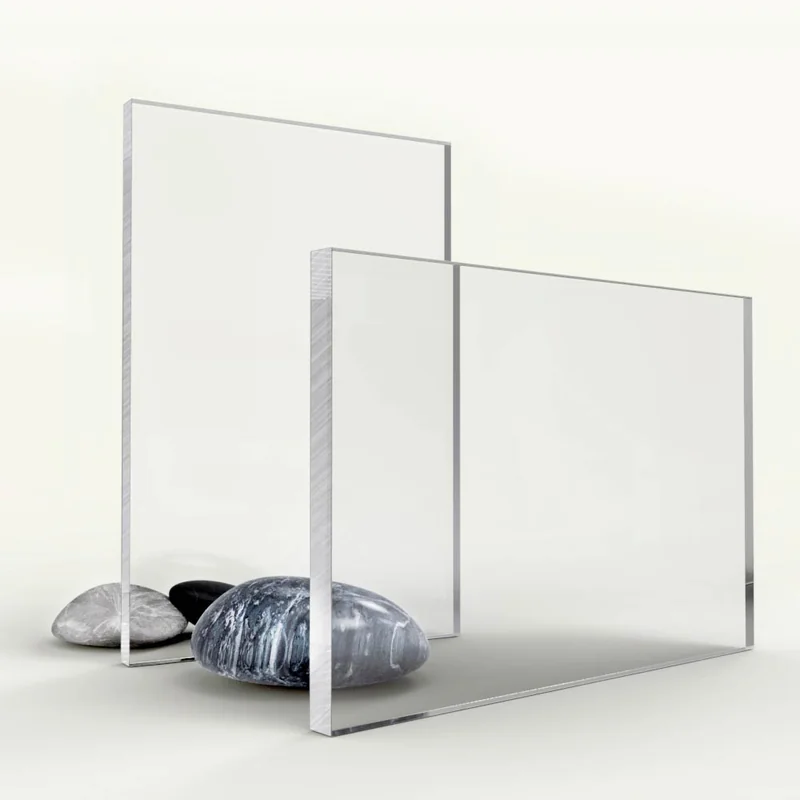
Clear: Maximum light transmission. The default for most applications.
Opal/White Diffuser: Transmits and diffuses light evenly: the backlit signage standard. Available in multiple diffusion levels (P95, DC2, and similar grades from different manufacturers). P95 frosted cast, for instance, holds about 70% light transmission while scattering the light evenly, which is why it is a go-to for LED diffusers and privacy panels. Our P95 privacy panel guide works through gauge selection, setback and per-panel pricing in detail.
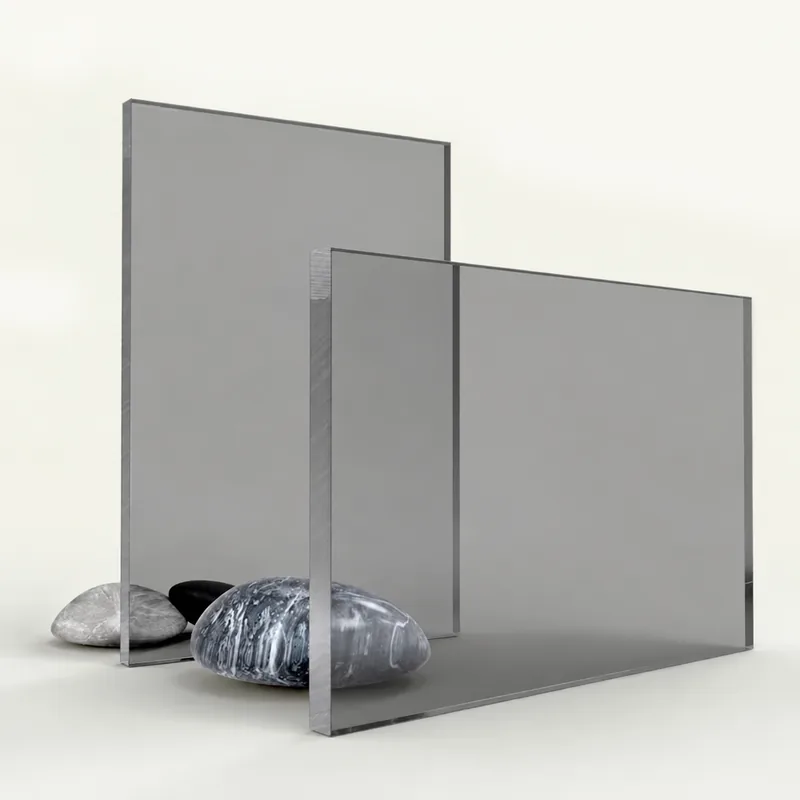
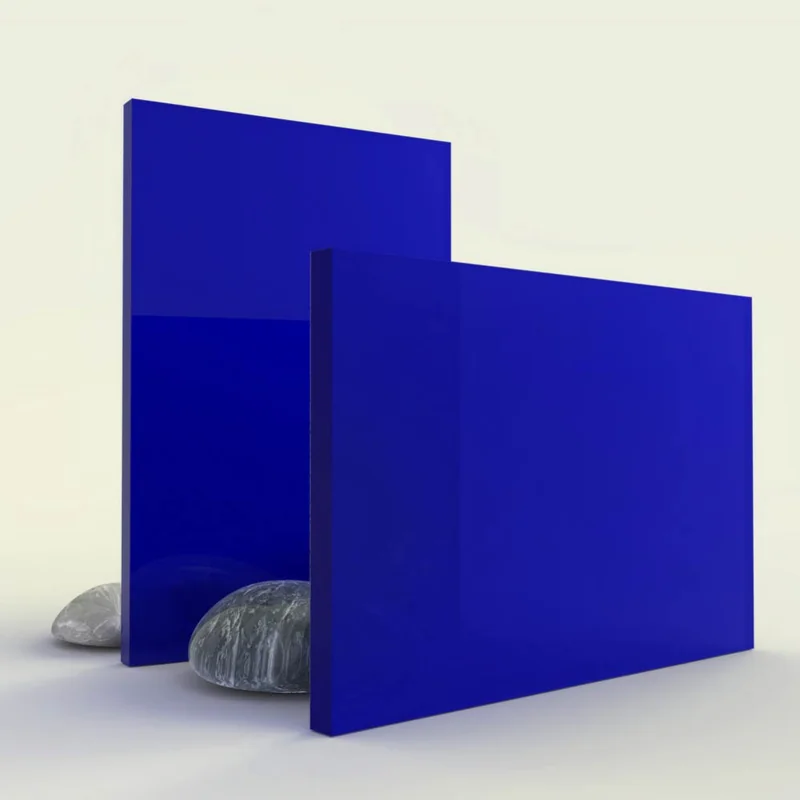
Colored transparent: Tinted sheets that transmit light while adding color. Used in illuminated signs, decorative panels, retail displays.
Colored opaque: Solid color sheets for non-illuminated signage, furniture, and branded applications. Black and white opaque are highest volume; other colors available on order. FIDAR stocks coloured cast in over 20 codes across blue, green, yellow, red, orange, violet, and pink families.
Frosted/Satin: Privacy without blocking light. Standard for shower enclosures, office screens, bathroom windows.
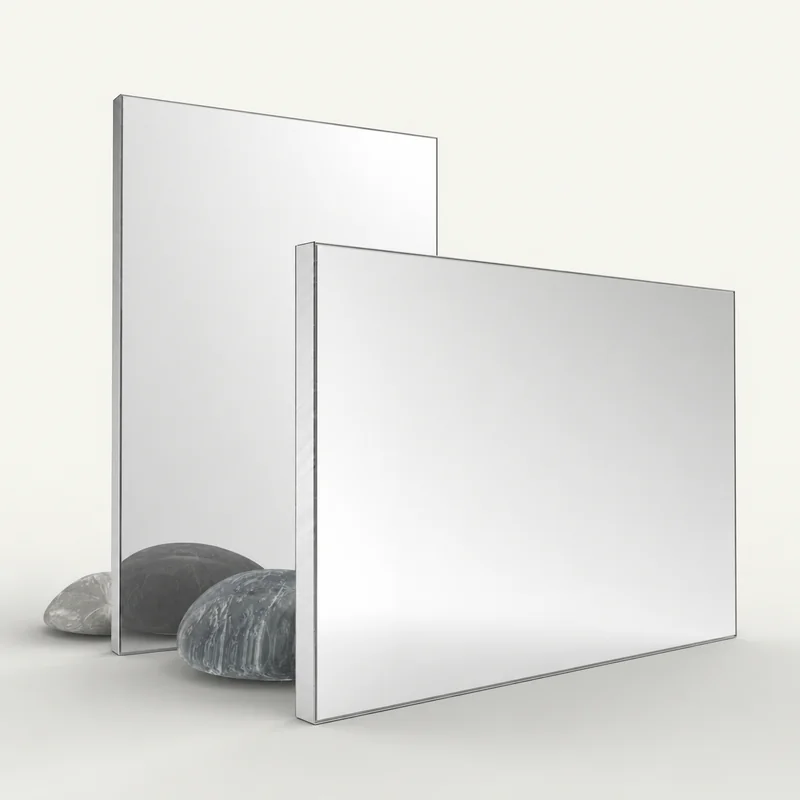
Mirror: Reflective surface for decorative mirrors, ceiling panels, branded displays, available in silver, gold, and rose gold tones.
UV-stabilized grades: Mandatory for outdoor applications. Includes UV absorbers in the material matrix rather than as a surface coating: provides multi-decade outdoor performance.
What Acrylic Sheets Cost in Canada (2026 Pricing)
Price is where a lot of buyers get confused, or taken advantage of. Here's what actually drives the cost:
Manufacturing type: Cast acrylic costs 15-25% more than extruded at equivalent thickness and size. If a price seems too good to be true for cast acrylic, it's probably extruded material being mislabeled.
Thickness: Price scales roughly linearly with thickness. A 6 mm sheet costs approximately twice as much as a 3 mm sheet of the same area, which is as expected.
Sheet format: Larger sheets typically offer a lower cost per square foot but may require more shipping cost. Buying a 4×8 sheet when you only need a 2×4 panel means paying for half the material as offcut.
Brand vs. generic: Evonik PLEXIGLAS®, Altuglas, and similar branded cast acrylic products carry a premium over generic imports. For demanding applications (outdoor UV exposure, food-contact applications, medical settings) the premium is usually worth paying for verified material specifications.
Custom cutting: Cut-to-size service typically adds $15-$40 per sheet depending on complexity but eliminates waste and saves fabrication time.
To turn that into real numbers, here are current FIDAR System starting prices by product line. These are actual 2026 list prices, shown as starting points; the exact figure depends on thickness, size, colour, and stock at time of order.
| Product line | Thickness range | Sheet sizes | Starting price (CAD) |
|---|---|---|---|
| Cast clear acrylic | 1 mm - 30 mm | 3×6, 4×8 ft | from $47.97 |
| Extruded clear acrylic | 2 mm - 6 mm | 4×8 ft | from $54.68 |
| Coloured cast acrylic | 2.8 mm - 5.5 mm | 4×8 ft | from $95.47 |
| P95 frosted acrylic | 2.8 mm - 9 mm | 4×8 ft | from $102.07 |
| Mirror acrylic | 3 mm | 4×8 ft | contact for pricing |
A few concrete reference points: in 4×8 ft extruded clear, 2 mm is $54.68 and 6 mm is $158.08, so you can read the near-linear step with thickness directly. Coloured cast runs $95.47 at 2.8 mm and $144.97 at 4.3 mm, and P95 frosted spans $102.07 at 2.8 mm up to $261.57 at 9 mm. Cast clear covers the widest range of all, from $47.97 for a thin 1.5 mm 3×6 ft sheet up to $1047.97 for a 30 mm 4×8 ft sheet. Prices move with the market, so treat these as a calibration for what fair looks like rather than a permanent quote, and check the live product pages before ordering.
Want a firm quote on your exact sheet?
Send us the material, thickness, size, and quantity and we will price it, including cut-to-size, with real stock availability.
Acrylic Sheet Demand Growth: Canada
Acrylic Sheet Applications by Industry
Acrylic earns its place in so many industries because one material covers clarity, colour, safety, and machinability at once. Where it lands most in the Canadian market:
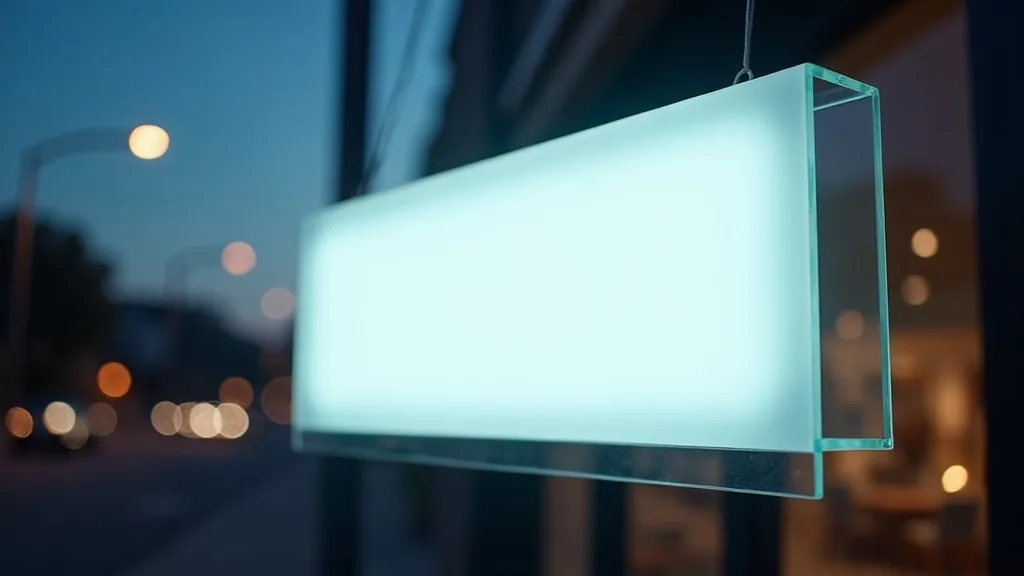 Clear and coloured acrylic sheet is the standard face material for illuminated channel letters and cabinet signs.
Signage and lighting: Clear and coloured cast acrylic is the default face material for illuminated channel letters, cabinet signs, and LED light boxes, with opal and P95 diffuser grades softening the light so bulbs and LED strips don't show through. Our guide to acrylic and lighting covers the diffuser choices in depth.
Retail and point-of-sale: Displays, risers, brochure holders, shelf dividers, and protective cases lean on 2.8 mm to 4.3 mm cast for its clean edges and optical clarity. This is high-volume, cut-and-assemble work where consistent thickness pays off.
Protective barriers and glazing: Sneeze guards, counter shields, machine guards, and interior partitions use the 4.3 mm to 6 mm range because acrylic cracks rather than shatters, making it the safer choice around people.
Interior design and architecture: Room dividers, feature walls, furniture, and mirror-acrylic accents use both clear and decorative grades. Our piece on modular interior design with acrylic shows how fabricators turn that into product lines.
Fabrication and makerspaces: Laser cutters, CNC routers, and thermoforming shops buy cast for its flame-polished laser edge and predictable behaviour under heat.
Not sure which grade fits your industry?
Tell us the application and we will recommend cast or extruded, the right thickness, finish, and format. No obligation.
Get a free quoteHow to Cut, Drill, and Fabricate Acrylic
Acrylic is one of the friendlier sheet materials to work, but the failure modes (chipping, melting, and cracking) are all avoidable with the right approach.
Cutting: For straight cuts, a table saw with a fine-toothed blade or a circular saw with a carbide blade rated for plastics gives a clean edge. Keep the protective masking on while you cut to reduce scratching, and support the sheet close to the cut line so it doesn't chatter. For curves and intricate shapes, a laser cutter on cast acrylic produces a flame-polished edge that needs no secondary finishing, which is a real advantage over sawn or routed edges that require buffing. Our laser cutting guide walks through settings and material choice.
Drilling: Use standard twist bits at moderate speed and let the bit clear chips rather than forcing it, which prevents the heat build-up that melts or cracks the sheet. Back the sheet with scrap so the bit exits cleanly, and never drill hard up to an edge without support.
Bending and forming: Acrylic thermoforms cleanly. A strip heater softens a line for a crisp single bend, while an oven brings a whole sheet up to forming temperature for deeper shapes. Extruded bends at a slightly smaller radius than cast because of its lower molecular weight.
Bonding: Solvent cement (such as the methylene-chloride and acrylic-based cements sold for the job) chemically welds two acrylic surfaces into a near-invisible joint, which is why display cases look seamless. Cast resists solvents and adhesives slightly better than extruded, so it holds up better where contact cement or aggressive cleaners are involved.
The short version: sharp tooling, moderate speed, keep the masking on, and support the sheet. Get those four right and acrylic cuts, drills, and glues predictably every time.
Caring for and Cleaning Acrylic Sheets
Acrylic's one real weakness against glass is surface hardness, so how it is cleaned and handled determines how long it stays looking new.
Cleaning: Use a soft microfibre cloth with plenty of water and a mild soap, or a cleaner formulated for acrylic. Never use ammonia-based glass cleaners (most household window sprays), acetone, or other harsh solvents, which fog or micro-crack the surface. Wipe gently and let grit float off in water rather than grinding it across the sheet.
Scratch handling: Light scratches in most grades can be polished out with a plastic polish and a soft pad. Deeper scratches are harder to remove, which is why the manufacturer masking should stay on right up until the piece is installed or finished.
Static and dust: Acrylic holds a static charge and attracts dust. An antistatic cleaner, or simply a damp (not dry) cloth, keeps it from re-attracting dust the moment you wipe it.
Treated this way, indoor acrylic stays clear for many years, and UV-stabilized cast holds up outdoors in Canadian sun and cold for 15 years or more.
Acrylic for Outdoor Use in Canadian Weather
Canada is a demanding environment for any plastic sheet, and outdoor acrylic sheets face three stresses at once: ultraviolet exposure in summer, deep cold in winter, and the freeze-thaw cycling in between. Acrylic handles all three better than most plastics, but only if you specify it correctly.
UV and sunlight: This is the single most important spec for anything outdoors. UV-stabilized cast acrylic carries UV absorbers dispersed through the material rather than as a surface coating, so it resists yellowing and surface chalking for well over a decade. Standard extruded acrylic without UV stabilization is the wrong choice outdoors; it will yellow and grow brittle within a few Canadian summers. When you buy acrylic sheets in Canada for exterior signage, glazing, or canopies, confirm the sheet is UV-rated before anything else.
Cold and impact: Acrylic keeps its clarity and dimensional stability through Canadian winter temperatures, but like most rigid plastics it becomes somewhat more brittle in deep cold, so an impact that a sheet would shrug off in summer can crack it at minus 25. Where panels take physical abuse in winter (loading docks, vestibules, exposed guards), stepping up a gauge or moving to polycarbonate is the safer call.
Thermal expansion: Acrylic expands and contracts more than glass across a temperature swing, and Canadian exteriors see large swings. Any outdoor panel needs to be mounted with room to move: slightly oversized fastener holes, edge clearance in the frame, and no hard clamping. Skip that and the sheet can bow or crack as it grows and shrinks through the seasons. Plan for roughly a couple of millimetres of movement per metre of panel across a full summer-to-winter range. On a 2.4 m storefront panel, that is a visible amount of travel, so a frame with proper edge clearance and slotted or oversized fastener holes is what keeps an outdoor acrylic sign flat and crack-free through its first Canadian winter and every one after.
Ordering Acrylic Cut to Size: How to Spec Your Cut List
Most commercial buyers save money by ordering acrylic cut to size rather than buying full sheets and cutting in-house, but a good cut order depends on giving the supplier the right information the first time.
Dimensions and tolerance: State each piece as width by height in a consistent unit, and say which dimension is the grain or reference edge if it matters. Saw cutting typically holds a tolerance of about ±0.5 to 1 mm, which is fine for most fabrication. If you need tighter, say so, because it changes how the shop cuts.
Edge finish: Decide what edge you need. A standard saw-cut edge is matte and slightly rough, good for pieces that get framed or glued. A flame-polished or diamond-polished edge is clear and glossy, which is what you want on exposed edges of displays and glazing. Polishing costs more, so only order it where it shows.
Quantity and nesting: Give the full quantity per size so the supplier can nest your parts efficiently on the sheet and cut your waste (and your cost). Ordering ten identical panels at once is cheaper per piece than ten separate cuts.
Holes and machining: If you need drilled holes, slots, or radiused corners, provide a dimensioned drawing rather than a description. It removes ambiguity and prevents rework.
Getting the cut list right up front is the difference between a clean, drop-in delivery and a batch of parts that need trimming. When in doubt, send the drawing and let the supplier confirm before cutting.
Is Acrylic Recyclable? Sustainability in Canada
Acrylic is a thermoplastic, which means it can be melted and reformed, and PMMA is technically one of the more recyclable plastics: through depolymerization it can be broken back down close to its original monomer and re-cast into new sheet. In practice, dedicated acrylic recycling streams are still limited in Canada, so most offcuts are either reused in the shop or diverted through industrial plastics recyclers rather than curbside programs.
The most effective sustainability step is upstream: order cut-to-size to minimize offcut, buy the right thickness rather than over-speccing, and keep clean offcuts for smaller parts and prototypes. Acrylic's long service life also counts in its favour, since a UV-stable exterior panel that lasts 15 years or more replaces itself far less often than cheaper materials that degrade in a few seasons. If sustainability is a formal requirement on your project, ask your supplier about the origin of the material and whether they take back clean production scrap.
Common Mistakes When Buying Acrylic Sheets in Canada
Most of the money buyers lose on acrylic sheets in Canada comes from a handful of avoidable mistakes. Knowing them in advance is the fastest way to buy well.
Paying cast prices for extruded material. This is the most common one. Because the two look identical, an unspecified sheet quoted at a cast price is a real risk. Always confirm the process in writing, and if the answer is vague, price it as extruded.
Over-speccing thickness. Buyers often default to thicker "to be safe," which can double the material cost for no real benefit. Size to the largest unsupported span and how the panel is handled, not to a general instinct that thicker is stronger.
Ignoring UV grade on outdoor work. Standard acrylic outdoors yellows and embrittles within a few Canadian seasons. For any exterior use, UV-stabilized cast is not optional. Skipping it is the single most expensive spec mistake because the panel fails and has to be replaced.
Buying full sheets when cut-to-size is cheaper. Paying for offcut you throw away, then paying freight to ship it, is pure waste on parts that a supplier could have nested and cut close to size.
Removing the masking too early. The manufacturer film protects the surface through cutting, handling, and installation. Peel it at the end, not the start, and you avoid most scratches.
Choosing on price alone with no spec. The cheapest quote is often the lowest grade, an unstated process, or inconsistent thickness. A supplier who names the process, brand, and grade is giving you information the cheap anonymous quote is hiding.
Avoid these six and you have avoided almost every way an acrylic order goes wrong. Each one comes back to the same habit: know exactly what you are buying before you buy it.
Acrylic, Polycarbonate, or PVC: A Quick Decision Guide
Before you commit to acrylic, it's worth confirming it's the right sheet material for the job, because buying the wrong material is more expensive than buying the wrong grade. The three plastic sheets Canadian buyers weigh most often are acrylic, polycarbonate, and PVC foam board, and each wins in a different situation.
| Factor | Acrylic | Polycarbonate | PVC Foam Board |
|---|---|---|---|
| Optical clarity | Best (up to 92%) | Good, slight tint | Opaque |
| Impact resistance | Good | Excellent (near unbreakable) | Low |
| Weight | Light | Light | Lightest, rigid foam |
| Weather/UV | Excellent with UV grade | Good, can yellow | Good for signage |
| Machinability | Excellent, laser-friendly | Good, harder to crack-cut | Excellent, cuts like wood |
| Typical price | Mid | Highest | Lowest |
Choose acrylic when you need the clearest, most colour-true sheet, a flame-polished laser edge, or a decorative finish like mirror or frosted. It's the default for signage faces, displays, glazing, and interior design.
Choose polycarbonate when impact resistance is the priority, such as security glazing, machine guards, and greenhouse panels that take hail. Our acrylic vs polycarbonate guide and the complete polycarbonate guide cover the trade-offs in detail.
Choose PVC foam board when you need a lightweight, rigid, waterproof panel for printed signage, exhibition builds, or cabinetry, and you don't need transparency. The PVC foam board vs acrylic guide shows exactly where each one wins on signage.
If clarity, colour, or a clean fabricated edge is anywhere near the top of your list, acrylic is almost always the answer. If it isn't, one of the other two usually saves you money.
How to Evaluate a Supplier
Buying acrylic sheets in Canada from the wrong supplier is a common and expensive mistake, and it undoes all the care you put into choosing the right material and grade. Here's what separates reliable suppliers from the rest:
Stock transparency: A good supplier tells you exactly what they're selling: cast or extruded, which manufacturer, which grade. If a supplier can't tell you the material specification, walk away.
Consistent quality: Order a few sheets from a new supplier before committing to large quantities. Check thickness tolerance across the sheet surface (measure in multiple spots). Inconsistent thickness suggests lower-quality material.
Cutting services: Suppliers who offer cut-to-size service are more likely to have professional-grade equipment and experience with the material. This is a useful signal of overall capability.
Lead times and stock: A full-service supplier carries inventory. If everything is always "special order," you'll consistently face delays. For commercial production work, predictable availability matters.
Customer service: Especially for first-time buyers, the ability to talk through your application with someone who actually understands the material is worth a lot. It prevents expensive mistakes.
At FIDAR System, we stock cast and extruded acrylic in Toronto with same-week shipping across Ontario and freight delivery Canada-wide. We carry Evonik PLEXIGLAS® grades, standard clear and colored extruded, acrylic mirror sheets in gold, silver, and rose gold, and diffuser grades for backlit signage. Our full breakdown of how to choose a plexiglass distributor turns these signals into a checklist you can use on any supplier.
Where to Buy Acrylic Sheets in Canada
If you're deciding where to buy acrylic sheets in Canada, the choice usually comes down to four channels, each suited to a different kind of buyer.
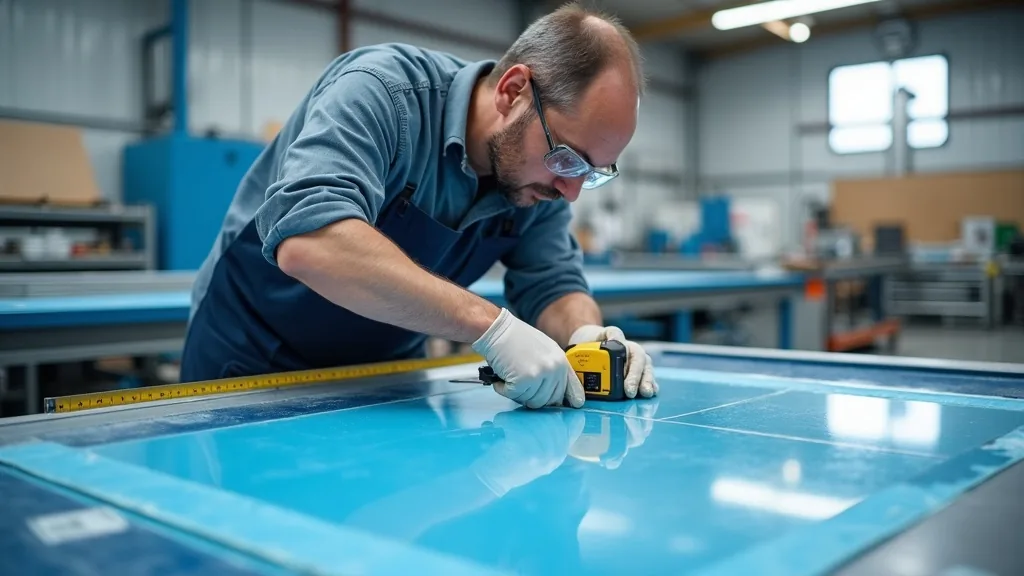 Cut-to-size service at the counter is one of the clearest signs of a full-service acrylic supplier.
Local plastics distributors: Best when you need to see the material, collect same-day, or get cut-to-size service in person. Availability varies by city, so check a regional guide first. We cover where to buy plexiglass in Toronto in detail, and our plexiglass near me guide explains how to vet a local supplier wherever you are in the country.
Online sheet suppliers: Convenient for standard clear and colored stock shipped to your door. The trade-off is buying without handling the material first, so specification transparency matters more than ever. Our where to buy clear acrylic sheets guide covers exactly what to confirm before ordering sight unseen.
Wholesale and B2B supply: Sign shops, fabricators, and contractors buying by the pallet get the best per-sheet pricing through a wholesale relationship rather than one-off retail orders. See our acrylic sheet wholesale guide for how bulk pricing and single-lot consistency work. In the GTA specifically, our Toronto plexiglass wholesale guide breaks down the three B2B pricing tiers and freight.
Manufacturers and specialty importers: Worth it only for very large ongoing volume or non-standard grades, and usually with long lead times and high minimums.
For most Canadian buyers, a full-service distributor that stocks both cast and extruded, tells you exactly what you're getting, and offers cut-to-size is the right home. FIDAR System ships from Toronto across Ontario same-week and freights Canada-wide, so you can buy acrylic sheets online or collect in person.
Prefer to talk it through? Call us at +1 (416) 857-7555 for real answers from the warehouse floor.
Shipping and Lead Times Across Canada
Acrylic is light for its size, which keeps freight reasonable, but sheets are large and scratch-prone, so how they ship matters as much as what they cost.
Pickup and local delivery: If you're near the supplier, warehouse pickup is the fastest and cheapest route and lets you inspect the material before it leaves the dock. FIDAR System offers pickup from North York, Ontario, and same-week shipping across the province for in-stock items.
Freight across Canada: For buyers outside Ontario, acrylic ships by LTL freight on skids. Full sheets travel flat and masked to protect the surface, and larger or thicker orders are crated. Because acrylic weighs about half what glass does, freight on a given panel size is markedly lower, which is a real part of the total-cost advantage over glass on any shipped order.
Lead times: Standard stock (clear cast and extruded, common thicknesses, white and black) usually ships within the week. Special colours, non-stock thicknesses, and imported grades run longer, so build that into production schedules. A supplier that carries real inventory is the difference between a predictable timeline and a string of "special order" delays.
Buying in Quantity: What Changes
For commercial and production buyers (sign shops, fabricators, contractors) buying in quantity changes the economics significantly.
Volume pricing: Most suppliers discount meaningfully at full pallet quantities (typically 20-40 sheets, depending on format). The discount varies by supplier but is typically 10-20% below retail pricing.
Consistent material: Ordering in large batches from a single lot ensures consistent properties across your production run. This matters for color-matched applications and laser cutting parameter consistency.
Sheet waste: Specify the smallest standard sheet size that accommodates your largest component. Unnecessary sheet area is paid-for waste.
Cut-to-size: For high-volume orders with consistent dimensions, having the supplier cut to your specifications often makes economic sense even with the service fee, because it eliminates in-house cutting labour and material waste.
TORONTO: Unit 29, 601 Magnetic Drive, North York, ON, M3J 3J2 Phone: +1 (416) 857-7555 Sales: +1 (416) 726-2428 Email: info@fidarsystem.com
The Bottom Line
Buying acrylic sheets in Canada well comes down to a short sequence: confirm acrylic is the right material over polycarbonate or PVC, choose cast or extruded for your application, specify the grade and UV rating in writing, size the thickness to the span, and order cut-to-size from a supplier who tells you exactly what you're getting. Get those five right and you'll buy the correct sheet at a fair price the first time, whether you need a single panel or a pallet.
For most buyers, the practical answer to where to buy acrylic sheets in Canada is a full-service distributor that stocks both cast and extruded, offers cut-to-size, and ships nationwide. FIDAR System does all three from North York, Ontario, with real 2026 pricing on the product pages and someone on the warehouse floor who can talk through your application before you order.
Related Resources
Dig deeper by topic:
- 4x8 Acrylic Sheet Sizes & Thickness: stock formats, the imperial-to-metric gauge traps, and real per-sheet and per-square-foot pricing
- Acrylic vs. Polycarbonate Sheets in Canada: when polycarbonate is the better choice
- Polycarbonate Sheets Canada: Complete Guide: if polycarbonate is the right call, this covers everything from grades to installation
- Where to Buy Clear Acrylic Sheets: sourcing options across Canada by application
- Where to Buy Plexiglass in Toronto: Toronto-specific supplier guide
- Acrylic Sheet Wholesale, Canada: bulk pricing and wholesale supply relationships
- How to Choose the Best Plexiglass Distributor in Canada: supplier evaluation criteria for commercial buyers
- Top Uses for Plexiglass Sheets in Canada: applications to inform your material purchase
- Laser Cut Acrylic Sheets, DIY & Commercial Guide: fabrication guide for buyers who process their own sheet
Industry references:
- Chemistry Industry Association of Canada: the national body representing Canada's chemistry and plastics sector, with industry data and standards
- ACRYLITE® by POLYVANTIS: manufacturer technical data sheets, fabrication manuals, and grade specifications for cast and extruded acrylic
Frequently Asked Questions
Written by
Red Seal Fabricator · 15 yrs hands-on experience
James is a Red Seal certified fabricator with 15 years of practical experience cutting, shaping, and installing acrylic, PVC, and composite panels. He writes practical, tool-in-hand guides for sign shops, fabricators, and serious DIYers who want real answers from the shop floor.
Reader Reviews
Loading reviews…