

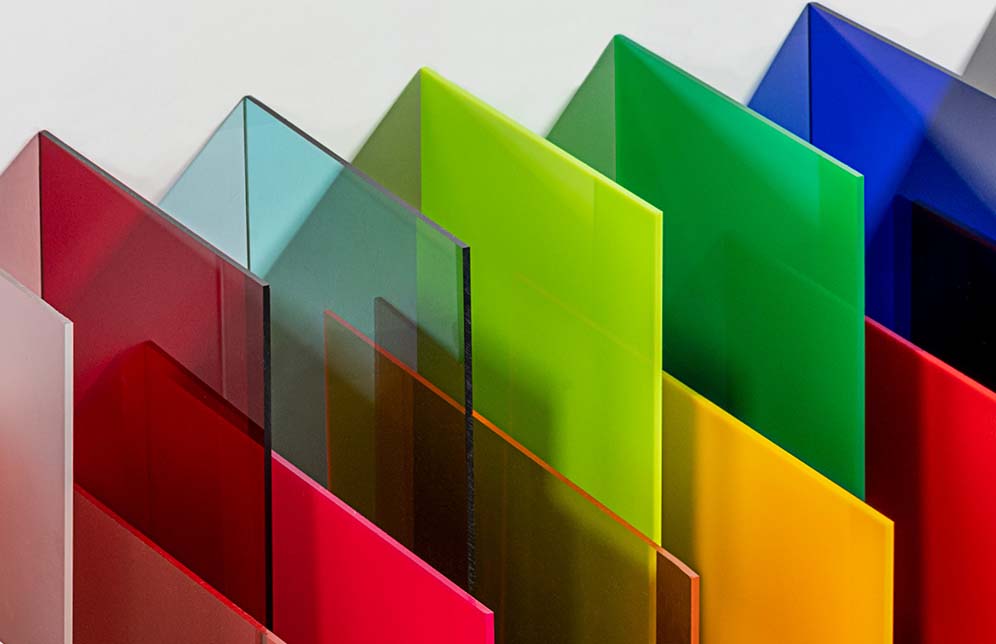
Plexiglass (more formally known as acrylic sheet or PMMA, polymethyl methacrylate) has gone from a specialty industrial material to one of the most versatile building and design products available in Canada. Walk through any modern retail space, office renovation, or contemporary home, and you'll find it somewhere: as a partition, a display case, a backlit sign, a stair railing panel, or a custom piece of furniture. If you are pricing sheet rather than browsing ideas, our page on plexiglass sheets in Canada lists every clear gauge we stock with today's 4x8 prices.
The shift happened gradually, then all at once. Post-2020, demand for hygienic barriers pushed plexiglass into nearly every commercial space in the country, a pattern explored in our glass vs. plexiglass residential comparison. Once businesses got comfortable working with the material, they started discovering all its other applications. Today, Canadian fabricators, contractors, sign shops, and furniture makers use plexiglass in ways that would have seemed niche even five years ago.
This guide breaks down the major application categories, with practical guidance on thickness selection, Canadian climate considerations, and where to source material reliably.
Why Plexiglass Works So Well Across So Many Applications
Before diving into the applications, it helps to understand why plexiglass performs as well as it does across such a wide range of uses.
The core properties are: optical clarity (up to 92% light transmission, better than standard glass), lightweight structure (roughly half the weight of glass at equivalent thickness), impact resistance (5-17× stronger than glass depending on grade), and machinability (it can be cut, drilled, bent, bonded, laser engraved, and routed with standard tools).
For Canadian applications specifically, UV stability matters enormously. Standard extruded acrylic degrades under ultraviolet exposure: it yellows, becomes brittle, and eventually crazes. Cast acrylic with UV stabilizer packages, like Evonik PLEXIGLAS® GS, maintains its clarity and mechanical properties for decades outdoors. If you're specifying plexiglass for any exterior application in Canada (where UV index is significant even in northern latitudes during summer), UV-stabilized cast acrylic is the only correct choice.
Applications by Use Category
Construction: Windows, Skylights, and Structural Glazing
Clear plexiglass sheet has been used as a glass substitute in construction for decades, particularly in applications where glass's weight or fragility is a disadvantage. Skylights are the most common example: plexiglass allows significantly more design flexibility (curved domes, angled panels, unusual geometries) than glass, and the lighter weight simplifies structural calculations.
In Canada, skylights and polycarbonate/acrylic roof panels need to handle significant snow loads, and our guide to polycarbonate roof panels works through what that load actually weighs on a single panel. For rooftop or overhead glazing applications, we typically recommend 10-12 mm cast acrylic as a minimum for any span over 600 mm, with proper framing to distribute load. For industrial buildings, walk-on applications, or large-span skylights, engineering approval is required regardless of material thickness.
Greenhouse panels and solarium glazing are another strong application. Clear or lightly tinted plexiglass transmits the light spectrum plants need while providing meaningful insulation value (acrylic has a lower thermal conductivity than single-pane glass). Double-skin corrugated acrylic panels (common in greenhouse construction) provide even better insulation while keeping weight low. For a heated production house, where snow load and condensation matter as much as light, see our polycarbonate greenhouse panel guide.
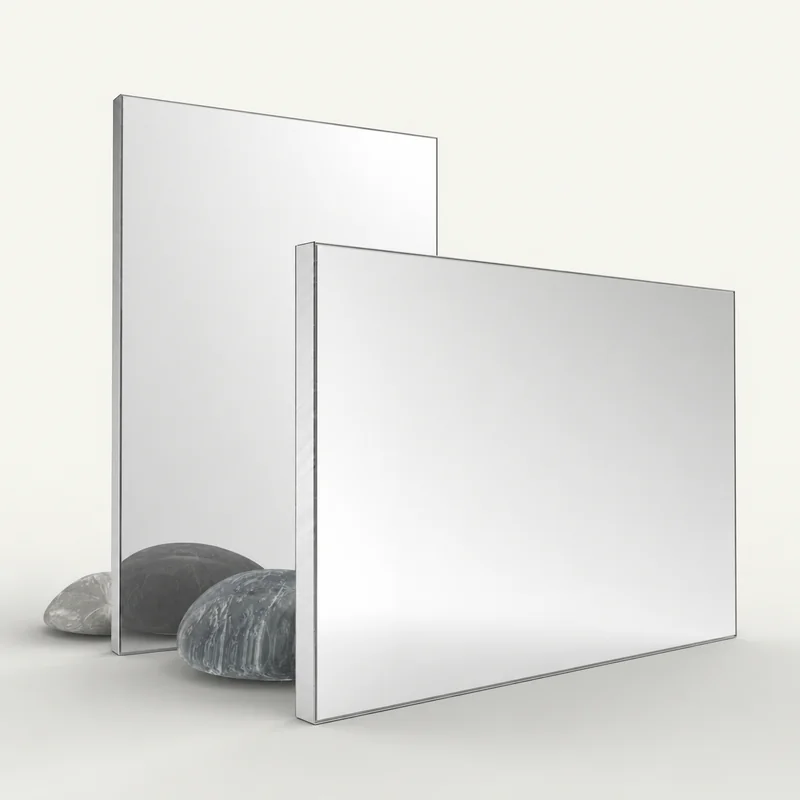
Protective Barriers and Partitions
This category grew explosively between 2020 and 2022 and has now settled into a permanent segment of the market. Office dividers, restaurant barriers, pharmacy sneeze guards, reception desk shields, and clinic partitions are now standard orders for commercial fabricators across Canada.
For standing barriers (floor-mounted), 6-8 mm is typically sufficient for most applications. For countertop sneeze guards (hanging or bracket-mounted), 4-6 mm works well. Anything mounted at height or covering a large span should step up to 8-10 mm for rigidity.
Clear acrylic barriers maintain a sense of openness that solid partitions eliminate: this is why they're so popular in open-plan offices that want acoustic and hygienic separation without losing the visual connection between spaces.
Retail Signage and Commercial Displays
Acrylic signage is the backbone of Canadian retail environments. Whether it's a laser-cut logo panel above a reception desk, a backlit menu board in a restaurant, or illuminated lettering on a storefront, plexiglass is almost always the primary material.
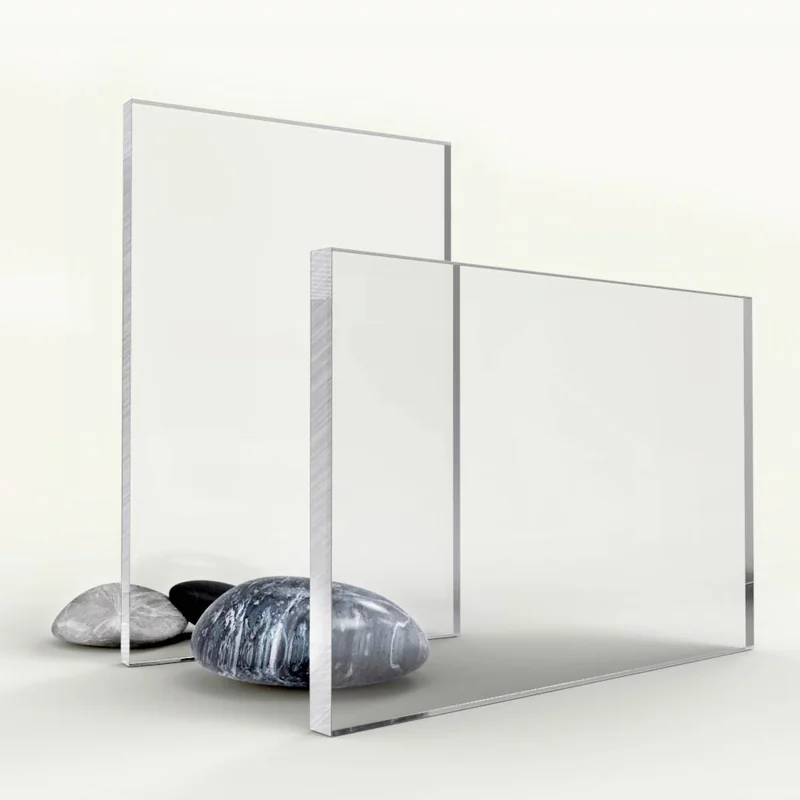
The reason is simple: acrylic edges transmit light beautifully. Install an LED strip along the edge of a clear acrylic panel and the entire edge glows uniformly: this "edge-lit" effect is used extensively in premium signage, trade show displays, and architectural features. You can't replicate this effect with any other sheet material at this price point.
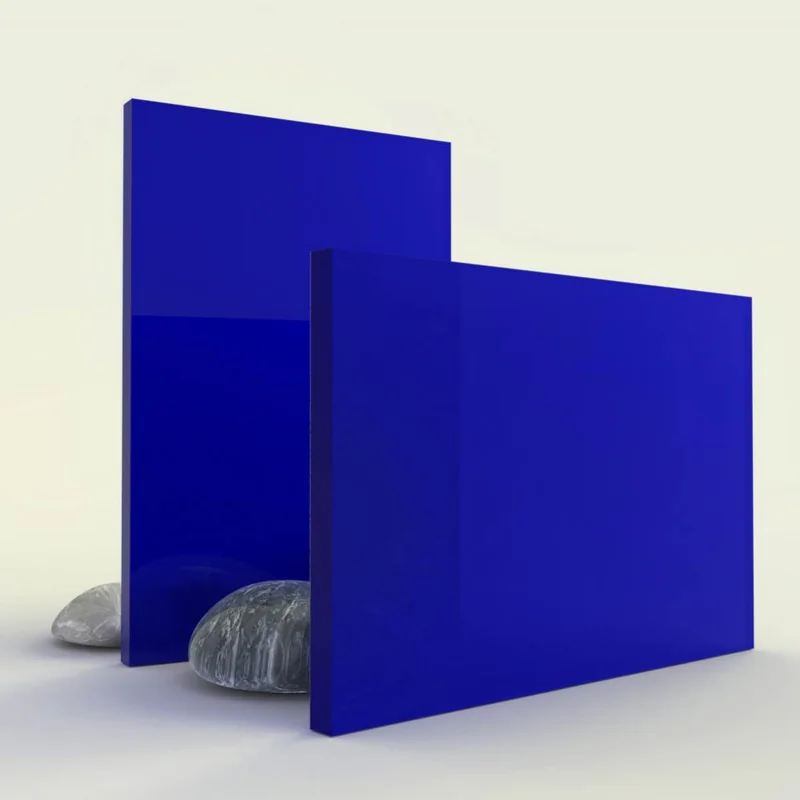
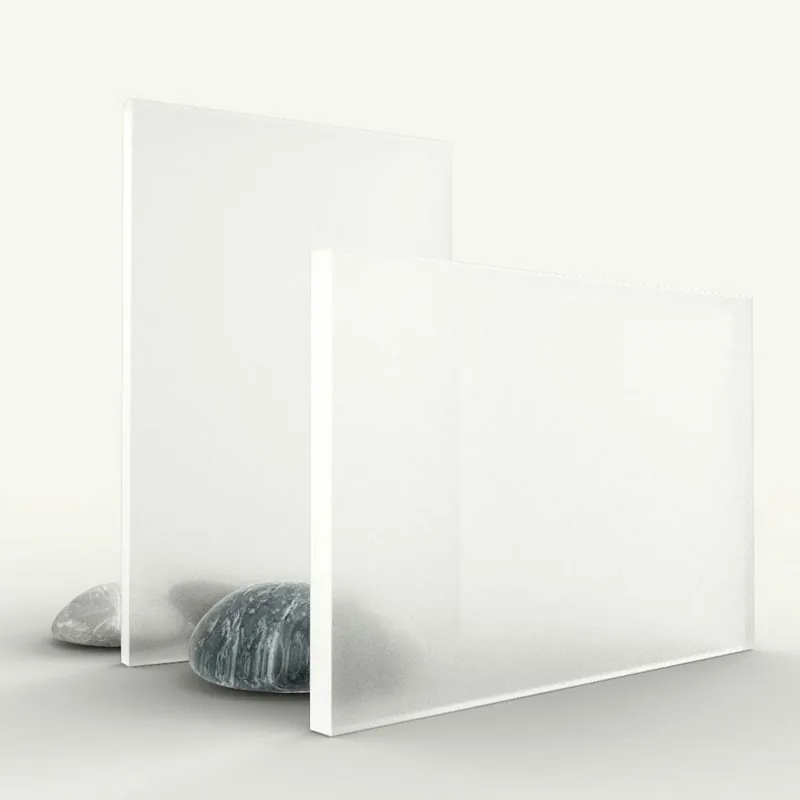
For backlit applications (signs with LEDs behind the panel), opal white acrylic (such as P95 or similar diffused grades) creates even illumination without hot spots. For cut-out lettering or decorative shapes, clear or colored cast acrylic is the standard choice.
Point-of-sale displays (product risers, brochure holders, showcase covers) represent a huge share of commercial acrylic usage. These applications typically use 2-5 mm clear or tinted acrylic, often in small-batch or custom quantities.
Exhibition and Trade Show Applications
Canadian trade shows, museum installations, and exhibition spaces rely heavily on acrylic for display cases, panel graphics, and three-dimensional branded environments. The material is lightweight enough to ship and set up repeatedly, clear enough to showcase products without visual obstruction, and durable enough to survive the handling of repeated exhibition cycles.
A well-fabricated acrylic display case made from 5-6 mm cast acrylic will outlast dozens of trade shows before showing any significant wear. Compare that to PETG or polystyrene display solutions, which scratch easily and degrade quickly.
Furniture and Interior Design
Acrylic furniture has moved well past the novelty phase into mainstream interior design. Clear acrylic chairs, coffee tables, console tables, and shelving appear in everything from upscale residential interiors to hospitality spaces, retail environments, and restaurant seating areas.
The appeal is obvious: acrylic provides structure and function while appearing visually weightless. A clear acrylic dining table in a small dining room takes up far less visual space than a solid wood or metal equivalent, making the room feel larger.
For furniture applications, thickness depends on span and load requirements. Coffee table tops typically use 8-12 mm for rigidity. Chair seats and backs: 8-10 mm. Shelving spans up to 600 mm: 6-8 mm, with metal or wood supports at edges. Anything over 600 mm span under significant load should go to 10 mm or thicker.
Outdoor Applications in the Canadian Climate
Outdoor plexiglass applications in Canada require specific material selection. The freeze-thaw cycles, extended UV exposure, and heavy snow or ice events in most Canadian provinces create conditions that will quickly expose the weakness of a poor-quality acrylic sheet.
UV-stabilized cast acrylic is the correct choice for any outdoor application. It won't yellow or become brittle over time. Untreated extruded acrylic will start showing UV degradation within 2-3 years outdoors, which is simply not acceptable for a commercial installation.
For outdoor signage, 6-10 mm cast acrylic handles Canadian weather conditions well. Mounting systems should account for thermal expansion: acrylic expands and contracts meaningfully with temperature changes, so oversized mounting holes with non-rigid fasteners are important.
Outdoor fencing inserts, privacy screens, and decorative panels are increasingly popular in residential construction. Colored or frosted acrylic panels in aluminum framing systems give a modern look while providing privacy and wind protection. How private a frosted panel really is depends on the gap between the panel and whatever sits behind it, not on the sheet alone.
Canadian Plexiglass Market Growth (2019-2025)
The 2020 spike reflects COVID-19-era barrier demand. The market has since stabilized at a significantly higher baseline as fabricators incorporated acrylic into standard product offerings.
Thickness Selection Guide
| Application | Minimum Thickness | Recommended |
|---|---|---|
| Small DIY decorative panels | 2 mm | 3 mm |
| Point-of-sale displays, risers | 3 mm | 4-5 mm |
| Signage panels, menu boards | 4 mm | 6 mm |
| Countertop sneeze guards | 4 mm | 6 mm |
| Office partitions, barriers | 6 mm | 8 mm |
| Furniture: tabletops, shelves | 8 mm | 10-12 mm |
| Skylights, overhead glazing | 10 mm | 12-16 mm |
| Heavy outdoor structural panels | 12 mm | 16-25 mm |
Installation and Fabrication Tips
Allow for thermal movement. Acrylic expands approximately 0.07 mm per metre per degree Celsius. For a 2-metre sheet in Canadian climate conditions (seasonal range of 60°C between winter and summer), that's nearly 9 mm of movement. Your mounting system needs to accommodate this: don't rigidly clamp acrylic panels at all four corners.
Don't over-tighten fasteners. Acrylic is notch-sensitive and will crack from point loads if screws are over-tightened. Use rubber or neoprene washers, and fasten just enough to hold the panel: not so tight that it bites into the surface.
Clean with the right products. Never use Windex or other ammonia-based cleaners on acrylic: they cause crazing (fine surface cracks) over time. Use mild soap and water, or a dedicated acrylic cleaner, with a soft microfiber cloth.
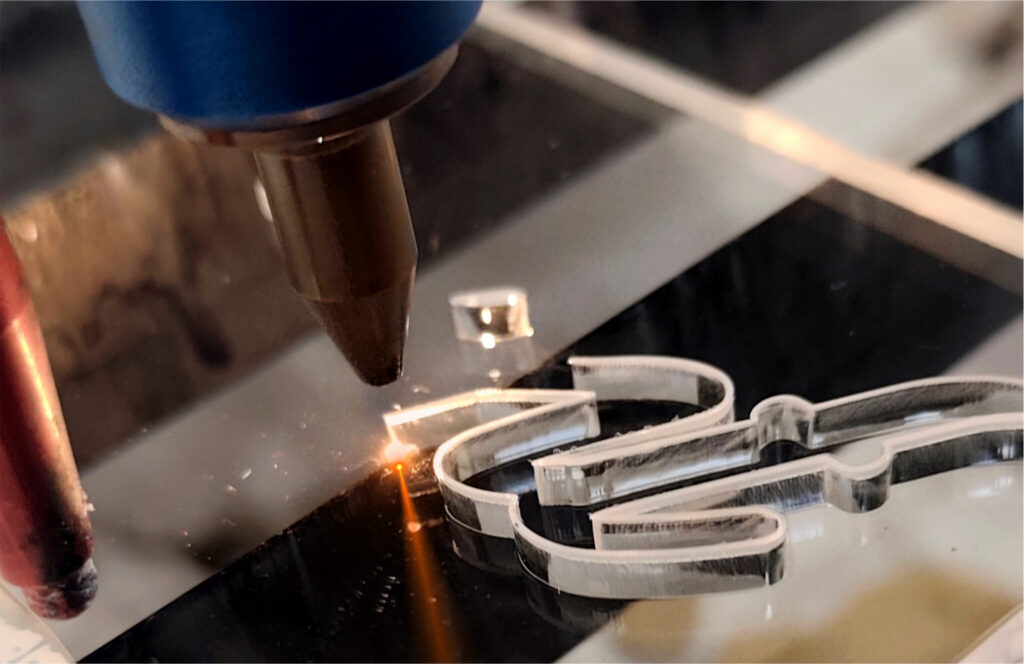
Use the right cutting tools. A sharp carbide-tipped blade in a table saw gives clean edges on straight cuts. A laser cutter gives the cleanest result for complex shapes. A router with a straight acrylic-specific bit works well for trimming and profiling edges.
Where to Source Quality Plexiglass in Canada
Not all acrylic sheets are the same. Sheets sourced from discount importers often have inconsistent thickness, poor UV stability, and higher levels of internal stress: which leads to cracking under fabrication or after installation.
At FIDAR System, we stock cast and extruded acrylic sheets in Toronto with Canada-wide shipping, including Evonik PLEXIGLAS® grades for demanding applications. We sell by the sheet or in pallet quantities for production use, and can provide cut-to-size services for customers without in-house fabrication equipment.
TORONTO Unit 29, 601 Magnetic Drive, North York, ON, M3J 3J2
Phone: +1 (416) 857-7555 Sales: +1 (416) 726-2428 Email: info@fidarsystem.com
Related Resources
Explore by application category:
- Complete Guide to Buying Acrylic Sheets in Canada: specifications, cast vs extruded, pricing, and supplier selection
- Polycarbonate Sheets Canada: Complete Guide: when the application needs impact resistance acrylic cannot provide
- Laser Cut Acrylic Sheets: Canada DIY & Commercial Guide: fabrication techniques for signage and display applications
- Acrylic in Architecture and Art: architectural and design applications in depth
- Glass vs. Plexiglass for Residential Use: residential glazing comparison for homeowners and contractors
- Lighting with Acrylic Sheets: LED edge-lighting, diffusers, and illuminated signage
- Interactive Light Art with Acrylic Sheets: sound-reactive installations and interactive commercial features
- Making Money with Modular Interior Design: commercial fabrication opportunities for Canadian entrepreneurs
- Clear Acrylic for Boat Windows: marine glazing applications and DIY replacement guide
- PMMA for Aviation: aircraft windows, canopies, and aviation-grade specifications
Industry references:
- Plastics Europe: European plastics industry market data, sustainability reports, and material lifecycle information
- Statistics Canada: Canadian construction and manufacturing activity data used throughout this article
Frequently Asked Questions
Written by
B.Sc. Materials Engineering · 12 yrs industry experience
Sarah brings over 12 years of hands-on experience in Canada's plastics and composites industry. She specializes in material selection, industrial-grade specifications, and supply chain optimization for manufacturers, fabricators, and distributors across the country.
Reader Reviews
Loading reviews…