

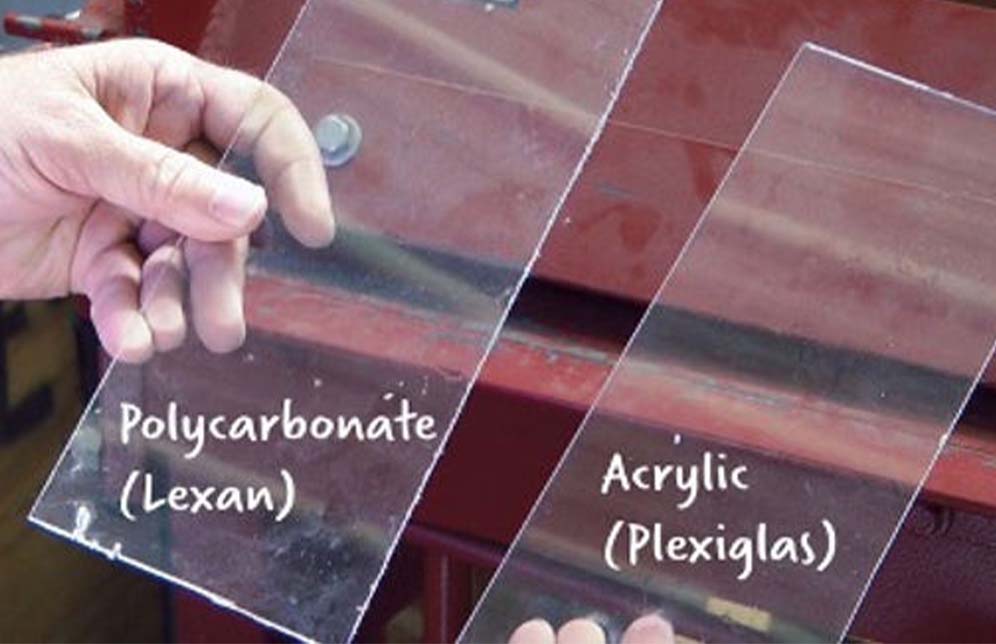
If you have ever priced transparent plastic panels in Canada, you have met the acrylic versus polycarbonate question. Both are clear, both are light, and both beat glass on impact. The gap between them is wide enough to matter. Pick the wrong one and you get a poor install, an early failure, or a bill you did not need to pay.
This guide is a working comparison, not a spec table, so you can make the right call for your own job. New to acrylic? Start with our complete guide to buying acrylic sheets in Canada. Already set on polycarbonate? Our polycarbonate sheets Canada complete guide covers grades, thickness, real pricing, and install. We handle both materials every day at our North York warehouse. Fabricators, contractors, and business owners ask us the same handful of questions, and they all come back to the same trade-offs.
The Core Difference: Clarity vs. Toughness
The fundamental trade-off between acrylic and polycarbonate is optical clarity versus impact resistance.
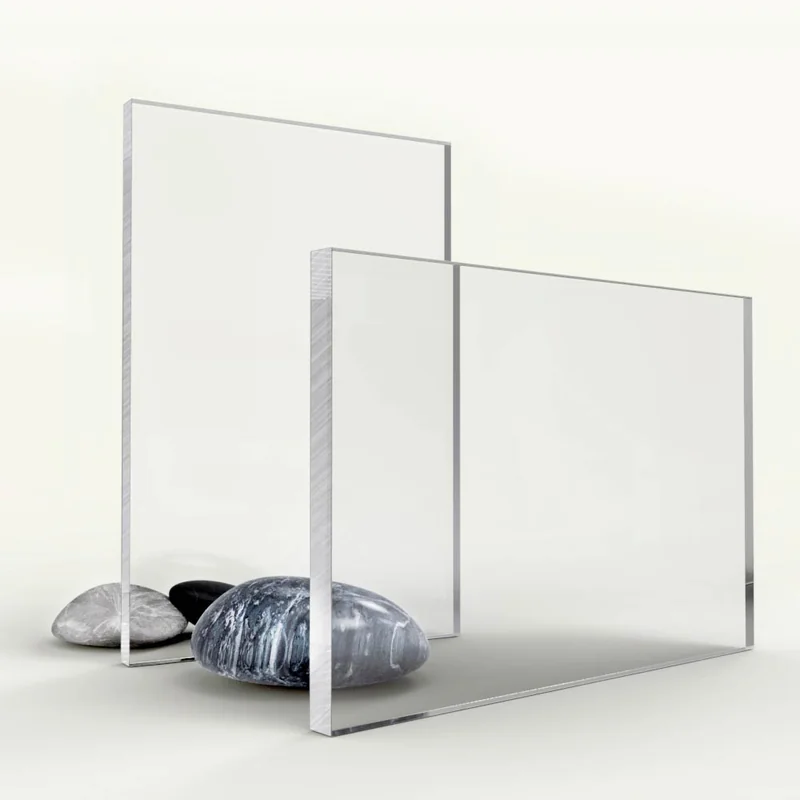
Acrylic, or PMMA, passes up to 92% of visible light. That beats window glass and it visibly beats polycarbonate. This is not a spec-sheet detail you have to take on faith. Put the two side by side and acrylic looks like glass while polycarbonate looks faintly hazy or yellow.
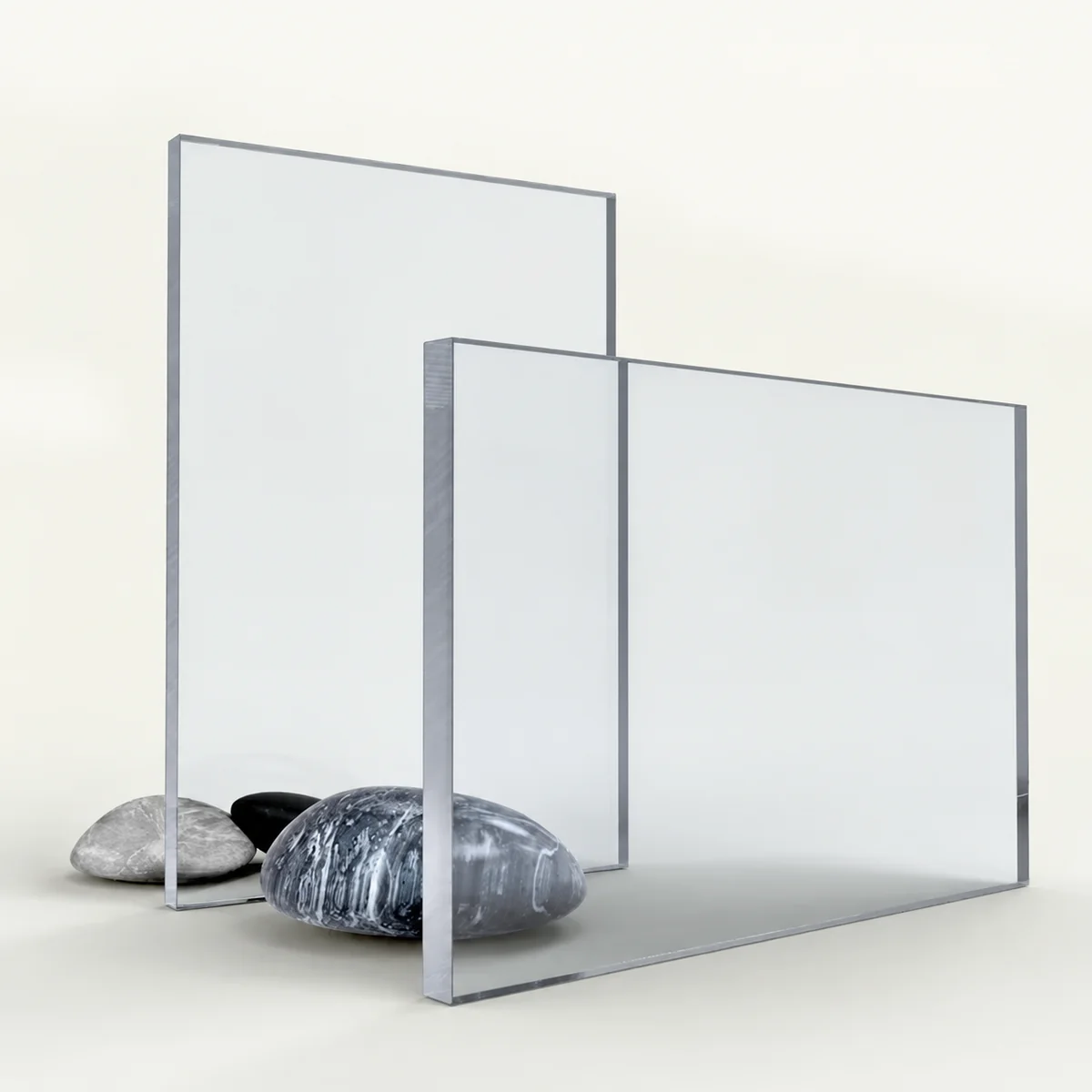
Polycarbonate goes by the brand name Lexan, and our Lexan sheets in Canada guide explains the naming. In practice it does not break. Hit it with a hammer and it dents. Its impact resistance is rated at 250 times that of glass and roughly 30 times that of acrylic. Where something really might strike the panel, polycarbonate is the one that protects. Think security glazing, machine guards, and skylights someone could step on.
Neither material is better outright. The question is which properties your job actually needs.
Detailed Property Comparison
| Property | Acrylic (PMMA) | Polycarbonate (PC) |
|---|---|---|
| Light transmission | 92% | 87-89% |
| Impact resistance | 5-17× glass | 250× glass |
| Tensile strength | ~70 MPa | ~60 MPa |
| Flexibility | Rigid (brittle under impact) | Highly flexible |
| UV resistance | Excellent (UV-stabilized grades) | Moderate (requires UV coating) |
| Scratch resistance | Better | Poorer (scratches easily) |
| Max service temp | ~80°C | ~120°C |
| DIY workability | Excellent | Good (requires sharper blades) |
| Cost (relative) | Lower | 20-40% higher |
| Optical clarity | Superior | Good |
| Weight | Lower | Slightly higher |
| Chemical resistance | Good | Poor (many solvents attack PC) |
When to Use Acrylic in Canada
Retail signage and displays: Acrylic is the default wherever clarity matters. Backlit signs, edge-lit displays, lit logo panels, and display cases all gain from its light transmission. Polycarbonate does not compete on optics. For flat printed signage, the cheaper substrate is often PVC foam board, as our PVC foam board vs acrylic sheets for signs guide explains.
Indoor barriers and partitions: Sneeze guards, office dividers, and reception shields suit acrylic, as long as nobody is going to hit them on purpose. Acrylic is stiffer than polycarbonate, so a large panel stays flat instead of bowing. Where the panel also has to obscure, price frosted P95 acrylic. At a quarter inch a sheet of it costs $102.98 less than a sheet of frosted polycarbonate.
Furniture and decorative work: Clear acrylic tables, shelves, and architectural pieces read as glass. Polycarbonate has a faintly plastic look that design work notices.
Laser cutting and precision fabrication: Acrylic laser cuts far better than polycarbonate, cast grades most of all. The laser leaves a flame-polished edge that is optically clear. Polycarbonate leaves a rough, discoloured edge, and it gives off more harmful fumes under the beam.
Outdoor UV-exposed work: UV-stabilized cast acrylic keeps its clarity outdoors for 15 years and more. Polycarbonate with no UV coating yellows badly within 2 to 3 years. Even coated, it ages more visibly than good UV-stabilized acrylic over a decade.


When to Use Polycarbonate in Canada
High-impact environments: Machine guards, security windows, sports glazing, and anywhere a panel might be struck by an object or a person. Acrylic shatters under a hard enough hit. Polycarbonate bends and stays whole.
Overhead and skylight work with load concerns: Polycarbonate is the usual pick for greenhouse and skylight panels. It soaks up hail, falling debris, and the odd misplaced boot without failing outright. Cast acrylic still gets specified for premium skylights. For commercial greenhouses and farm structures, polycarbonate is more forgiving. Our guide to polycarbonate roof panels in Canada works through solid, multiwall, and corrugated, and shows how snow load sets the thickness.
Cold weather flexibility: Polycarbonate keeps its impact resistance down to -40°C. Acrylic gets more brittle in deep cold. Not unusably so, but worth weighing for work in northern Canada.
High-temperature work: Polycarbonate serves to around 120°C, against 80°C for acrylic. Near a heat source, that gap decides it. Machine guards around hot equipment and covers over light fixtures both belong to polycarbonate.
Ballistic and security work: Bullet-resistant and blast-resistant glazing is built on polycarbonate. No grade of acrylic comes close here.
How Canadian Applications Break Down
The pattern matches what Canadian fabrication suppliers actually sell. Acrylic owns the visual and design work. Polycarbonate takes over the moment impact is the deciding factor.
What the Price Gap Looks Like Today
The gap between the two depends heavily on thickness, more than most buyers expect. At our prices a 4x8 sheet of 6 mm clear extruded acrylic is $158.08, and the same sheet in polycarbonate is $203.95. At 4.5 mm the gap nearly closes: a polycarbonate sheet costs $6.27 more than the acrylic one. Our polycarbonate sheet price guide charts the gap at every thickness we stock, live from our catalogue, along with what cutting, delivery and tax add.
Fabrication and Cutting Differences
Acrylic cutting: It takes a laser beautifully, and cast grades come off with a flame-polished edge. It also handles a table saw, a router, and score-and-snap on thin sheet. The material cuts clean and does what you expect.
Polycarbonate cutting: Use a sharp, high-tooth-count blade or it melts and chips. Score-and-snap will not work, because the sheet is too flexible. A laser can cut it, but the edge is poor and the fumes are worse. A fine-tooth jigsaw blade works, and so does a circular saw with plenty of teeth. Our guide to cutting polycarbonate sheets cleanly covers blade choice, feed rate, and edge finishing.
Drilling: Both take standard twist bits. Polycarbonate needs a slower speed and a lighter touch, or it cracks where the bit enters.
Bonding: Acrylic bonds with solvent cement such as Weld-On 3 or 4. The solvent fuses the two pieces at a molecular level, so a clear joint all but disappears. Polycarbonate needs different adhesives, and the joint never looks as clean.
Thermoforming: Both heat-form. Polycarbonate takes a wider temperature range and forgives uneven heating. Acrylic wants tighter control, and rewards it with a crisper shape.
Thickness Recommendations for Common Applications
| Application | Acrylic | Polycarbonate |
|---|---|---|
| Small signs, frames, displays | 2-5 mm | Not typical |
| Countertop barriers | 4-6 mm | 3-5 mm |
| Office partitions | 6-8 mm | 5-6 mm |
| Skylights (residential) | 10-16 mm | 6-10 mm |
| Machine guards | Not recommended | 5-10 mm |
| Security glazing | Not applicable | 12-38 mm |
The Budget Question
Where acrylic will do the job, it is nearly always the cheaper answer. At our prices a 4x8 sheet of 6 mm clear extruded acrylic is $158.08, and the same sheet in polycarbonate is $203.95. On a large job that gap adds up fast.
Do not buy polycarbonate "just to be safe" when acrylic is up to the job. You are paying for impact strength you will never use. The reverse is worse. Do not save money on acrylic where polycarbonate is what safety or code actually calls for.
Where to Buy Both Materials in Canada
FIDAR System stocks acrylic, both cast and extruded, and polycarbonate sheet in Toronto, with shipping across Canada. We will help you pick the grade and thickness your job needs, and we cut both materials to size.
TORONTO: Unit 29, 601 Magnetic Drive, North York, ON, M3J 3J2 Phone: +1 (416) 857-7555 Sales: +1 (416) 726-2428 Email: info@fidarsystem.com
Related Resources
Further reading from FIDAR System:
- Polycarbonate Sheets Canada: Complete Guide: grades, thickness selection, real CAD pricing, fabrication, and installation guide
- Complete Guide to Buying Acrylic Sheets in Canada: comprehensive specifications, pricing, and supplier guidance
- Top Uses for Plexiglass Sheets in Canada: application overview across construction, signage, and design
- Acrylic gauge and format guide: thickness by application, plus what a full 4x8 sheet costs in each gauge
- Honeycomb Composite Panels in Canada: when neither solid acrylic nor polycarbonate is stiff enough per kilogram for a large span
- Glass vs. Plexiglass for Residential Applications: a complementary material comparison for home projects
- PMMA for Aviation: why aviation specifies acrylic over polycarbonate for optical-critical applications
Standards and technical references:
- ASTM International: ASTM D4802 (acrylic sheet) and ASTM D3935 (polycarbonate sheet) material specifications
- Plastics Industry Association: North American plastics industry data, market reports, and material resources
Frequently Asked Questions
Written by
B.Sc. Materials Engineering · 12 yrs industry experience
Sarah brings over 12 years of hands-on experience in Canada's plastics and composites industry. She specializes in material selection, industrial-grade specifications, and supply chain optimization for manufacturers, fabricators, and distributors across the country.
Reader Reviews
Loading reviews…