

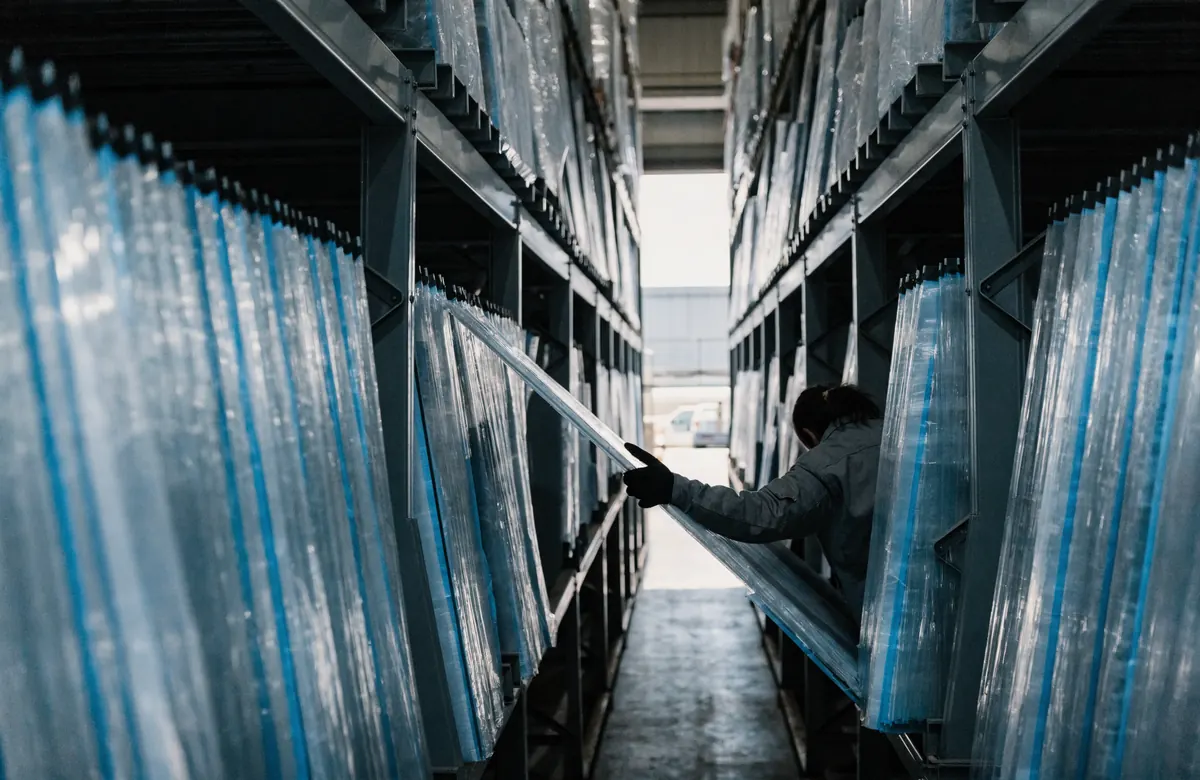
Most sizing questions we take at our North York warehouse are really one question wearing a disguise. Somebody has a job, has settled on acrylic, and now has to turn that into a line on a purchase order. So this guide is built the way the order gets written, one field at a time. Here is the line a typical sign shop sends us for a run of counter guards, with a 4x8 acrylic sheet at the centre of it, and the rest of the article works through where each entry comes from and what it costs to get wrong.
| Order field | Entry | Section |
|---|---|---|
| Format | 4x8 ft, 48″ × 96″, 32 sq ft | Line 1 |
| Gauge | 5.5 mm, the sheet sold as 1/4 in | Line 2 |
| Grade | Cast clear | Line 3 |
| Quantity | 25 sheets, one pallet, 486 kg | Line 4 |
| Cut | Cut to size, 8 up at 18″ × 30″ | Line 5 |
| Price | $160.57 per sheet, $5.02 per sq ft | Line 4 |
For the wider purchasing picture behind these fields, grades and supplier selection included, our complete guide to buying acrylic sheets in Canada is the pillar this sits under.
Line 1: The Format, and Why the 4x8 Acrylic Sheet Won
A 4x8 acrylic sheet is 48 inches by 96 inches, which is 1219 by 2438 mm and 32 square feet of material. The same product gets written as an acrylic sheet 8x4, as 48 x 96, or in metric as 1220 x 2440. All four name one sheet. Clear acrylic has no grain direction and no face-up convention, so the order the dimensions are written in tells you nothing about what arrives.
The format dominates for mechanical reasons rather than habit. It clears the bed on most 4x8 CNC routers and large-format lasers, it sits inside a standard 48 by 40 inch pallet with a manageable overhang, and every downstream fabrication table in a Canadian sign shop is already built around it.
| Format | Inches | Metric | Area | What we stock in it |
|---|---|---|---|---|
| 4x8 ft | 48″ × 96″ | 1219 × 2438 mm | 32 sq ft | Full range, 2 mm to 30 mm, every colour |
| 4x6 ft | 48″ × 72″ | 1219 × 1829 mm | 24 sq ft | Thin gauges only, 1.5 mm |
| 3x6 ft | 36″ × 72″ | 914 × 1829 mm | 18 sq ft | Thin gauges only, 1 mm and 1.5 mm |
We do not stock 4x10 ft or 5x10 ft acrylic, and we would rather say that than quote a lead time we cannot hold. Past 48 by 96 inches the panel has to be seamed, and on a sign face a joint down the middle is usually a worse answer than redesigning around a full sheet.
The two small formats exist for a narrow purpose: thin-gauge work like framing inserts, overlays and light protective covers, where a 4x8 sheet means paying for material that goes in the bin. They are not cheaper per square foot. The 1.5 mm 3x6 sheet is $2.67 per square foot and the 4x6 in the same gauge is $2.66, both above the $2.51 a full 4x8 costs at the next gauge up, because the cost of handling a sheet barely changes with its size.
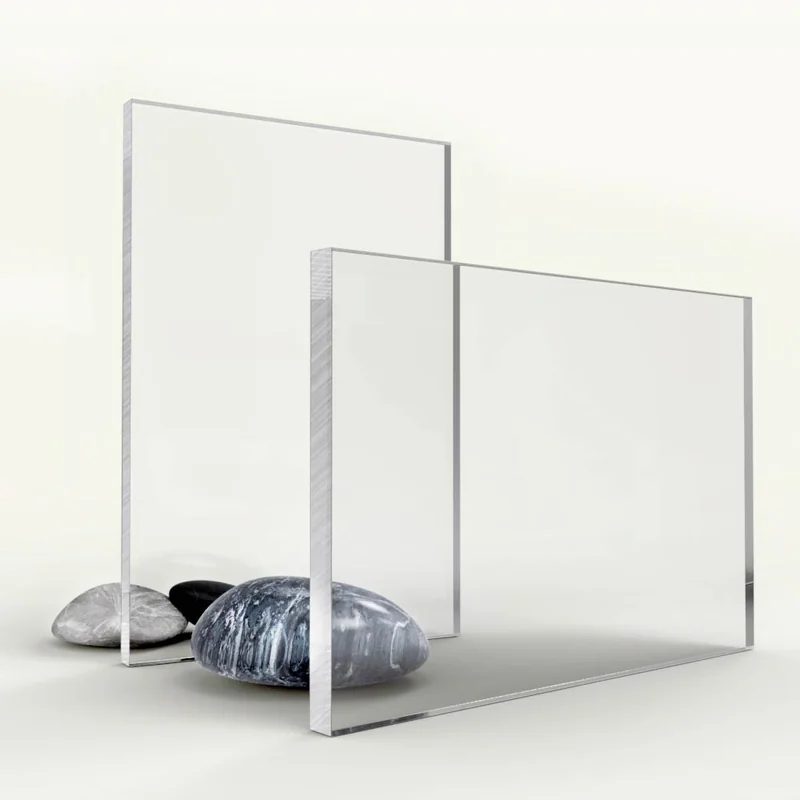
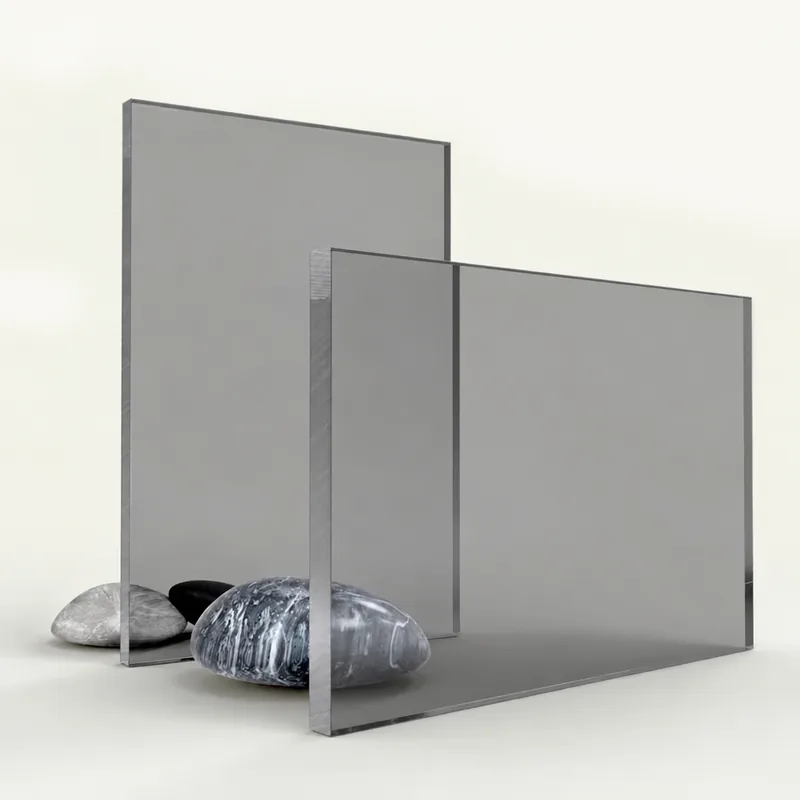
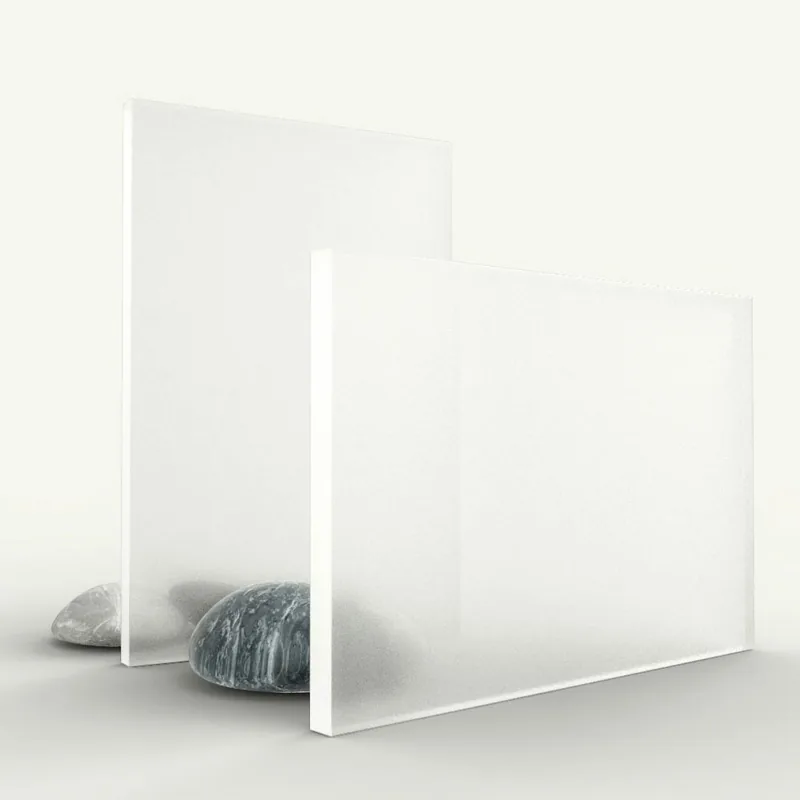
Line 2: The Gauge, Where 1/4 in Acrylic Sheet Stops Meaning 6.35 mm
This field costs more money than any other, and almost nobody checks it. The imperial gauge names the North American trade runs on are nominal labels, not measurements. A 1/4 in acrylic sheet is not 6.35 mm. In cast it is 5.5 mm, in extruded it is 6 mm, and neither is what the name says.
| Trade name | Cast, as stocked | Extruded, as stocked | True imperial |
|---|---|---|---|
| 1/8″ | 2.8 mm | 3 mm | 3.18 mm |
| 3/16″ | 4.3 mm | 4.5 mm | 4.76 mm |
| 1/4″ | 5.5 mm | 6 mm | 6.35 mm |
| 3/8″ | 9 mm | not stocked | 9.53 mm |
| 1/2″ | 12 mm | not stocked | 12.70 mm |
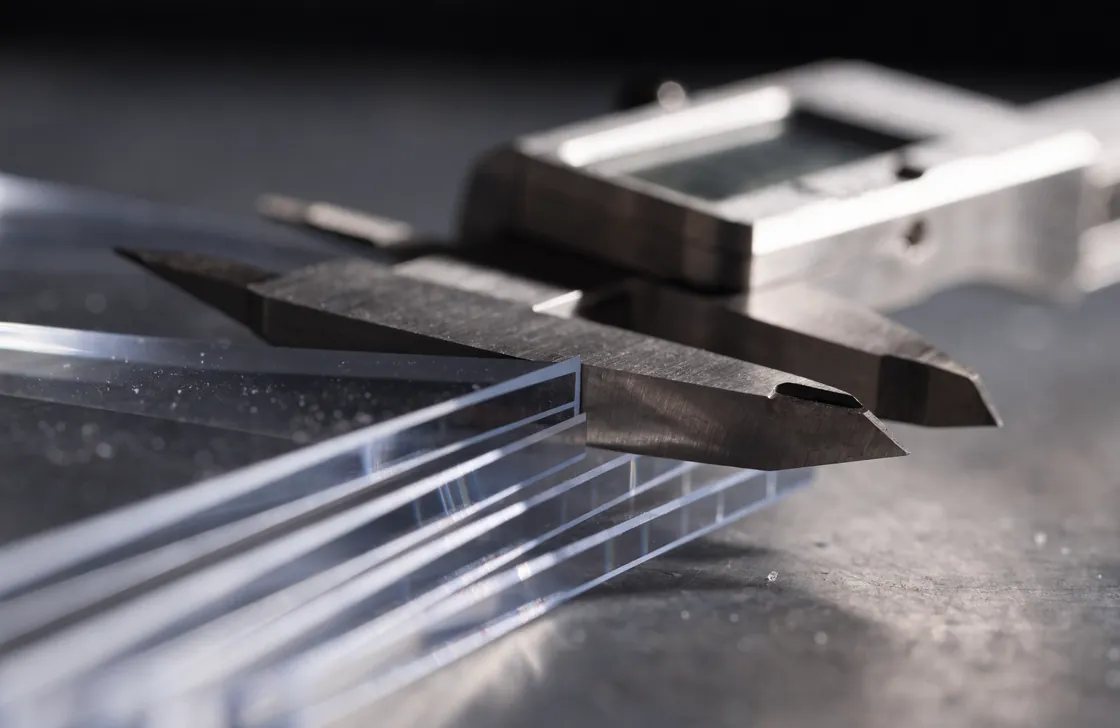 The gap between the name and the sheet is under a millimetre, which is exactly why it survives all the way to the machining stage.
The error surfaces late and always downstream. A shop that routes a 6.35 mm channel for a quarter inch panel and receives 5.5 mm cast has 0.85 mm of slop in every slot, which reads as a rattling face and a shadow line along the edge. A cabinet maker cutting a 6 mm dado for cast acrylic finishes half a millimetre loose on every joint. Neither is discovered until parts are already cut.
The fix costs nothing. Specify millimetres on drawings and purchase orders, treat the imperial name as conversational shorthand, and confirm the metric figure before machining anything that has to receive the sheet. Every gauge on our cast clear acrylic page carries both labels for this reason.
The metric figures are where the actual standards live. ISO 7823-1 covers cast PMMA sheet from 1.5 mm to 25 mm and sets the dimensional and thickness tolerances the trade works to, which is why our 1 mm and 30 mm cast sheets sit outside it at both ends. No equivalent standard recognises "quarter inch" as a thickness, because it is not one.
Gauge also decides stiffness, and stiffness does not scale the way price does. Panel rigidity goes with roughly the cube of thickness, so stepping 4.3 mm up to 5.5 mm costs 25 percent more material and returns close to double the resistance to bowing. That relationship is what makes the thickness table below worth following rather than eyeballing.
| Application | Minimum | Recommended |
|---|---|---|
| Picture frames, decorative overlays | 2 mm | 2.8 mm |
| Small display cases, POS risers | 2.8 mm | 4.3 mm |
| Menu boards, indoor sign faces | 4.3 mm | 5.5 mm |
| Counter guards and barriers | 4.3 mm | 5.5 mm |
| Freestanding office partitions | 5.5 mm | 9 mm |
| Shelving to 600 mm span | 5.5 mm | 9 mm |
| Furniture tabletops | 9 mm | 12 mm |
| Skylights and overhead glazing | 12 mm | 18 mm |
| Structural outdoor panels | 18 mm | 25 mm |
Line 3: The Grade, Where Extruded Stops Being the Cheap Option
Cast and extruded are both PMMA. Cast is poured between glass moulds and cured slowly, extruded is pushed through a die and cooled fast. The trade treats extruded as the budget grade, and at the top of the range that is true. It stops being true quickly.
The gap is $7.29 per sheet at 2 mm and then a flat $2.49 at the three heavier comparable gauges. It does not widen as the sheet gets heavier, so as a percentage the extruded discount collapses: 11.8 percent at 2 mm, 1.6 percent at quarter inch. At the top two pairs the extruded sheet is also physically thicker, 4.5 mm against 4.3 mm and 6 mm against 5.5 mm, so the cheaper sheet is carrying more material.
The two grades are standardised separately, which is a fair signal that they are not interchangeable: cast falls under ISO 7823-1, while ISO 7823-2 covers extruded sheet and stops at 20 mm rather than 25 mm, matching the thinner range the process is suited to.
That reframes the decision. Extruded is not a saving worth designing around. Choose cast when you are laser cutting, engraving or thermoforming, because cast has a 95°C heat deflection point against 80°C, and lasers to a flame-polished edge that needs no second operation. Choose extruded for flat glazing and general panels where none of those matter. Our laser cutting guide for acrylic covers how far the grade changes the settings.
Line 4: The Quantity, Priced Per Sheet, Per Square Foot and Per Pallet
Sheet price alone says very little, because a 30 mm sheet is not expensive relative to a 2 mm sheet, it is fifteen times the material. These are our current list prices for cast clear in the 4x8 format, with the rate per square foot and the finished sheet weight beside them.
| Gauge | Per sheet | Per sq ft | Sheet weight |
|---|---|---|---|
| 2 mm | $61.97 | $1.94 | 7.1 kg (16 lb) |
| 2.8 mm (~1/8″) | $80.27 | $2.51 | 9.9 kg (22 lb) |
| 4.3 mm (~3/16″) | $128.67 | $4.02 | 15.2 kg (34 lb) |
| 5.5 mm (~1/4″) | $160.57 | $5.02 | 19.5 kg (43 lb) |
| 9 mm (~3/8″) | $249.67 | $7.80 | 31.8 kg (70 lb) |
| 12 mm (~1/2″) | $334.37 | $10.45 | 42.5 kg (94 lb) |
| 18 mm (~3/4″) | $550.97 | $17.22 | 63.7 kg (140 lb) |
| 20 mm (~3/4″) | $614.97 | $19.22 | 70.8 kg (156 lb) |
| 25 mm (~1″) | $759.97 | $23.75 | 88.4 kg (195 lb) |
| 30 mm (~1.2″) | $1047.97 | $32.75 | 106.1 kg (234 lb) |
Divide each rate by its thickness and a pattern appears that is worth knowing before you argue about price. From 2 mm through 25 mm every gauge sits between $0.87 and $0.97 per square foot for each millimetre of thickness. Acrylic is priced almost purely on volume of material, and only the 30 mm sheet breaks the band at $1.09. There is no gauge that is quietly better value than its neighbours, which means the only rule that saves money is to specify the thinnest sheet that meets the stiffness requirement.
Weight matters on this line too, because it decides the freight and the handling at both ends. A pallet of 25 sheets of 5.5 mm is 486 kg of acrylic before the pallet itself. Forty sheets of 2.8 mm is 396 kg. Both ship comfortably. The same sheet count in 18 mm would not, and that is cheaper to discover here than at the dock. Weight is also what decides whether a sheet is worth shipping across the country at all, which our plexiglass Vancouver guide works through gauge by gauge for buyers in BC.
Pricing a job on 4x8 sheets?
Send the gauge, the quantity and the cut list. We price the sheets, the cutting and the freight together from our North York warehouse.
The three tiers on the same sheet
List price is what one sheet costs. Trade buyers move through three tiers on identical material, and at production volume the difference is not marginal.
| Gauge, 4x8 cast clear | List | Commercial account | Volume / pallet |
|---|---|---|---|
| 2.8 mm | $80.27 | $64 to $72 | $52 to $64 |
| 4.3 mm | $128.67 | $103 to $116 | $84 to $103 |
| 5.5 mm | $160.57 | $128 to $145 | $104 to $128 |
| 9 mm | $249.67 | $200 to $225 | $162 to $200 |
| 12 mm | $334.37 | $267 to $301 | $217 to $267 |
List figures are current FIDAR prices. The commercial and volume columns apply the standard 10 to 20 percent and 20 to 35 percent trade bands to those prices and stay indicative until quoted against a real mix.
A shop ordering 25 sheets of 5.5 mm cast clear pays $4,014 at list. The same pallet at volume pricing lands between $2,609 and $3,211, so the tier is worth $803 to $1,405 on one order. There is no formal minimum for commercial pricing beyond a verified business account, full volume pricing starts at pallet quantities of roughly 20 to 40 sheets depending on gauge, and NET-30 is available on established accounts. Our Toronto wholesale plexiglass guide sets out how the tiers are earned, and the wholesale near me guide covers the same ground for accounts outside the GTA.
Line 5: The Cut, Where the Sheet Turns Into Parts
The last field is the one that decides what the material actually cost you, because yield is set by the part list, not the sheet price. Take the counter guard job at the top: 18 by 30 inch panels out of a 48 by 96 inch sheet.
96 in x 48 in stock sheet, drawn to scale · 5.5 mm cast clear at $160.57 per sheet
Every part the same way up
Three columns of 30 in leave a 6 in strip, two rows of 18 in leave a 12 in strip. Both are dead.
Parts rotated individually
Five parts stood upright in a 30 in band, three laid flat in the 18 in band below. The offcut drops to one 6 in edge strip.
Part counts, area yield and cost per part are computed from the layouts drawn above. Sheet price is the FIDAR list price for 5.5 mm cast clear, 48 x 96 in, August 2026. Kerf is shown as the gap held between parts.
Six parts against eight, from the same sheet and the same part size. The material cost per panel falls from $26.76 to $20.07, and on a 200 panel run that difference is $1,338. Nothing changed except that parts were allowed to turn independently instead of all running the same way.
Three habits protect yield on a 4x8 acrylic sheet. Design part sizes that divide into 48 and 96 where the job allows, because a 12 by 24 inch part tiles the sheet exactly sixteen times with no offcut at all. Let parts rotate individually when nesting. And treat the saw or laser kerf as a gap held between parts rather than material added to each dimension, which is how our own nesting runs.
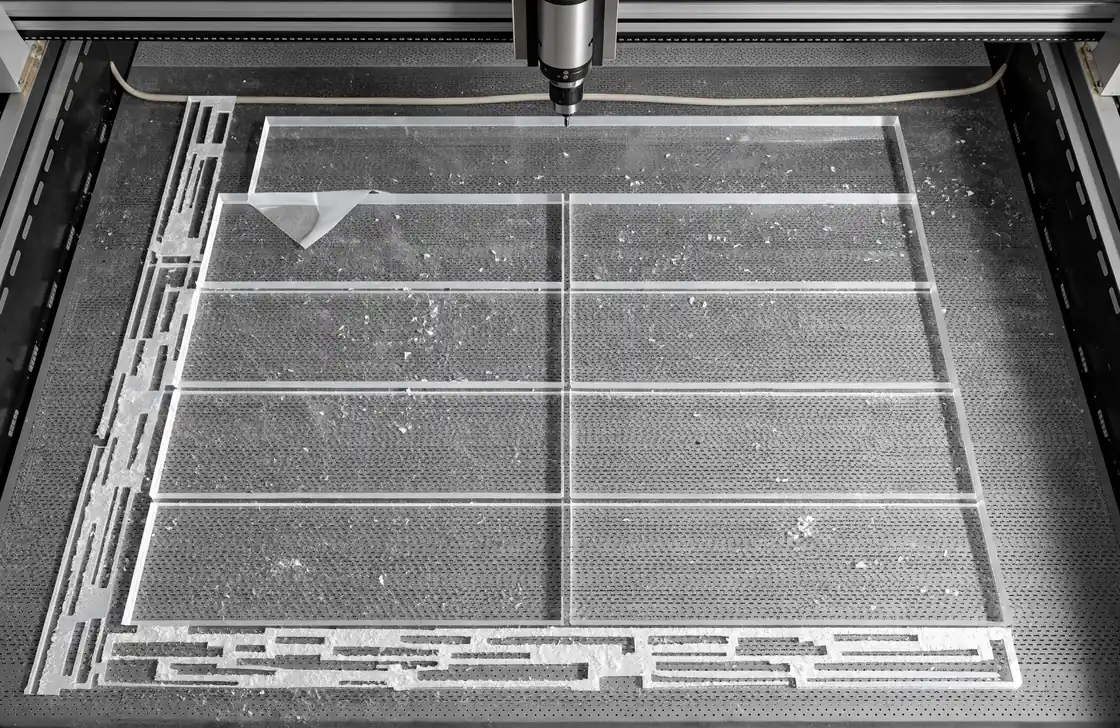 Eight panels out of one sheet, with the offcut reduced to skeleton strips along two edges.
Cutting full sheets in house is realistic with the right equipment and the floor space to handle 32 square feet of material. Score and snap works to about 4 mm on straight cuts. A table saw with a 60 to 80 tooth carbide blade handles every gauge we stock, masking film left on, slow feed on the thick sheets. A jigsaw or bandsaw takes curves. A CNC router needs single-flute O-flute tooling and the correct chip load, or the acrylic gums onto the cutter and welds itself back into the cut behind it.
What goes wrong is predictable. Feed too fast and the edge chips. Feed too slow and the material melts and re-fuses. Clamp too hard near an edge and cast acrylic crazes into fine surface cracks that only appear once the film comes off, by which point the panel is scrap. On a $160.57 sheet, one ruined cut costs more than having the whole sheet cut properly.
That is the honest case for our cut-to-size service: parts arrive at your dimensions, the offcut stays on our floor, and the cutting time comes off your schedule. For lettering, intricate profiles and anything needing a polished edge without a second operation, laser cutting on cast acrylic gets there in one pass. Send a part list to our quote request and we will price the sheets and the cutting together.
Need parts, not sheets? Call +1 (416) 857-7555 with your cut list for same-day cut-to-size pricing.
What the Order Line Does Not Capture
Four things sit outside the fields and still decide whether the job survives its first year.
UV stability outdoors. Unstabilized extruded acrylic yellows within two to three years of Ontario exposure. UV-stabilized cast holds clarity well past fifteen. For anything facing the sky this outranks gauge, and it is worth naming on the order, because ASTM D4802 separates UV-filtering sheet (Type UVF) from UV-transmitting sheet (Type UVT) as distinct grades. Ask for one and you can still be sent the other.
Thermal movement. Acrylic expands about 0.07 mm per metre per degree, so a 2.4 m sheet travels close to 9 mm across a 60 degree seasonal swing. Mounting holes go 5 mm oversize with non-rigid fasteners, or the panel cracks at the fixings in the first hard winter.
Support spacing. Horizontal panels sag under their own weight. Support every 600 to 900 mm depending on gauge, and expect large unsupported vertical sheets to bow in heat.
The material itself. If impact resistance rather than stiffness is driving the specification, no gauge on the table above is the right answer. Our acrylic versus polycarbonate comparison covers where the material changes instead, and the sign board material guide sorts every substrate we stock by the job it belongs on.
Setting up trade pricing?
Tell us the monthly gauge and colour mix and we will price commercial and pallet tiers, cut-to-size, and palletized delivery across Canada.
Get a free quoteColour and Finish on the 4x8 Sheet
Almost everything beyond clear cast is stocked in the 4x8 format only, and the gauge range narrows as you move away from clear.
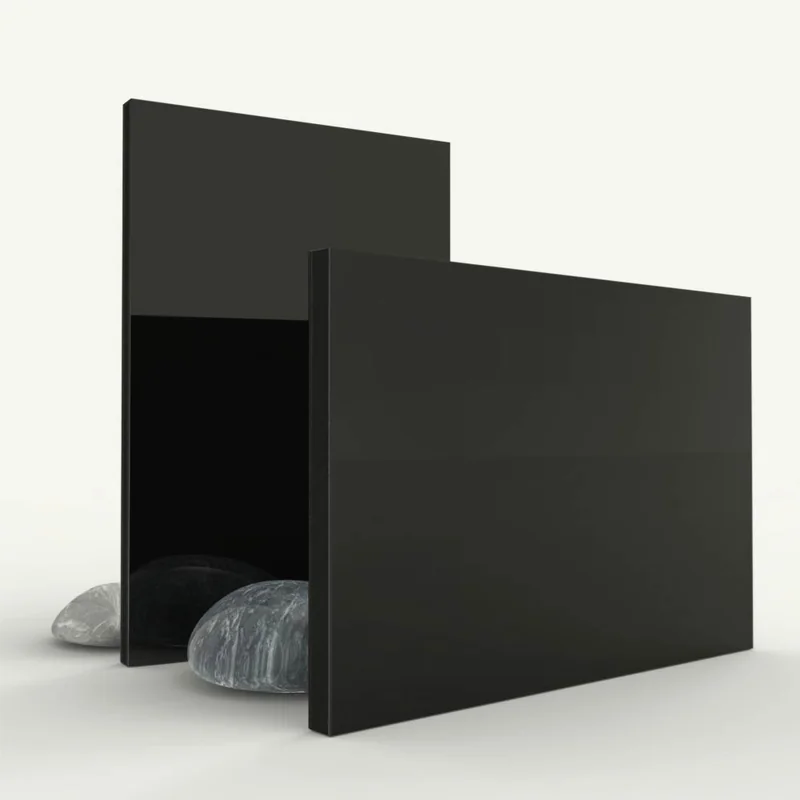
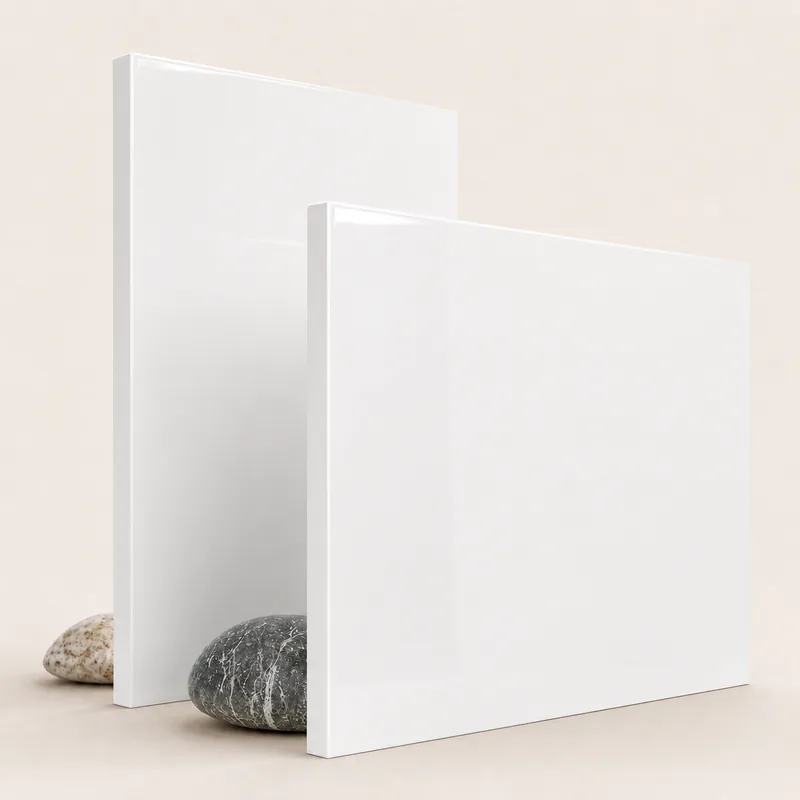
White and black opaque run 2.8 mm through 18 mm in the highest-moving codes, at $95.47 for 2.8 mm and $182.37 at 5.5 mm. Matte-faced versions cost more than gloss at every gauge, $105.14 against $95.47 at 2.8 mm and $200.73 against $182.37 at 5.5 mm, and matter for non-glare signage.
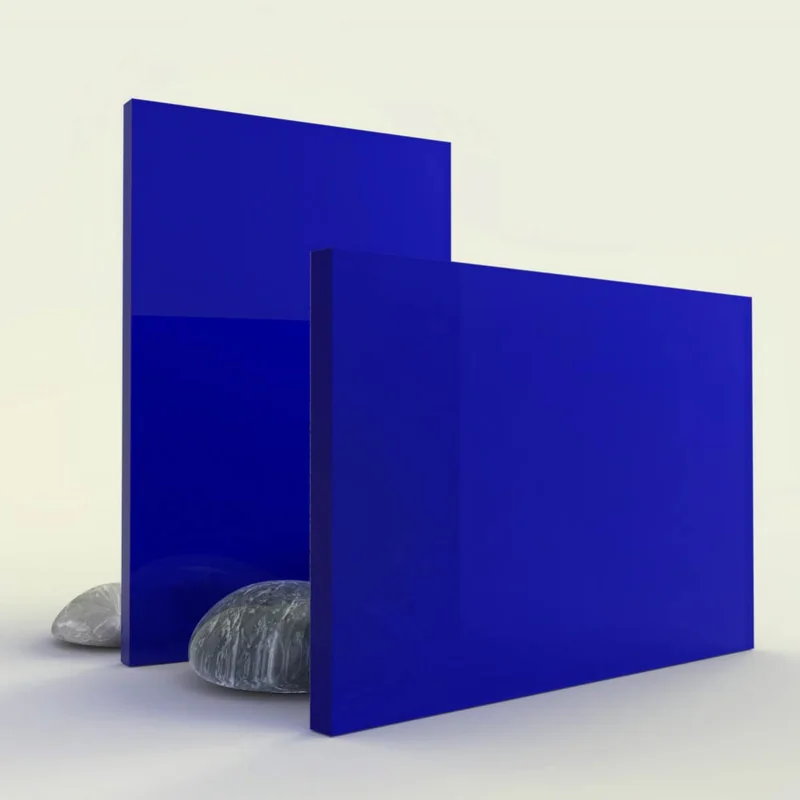
Transparent and opaque colours hold at $95.47 at 2.8 mm across most of the palette, with the 9000-series tones at $117.70. The coloured acrylic sheets page lists them by code.
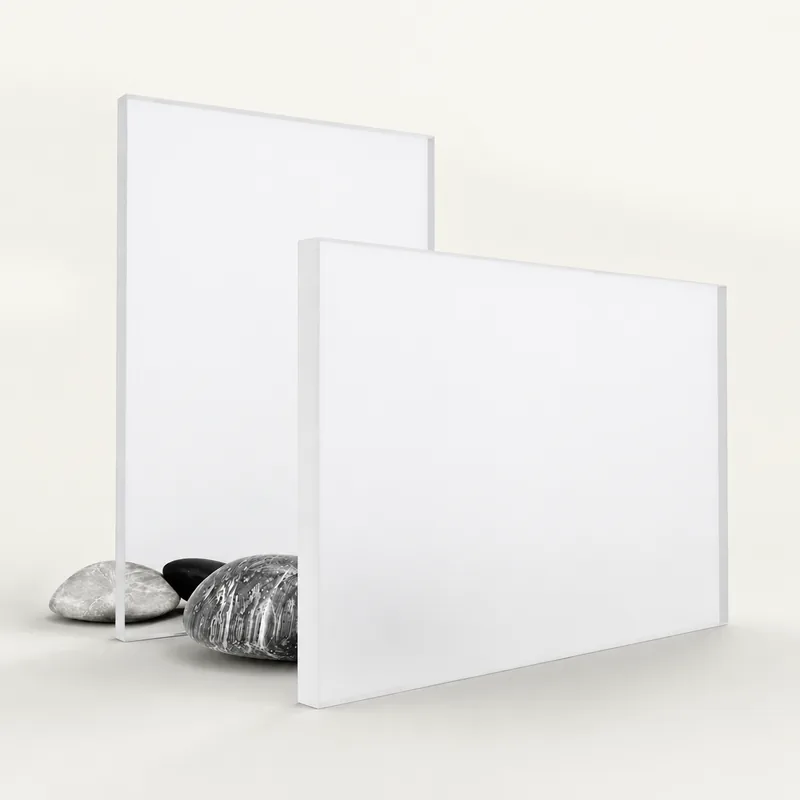
P95 frosted is stocked in four gauges from 2.8 mm to 9 mm, gloss on one face and matte on the other, which spreads light across an LED array without the hot spots clear acrylic produces. Because the frost sits on the surface rather than through the sheet, gauge on frosted acrylic is a stiffness decision rather than an opacity one.
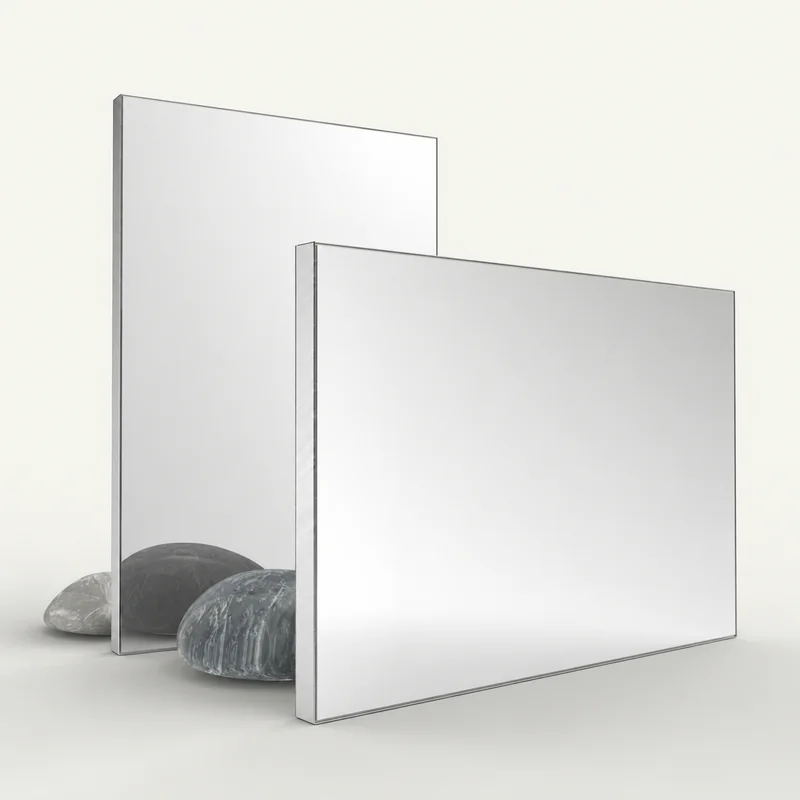
Mirror acrylic is 3 mm only, in seven finishes from $161.70 to $297.42 per sheet.
Ordering 4x8 Acrylic Sheets in Canada
We stock the full acrylic range at our North York warehouse: cast clear in ten gauges on the 4x8 sheet, plus extruded, white, black, coloured, pastel, P95 frosted and mirror, with PVC, polycarbonate and ACM alongside. Pickup suits full-size vehicles, Ontario delivery runs same week, and we ship palletized freight across Canada. Cut-to-size is available on any of it.
If the specification is still open, the acrylic sheets category collects everything we have written on grades and applications, where to buy clear acrylic sheets covers sourcing once the spec is fixed, and you can always contact our team before committing a gauge to a drawing.
TORONTO Unit 29, 601 Magnetic Drive, North York, ON, M3J 3J2 Phone: +1 (416) 857-7555 Office: +1 (416) 726-2428 Email: info@fidarsystem.com
Related Resources
Further reading from FIDAR System:
- Complete Guide to Buying Acrylic Sheets in Canada: cast against extruded, grades, and supplier selection
- Plexiglass Wholesale in Toronto: pricing tiers, NET-30, minimums and palletized freight
- Acrylic Sheet Wholesale Near Me, Canada: qualifying for commercial rates outside the GTA
- Acrylic vs. Polycarbonate Sheets in Canada: when the material changes rather than the gauge
- The Sign Shop's Guide to Plastic Sign Board Material: every substrate we stock, sorted by the sign job
Standards and manufacturer references:
- ISO 7823-1:2003: cast PMMA sheet, 1.5 mm to 25 mm, types, dimensions and thickness tolerances. Reviewed and confirmed 2023
- ISO 7823-2:2003: the extruded companion, 1.5 mm to 20 mm
- ASTM D4802-16(2024): acrylic sheet specification, including the UVF and UVT grade split and the A/B category and finish classes
- Evonik PLEXIGLAS®: manufacturer data for cast gauges, tolerances and UV-stabilized outdoor grades
Frequently Asked Questions
Written by
Red Seal Fabricator · 15 yrs hands-on experience
James is a Red Seal certified fabricator with 15 years of practical experience cutting, shaping, and installing acrylic, PVC, and composite panels. He writes practical, tool-in-hand guides for sign shops, fabricators, and serious DIYers who want real answers from the shop floor.
Reader Reviews
Loading reviews…