

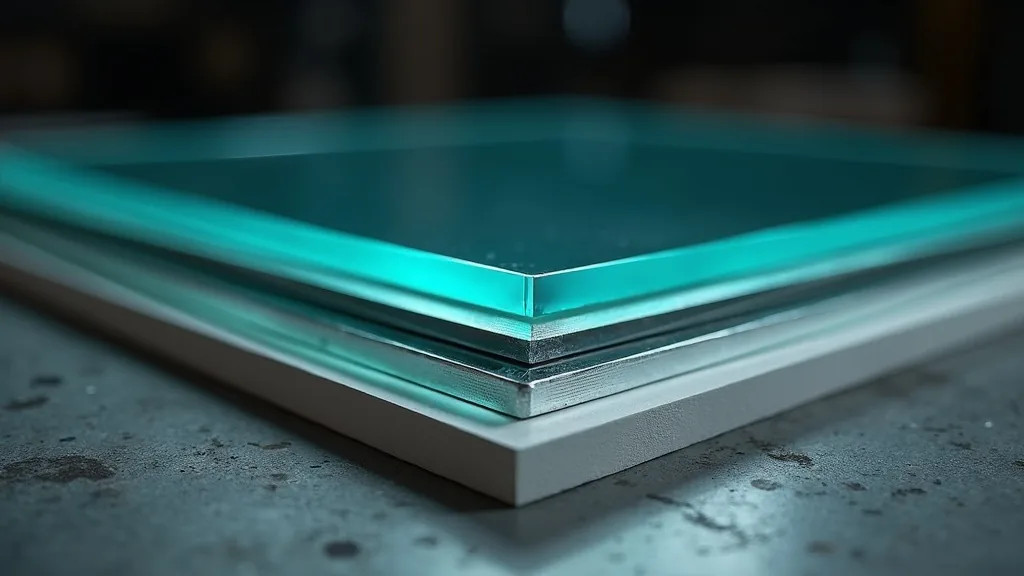
Most guides to signage sheet and plastic sign board material are organised by the sheet: here is acrylic, here is PVC, here is ACM, pick one. That is not how a quote gets written. A job walks into the shop with a size, a location, a budget and a date, and the substrate is the last thing decided rather than the first. So this guide runs the other way round. It works through the sign jobs a Canadian shop actually quotes, and for each one gives the sheet we would pull off the rack at our North York warehouse, the thickness, the real 2026 price, and what that choice does to everything downstream of it.
Start here: the sign first, then the signage sheet
If you only read one thing on this page, read the table. It is the routing logic we use at the counter when a fabricator calls and describes a job, and it covers every category of signage sheet and plastic sign board material we stock. Everything after it is the reasoning behind a row.
| The job | What we pull off the rack | Typical thickness | The reason |
|---|---|---|---|
| Lit cabinet face, up to 4 ft | White cast acrylic 7328 or 2447 | 1/8" (2.8mm) | Even glow, holds its colour for a decade of Canadian sun |
| Lit cabinet face, 4 to 8 ft | White cast acrylic | 3/16" to 1/4" | Sag climbs with span to the fourth power |
| Lit face where vandalism is a risk | Diffused white polycarbonate | 3mm | Same even glow, far harder to break |
| Channel letter faces | White or coloured cast acrylic | 1/8" | Colour runs through the sheet, cements cleanly |
| Permanent exterior fascia, unlit | ACM, white matte | 3mm | Flat, light, aluminium skinned, prints direct |
| Monument and pylon faces | Cast acrylic if lit, ACM if not | 3/16" or 3mm | Follows the illumination, not the size |
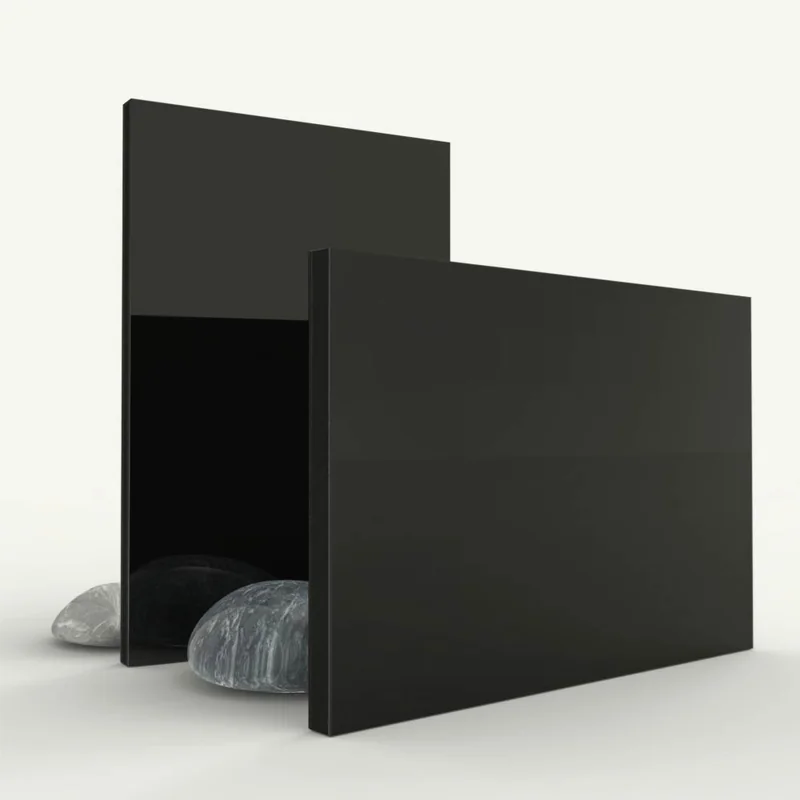
| Interior wayfinding and room ID | Black or white cast acrylic | 1/8" | Laser cuts with a polished edge, engraves with contrast |
| Painted directory backers and cleats | White PVC foam board | 6mm | Cheapest rigid sheet that routs and holds a screw |
| Event, real estate and site boards | White PVC foam board | 3mm to 6mm | Prints direct, one to three years outdoors |
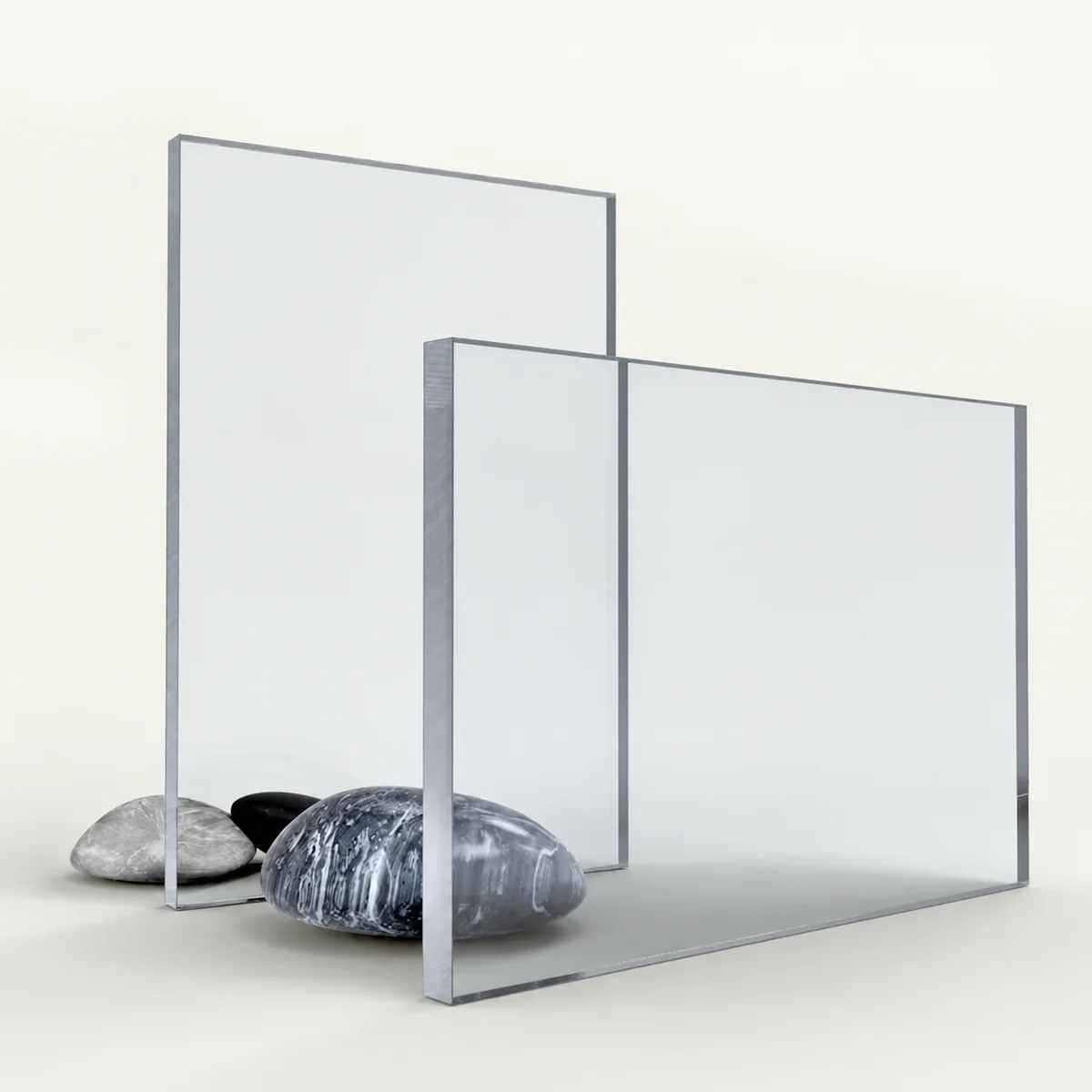
| Retail POP and shelf displays | Clear cast acrylic | 1/8" to 3/16" | Strip heater bends, invisible solvent joints |
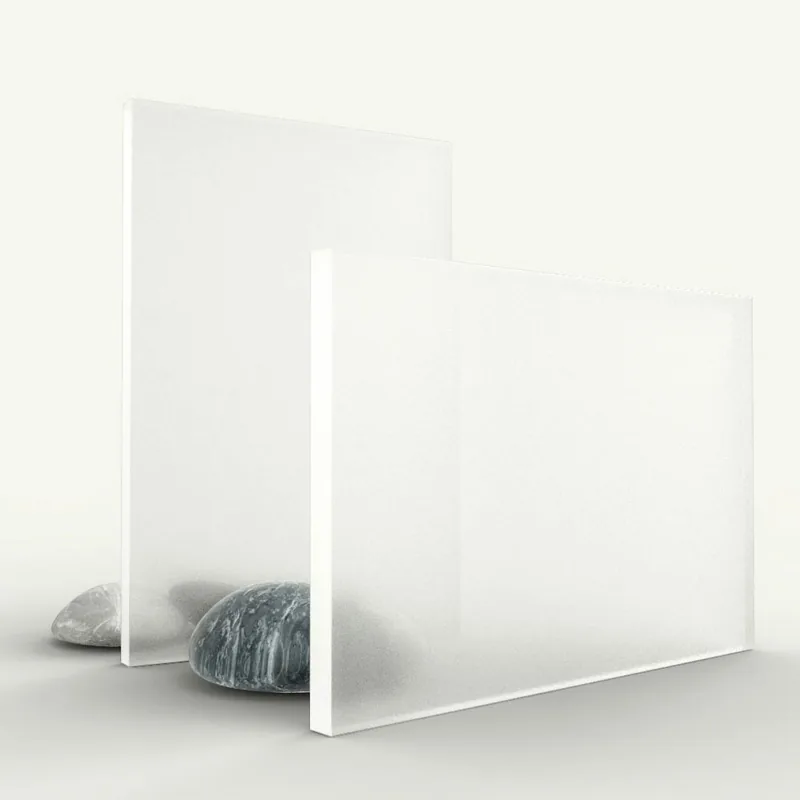
| Privacy panels and diffuser inserts | P95 frosted acrylic | 1/8" | Gloss one face, matte the other, roughly 70% transmission |
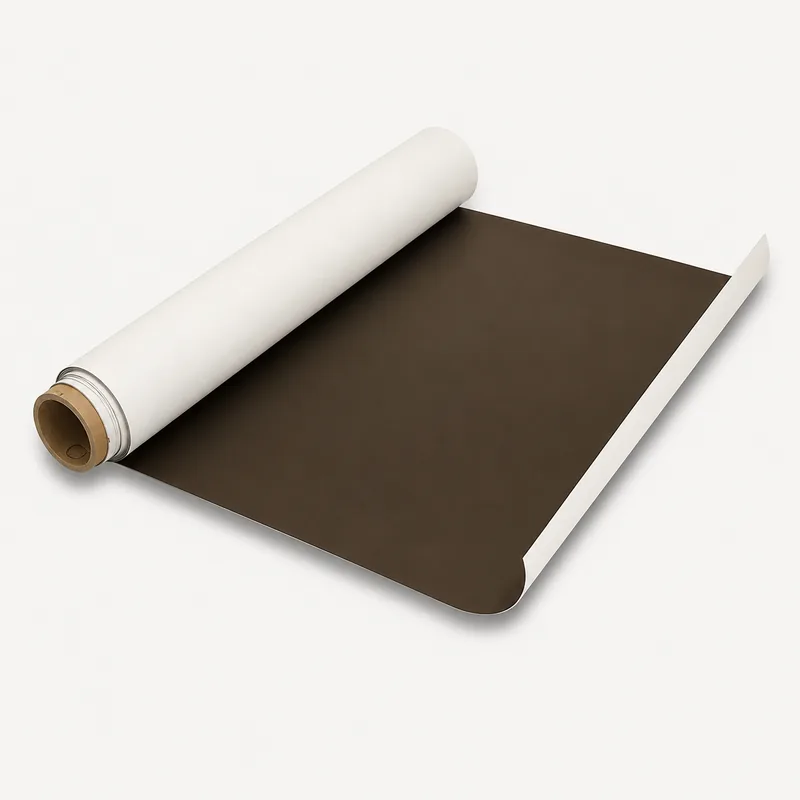
| Vehicle door magnets | Flexible magnetic roll | 0.030" | Prints on the vinyl face, conforms to a curved door |
| Machine guards and impact glazing | Clear polycarbonate | 6mm | Up to 250 times the impact resistance of glass |
Two patterns hide in that table, and they explain most sign board material decisions before any spec sheet comes out.
The first is that illumination splits the whole market in half. A sign that lights has to pass light evenly, so it lives in the acrylic and polycarbonate family whatever else is true about it. A sign that does not light has no such constraint, so it drops straight to the cheapest rigid sheet that survives the location. That single question sorts most jobs before any other spec is discussed.
The second is that exposure sorts what is left. Interior work can use almost anything. Permanent Canadian exterior work is a much shorter list, because a Toronto fascia sees forty degrees or more of temperature swing between a January night and a July afternoon, plus road salt, plus UV.
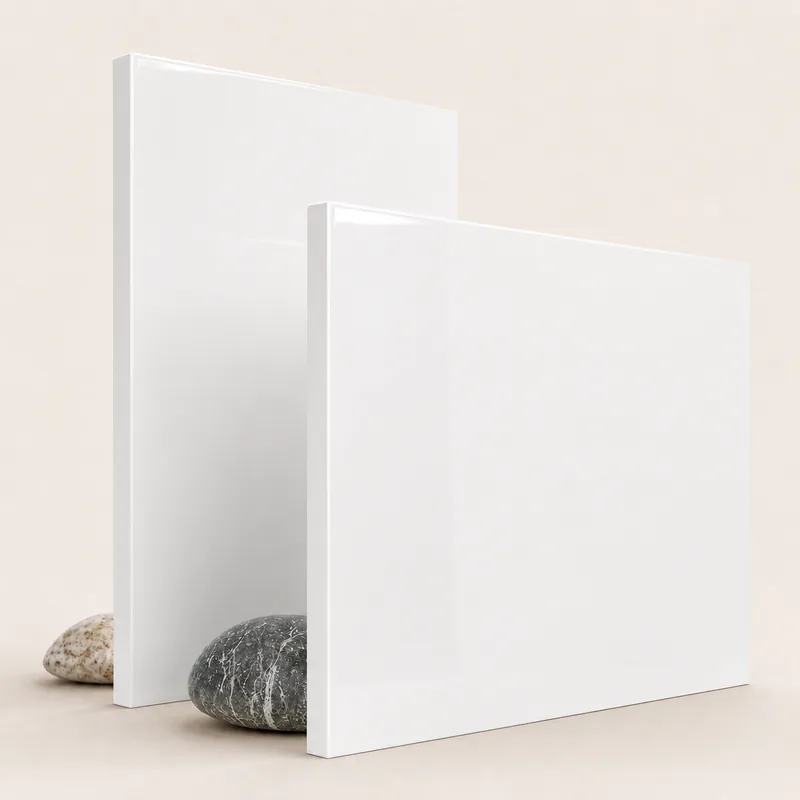
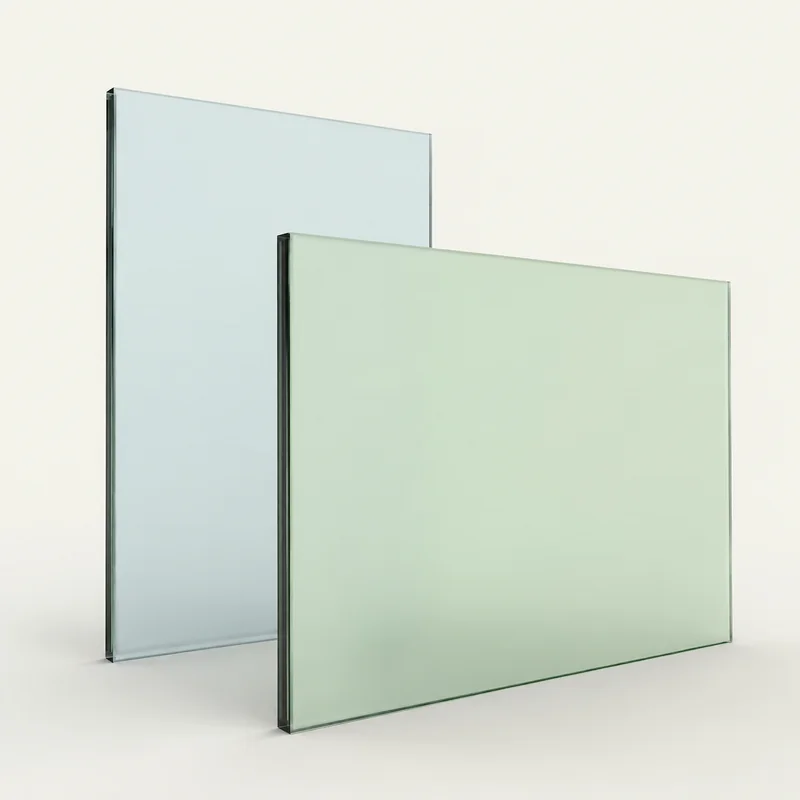
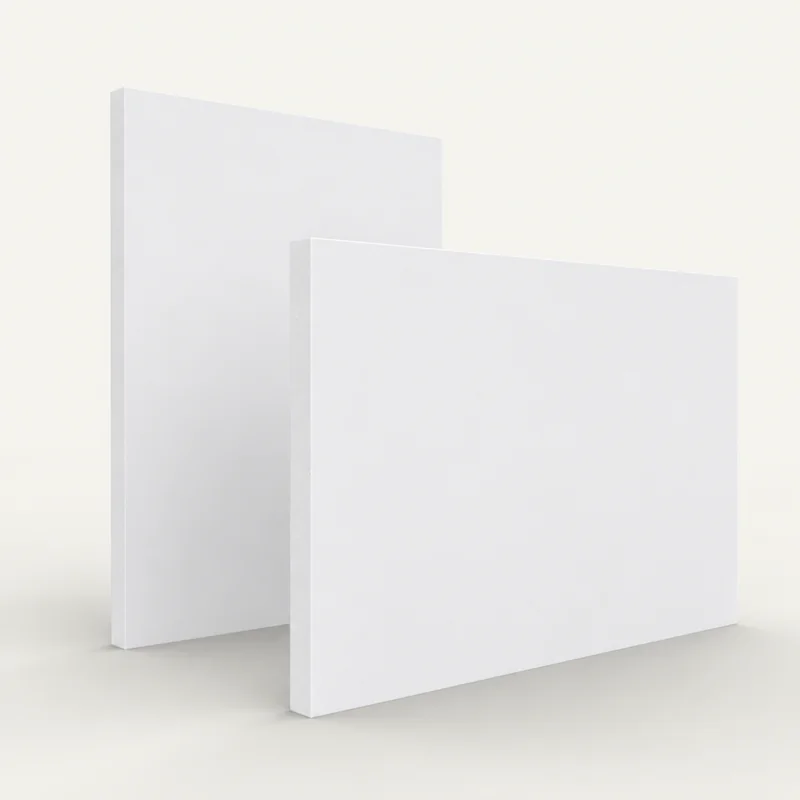
What plastic sign board material costs per square foot
Sheet prices get quoted per sheet, but jobs get costed per square foot, and the conversion hides some large surprises. The grid below is every sign relevant sheet we stock, at real July 2026 FIDAR pricing, converted to dollars per square foot on a 4 by 8 ft sheet. Blank cells are not gaps in the data. They are combinations nobody stocks, and that is information too.
| Substrate | 2mm | 1/8" | 3/16" | 1/4" | 3/8" | 1/2" | 3/4" |
|---|---|---|---|---|---|---|---|
| PVC foam board, white3, 6, 10, 12, 18mm | $0.88 | $1.43 | $2.32 | $2.67 | $3.87 | ||
| PVC foam board, black3, 6, 10, 18mm | $1.12 | $1.63 | $2.67 | $4.21 | |||
| ACM, white matte3mm only | $1.97 | ||||||
| Extruded clear acrylic2, 3, 4.5, 6mm | $1.71 | $2.43 | $3.94 | $4.94 | |||
| Cast clear acrylic2mm to 18mm | $1.94 | $2.51 | $4.02 | $5.02 | $7.80 | $10.45 | $17.22 |
| Cast white acrylic7328 and 7508 | $2.64 | $2.98 | $4.53 | $5.70 | $8.17 | $10.99 | $18.06 |
| Cast black acrylicJet Black 2025 | $2.98 | $4.53 | $5.70 | $8.17 | $10.99 | $18.06 | |
| P95 frosted acrylicprivacy grade | $3.19 | $4.87 | $5.77 | $8.17 | |||
| Clear polycarbonateUV layer one side | $2.83 | $3.25 | $4.14 | $6.37 | $11.19 | ||
| Diffused white polycarbonateco-extruded diffuser | $3.07 | $3.83 | $4.52 |
Read across a row and you get the thickness penalty. Read down a column and you get the substrate penalty. The second is much larger than most people expect.
At the 1/8 inch band, the cheapest sheet on the grid is 88 cents a square foot and the dearest is $3.83. That is a spread of more than four to one across sheets that all look broadly similar stacked on a rack. Move to the 3/4 inch band and cast acrylic is running $17.22 a square foot while PVC foam is $3.87, a spread of nearly four and a half to one, and now with $13.35 a square foot of real money between them instead of pocket change.
The other thing the grid shows is where the product range simply stops. ACM occupies one cell, because the whole point of a thin skinned composite is that it is thin, and the sign trade buys it at 3mm. Diffused polycarbonate stops at 3/16 inch because it exists to sit in a light box, and there is little call for a half inch diffuser. When a specification asks for a thickness that does not appear in a row, that is usually a sign the wrong material has been specified rather than a sourcing problem.
Costing a sign package this week?
Send us the sizes, the substrate and the quantity and we will come back with sheet pricing, cut to size pricing and freight in one number, so what lands in your estimate is what you actually pay.
Illuminated faces: cabinets, light boxes and channel letters
This is the job where the substrate decision matters most, because the sheet is not a backing for the graphic. The sheet is the light. Of all the sign board material on the rack, only two families pass light the way a cabinet needs, and picking between them takes about thirty seconds once you know the two questions.
White cast acrylic is the default and has been for decades. We stock it in the 7328, 7508, 2447 and 402 colour codes, all at $95.47 for a 4 by 8 ft sheet in the 1/8 inch band. Those codes are different formulations rather than different names for one product, and they read differently when lit. Ordering by code rather than by the word white is what stops a two cabinet job arriving with two slightly different whites, which is the complaint we hear most often from shops that bought their faces from two suppliers.
Thickness follows the span, and there is a section further down on why. The short version is 1/8 inch up to about 4 ft, 3/16 inch from 4 to 6 ft, and 1/4 inch past that.
Colour is the other half of the lit face decision, and it behaves nothing like colour on an unlit sign. A translucent coloured acrylic looks one way in daylight and another way with 5000K LEDs behind it, so the sheet has to be chosen against the lit appearance rather than against a swatch on a desk. Our coloured cast acrylic range runs across seven colour families and starts at $95.47 in the 1/8 inch band, with the 9000 series codes at $117.70, and every code is a distinct formulation rather than a tint sprayed over a base sheet, which is why the colour survives a routed edge and a decade of sun.
The specialty worth knowing about is day and night acrylic. We stock the C01M code at $173.99 for a 1/8 inch 4 by 8 sheet, and it does something no ordinary sheet does: it reads as a solid dark panel in daylight and lights through as a bright graphic after dark. On a drive through menu board or a hospital wayfinding pylon, that one sheet replaces a two layer build with applied translucent vinyl, and it never delaminates because there is nothing applied to it.
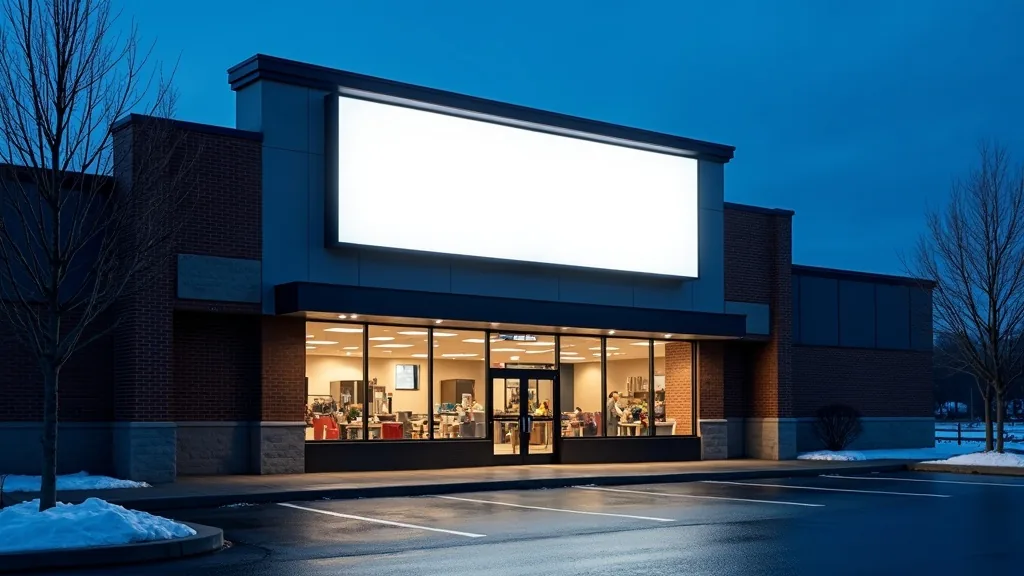 An evenly lit blank face with no visible hot spots. That result comes from LED spacing and setback, not from the sheet alone.
When to reach for diffused polycarbonate instead
There are two situations where we steer a shop off acrylic and onto diffused white polycarbonate at $122.55 for a 3mm 4 by 8 sheet.
The first is impact risk. A face at ground level in a transit shelter, a school, a parking garage or a late night retail strip will eventually get hit. Polycarbonate takes that hit. Acrylic breaks.
The second is heat. The diffuser layer in our white polycarbonate is co-extruded into the sheet rather than laminated onto it, so it cannot peel. Our polycarbonate carries a published service range to 120 degrees Celsius, where cast acrylic's heat deflection temperature is 95 degrees. Those are two different measurements rather than a like for like comparison, but they point the same way. In a shallow cabinet where high output LEDs sit close to the face, that margin is the difference between a panel that stays flat and one that bows in its retainer by August.
The trade is money and clarity. Diffused polycarbonate at 3mm is $3.83 a square foot against $2.98 for 1/8 inch white acrylic, and it transmits roughly 50 to 60 percent of the light against acrylic's higher figure, so you may need more LEDs behind it.
The gap behind the face is the spec nobody writes down
Every hot spot complaint we field traces back to the same thing, and it is not the sheet. It is the distance between the LED and the face. Our own product guidance is a minimum 20 to 30mm air gap for diffused polycarbonate, and the same physics applies to acrylic. Below that, the individual diodes print straight through whatever you put in front of them.
That number belongs in the shop drawing next to the face thickness, because the cabinet depth is fixed long before anyone orders the sheet. Our article on acrylic sheets and lighting covers the diffusion side in more depth if you are designing the cabinet rather than just facing it.
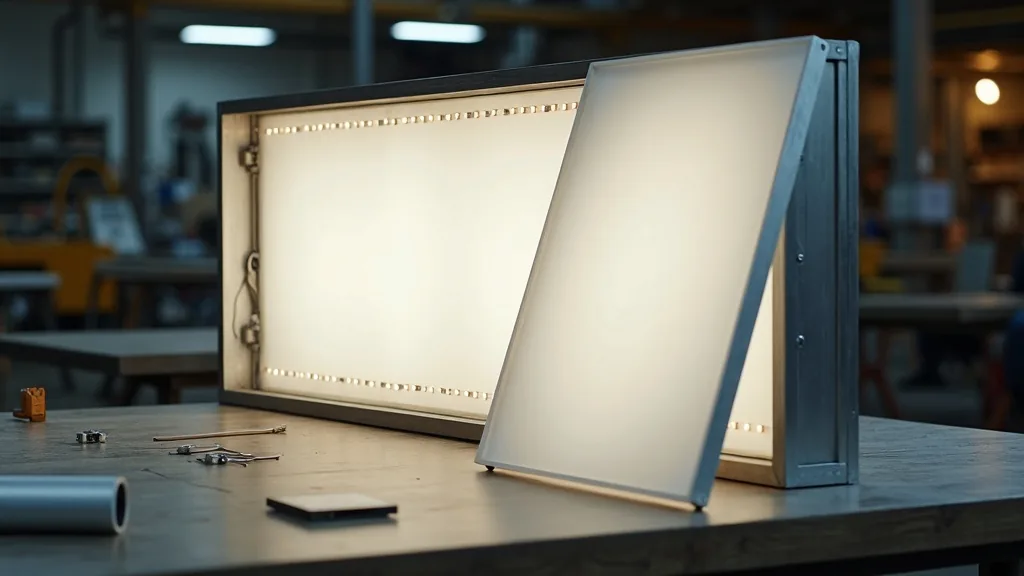 Face off, cabinet lit. The setback between those LED rows and the back of the panel is the spec that decides whether the finished sign glows or spots.
Flat exterior signs: fascia panels, monument faces and site boards
Once the sign stops lighting up, the question changes from how does it pass light to how long does it survive outdoors, and the answer in Canada is unforgiving. Most sign board material will sit happily on an interior wall for twenty years. Very few of them survive a decade of Ontario winters on a south facing fascia.
For permanent exterior work that does not illuminate, 3mm ACM is the default and it is not close. At $63.18 a sheet, or $1.97 a square foot, you get two aluminium skins bonded to a polyethylene core: a panel that stays flat across a 4 by 8 ft face, takes direct print from solvent, UV and latex machines, weighs about 3.56 kg per square metre, and does not care about a Toronto winter. We stock it in eight face and back combinations from the $63.18 white matte through to mirror silver at $140.18, and the ACM supplier and pricing guide has the full finish list with prices.
The fabrication side of ACM is genuinely different from sheet plastic, because it behaves like sheet metal. You rout a V groove through the back skin and the core, fold the panel along that groove, and get a crisp returned edge with no separate trim. Our ACM fabrication guide for sign shops walks that sequence with real tool settings. What it will not do is go on a laser, ever: the aluminium face reflects the beam back into the optics.
Where PVC foam board belongs, and where it does not
White PVC foam board at $28.13 for a 3mm 4 by 8 sheet is the cheapest rigid substrate in the building at 88 cents a square foot, and it is the right answer more often than its reputation suggests. It prints direct with no primer, cuts with a utility knife, and weighs almost nothing at roughly 0.55 g per cubic centimetre.
The boundary is time outdoors. Standard foam board is a one to three year exterior material before the surface chalks, unless it carries a UV laminate or UV stable ink. That makes it correct for construction hoarding, real estate boards, election signage, event graphics and seasonal retail, and wrong for a fascia sign the client expects to see in 2036. The PVC foam board pillar guide covers the full grade and thickness range, and Sintra board is the brand name most designers will write on the drawing when they mean exactly this material.
Where foam board earns its place on permanent work is out of the weather and out of sight: painted directory backers, cleats, mounting substrates behind a printed face, interior panel infill. 6mm at $45.73 is the gauge we point people to for that work, because it is the thinnest sheet that reliably holds a screw through the face without crushing. When the backer is meant to be seen, black PVC foam board does the same job without a coat of paint, and because the colour runs through the board a routed edge stays black.
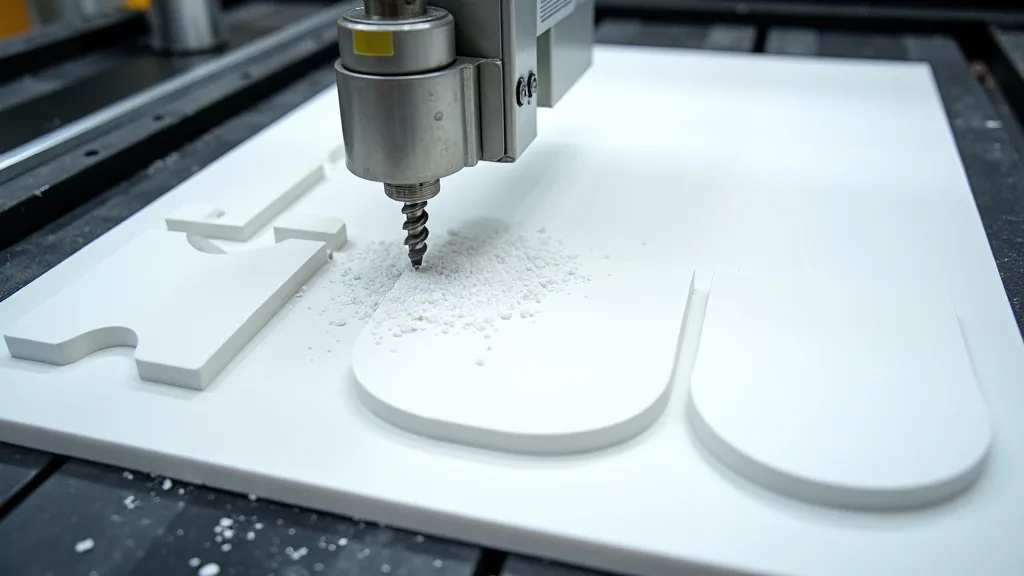 PVC foam on the router. It cuts fast and cleanly with a single flute bit, which is why it is the default for shape heavy short run work.
Interior wayfinding, room ID and reception signage
Interior work is where the material list opens up and the decision moves from survival to finish quality. Nothing here is fighting weather, so almost every sign board material on the rack is technically viable, and the question becomes which one gives the best edge, the best print and the best perceived value at the size involved.
Cast acrylic wins most of it, and specifically because of the laser. Of the substrates on this page it is the one that cuts on a CO2 laser with a flame polished edge straight off the machine, needing no sanding, buffing or flame treatment afterwards. Extruded acrylic will laser too, a little duller at the edge; PVC, ACM and polycarbonate are all off the table for reasons covered below. On a set of forty room ID plates, that eliminated finishing step is the entire labour difference between the job being profitable and not. Our laser cutting acrylic guide covers settings and edge quality in detail.
For a typical 8 by 8 inch room plate you are using 0.44 sq ft of sheet, so at $2.98 a square foot in 1/8 inch white or black cast acrylic the material content of one plate is about $1.31. Substrate cost is genuinely not the variable on this kind of work. Yield is. Forty eight plates nest out of a single 4 by 8 sheet with room to spare, and how tightly you nest them decides the material line, not which acrylic you bought.
Jet Black 2025 is the workhorse for engraved interior signage because laser engraving it produces a frosted white result against a gloss black field, which is high contrast without a second process or any ink. White acrylic engraves the other way, frosted against white, so it needs paint fill or applied vinyl to read.
For anything that needs privacy rather than opacity, P95 frosted acrylic at $102.07 a sheet gives roughly 70 percent light transmission with a gloss face and a matte face, which is the standard specification for office partition inserts and washroom vision panels. The full P95 specification guide covers the four stocked gauges and what the frosting adds over clear at each one.
Accessible signage changes the material call, not just the artwork
Tactile and Braille room identification is the one interior category where a standard, rather than a designer, picks your sheet. In Canada the reference is CSA B651, the national accessible design standard for the built environment, sitting underneath the Accessibility for Ontarians with Disabilities Act in this province and equivalent legislation elsewhere. Three of its requirements land directly on the substrate order:
- Raised characters. Tactile lettering has to stand proud of the face, with CSA B651 calling for at least 1mm of relief in a sans serif face. That is a build up, not an engraving, so you need a thin sheet for the character layer.
- Braille below the text. The Braille cells sit under the corresponding characters, which means either raised beads set into drilled holes or a routed pocket, and both of those want a substrate that machines to a clean small radius.
- A non-glare finish. Matte or low reflection, so a wheelchair height sign under a corridor downlight can still be read. A gloss black plate fails this on the finish alone, no matter how good the contrast looks on screen.
That third point is why we stock matte acrylic as separate colour codes rather than as a surface treatment. Matte Black 2025M and White Matte 7508M both run $105.14 for a 1/8 inch 4 by 8 sheet, $9.67 over the gloss equivalent, and they arrive matte through the sheet rather than sprayed. The first point is why we carry 1mm cast acrylic in a 3 by 6 ft format: 1mm Jet Black at $65.77 a sheet is the character layer, laser cut and cemented onto a 1/8 inch backer. Note that 1mm sits exactly on the minimum rather than above it, so if the specification or the reviewing authority wants margin, build the character layer from the 1.5mm sheet instead.
None of this is legal advice and the requirement varies by occupancy and province, so confirm the current standard with the code consultant on the project. Braille Literacy Canada publishes accessible signage guidelines that are a useful cross check before a set goes to production.
How each sheet takes print, paint and vinyl
Signage sheet guides usually stop at cutting, which leaves out the step that actually decides how the sign looks. A sheet that will not hold ink is a problem you discover after you have bought it.
The practical split is between sheets you print on directly and sheets you decorate with applied film. It maps almost exactly onto the opaque versus transparent divide.
- PVC foam board takes direct print with no primer. The matte closed cell face accepts solvent, UV and latex inks straight off a wide format machine. This, more than price, is why it dominates short run graphics: the sheet goes on the flatbed and comes off finished.
- ACM is built for print on one side and mounting on the other. Our white matte face is a print surface, and several of the eight combinations we stock pair that matte print face with a gloss, silver or coloured back precisely so a fabricator can choose which side faces out.
- Acrylic is usually decorated, not printed. Direct printing to acrylic needs adhesion promotion and is not something most sign shops set up for. The normal route is applied vinyl or translucent film, and on clear sheet the strong move is second surface: print or apply on the back so the acrylic itself protects the graphic from scratches, cleaning and UV.
- Polycarbonate behaves like acrylic for decoration, with one extra caution. Keep heat off it during application and drying, and keep the co-extruded UV layer facing outward, because that side is the one engineered to survive the sun.
- Magnetic roll prints on the vinyl face only. Never the magnetic side, and never through a heat laminator, since makers put the safe limit for the magnetic layer at roughly 50 to 80 degrees Celsius depending on the compound. Cold laminate for anything going outdoors on a vehicle. Our magnetic sheet guide for sign shops covers gauge, laminating heat and how many door signs a roll yields.
Paint sits differently again. PVC foam takes a solvent based or acrylic sign enamel well and is routinely painted on cut edges to seal them. Acrylic can be painted but rarely should be, because the sheet already comes in the colour you want and paint on a routed acrylic edge chips where the sheet would not have.
One shop habit prevents most print failures across all of these: handle the sheet by the edges with the masking on, and pull the masking immediately before the sheet goes on the bed. Fingerprints and static dust are the two things that reject a print, and both arrive in the ten minutes between unwrapping the sheet and printing it.
Dimensional letters, layered builds and cut logos
Dimensional work is where thickness stops being a structural question and becomes a visual one. The sheet edge is the product.
For flat cut letters up to about 12 inches tall, 1/4 inch cast acrylic at $160.57 a sheet is the standard. It gives a visible edge with real presence, routs and lasers cleanly, and takes a stud mount without tearing out. Below 1/8 inch, letters look like vinyl on a stick. At 1/2 inch and beyond, starting at $334.37 a sheet, you are paying for material nobody sees from the floor unless the letters are enormous or lit from behind.
Layered builds are where the range actually pays for itself. A reception logo built as a 1/4 inch clear back panel on standoffs, a 1/8 inch coloured acrylic mid layer and 1/8 inch mirror acrylic top elements reads as an expensive fabricated piece and costs perhaps forty dollars of sheet across the whole assembly. The acrylic mirror sheet guide covers the finishes we stock and how they behave under a laser, which is not the same as clear acrylic.
Two habits save the most rework on dimensional jobs. Keep the masking on until the part is mounted, because a scratch on a 1/4 inch edge is visible from across a lobby and cannot be polished out on a routed profile without changing the shape. And cut a single test letter before committing the sheet, because kerf compensation that is out by half a millimetre reads as a wrong weight on a thin stroke.
Displays, POP and short run signage
Retail and event work is defined by two things: the sign has a known end date, and the fabricator is doing a lot of unique pieces rather than many identical ones.
That combination points at clear cast acrylic for anything that has to look premium and at PVC foam for anything that has to be cheap and fast. Clear cast acrylic thermoforms on a strip heater between roughly 140 and 180 degrees Celsius and holds the bend once cool, which is how most riser, easel and shelf talker geometry is made without any tooling. Röhm, the German manufacturer behind PLEXIGLAS, publishes the forming and cementing data most fabricators work from if you want the numbers for a specific grade. It also cements to itself with a solvent that welds the two surfaces into a joint that is nearly invisible, which is the finish that separates a fabricated display from an assembled one.
Extruded clear acrylic sits underneath cast on price at $77.78 against $80.27 for the nearest cast sheet. That gap is a flat $2.49 a sheet at every thickness above 2 mm we stock both in, which means the saving matters least exactly where you are spending most: it is 3.1 percent on the 1/8 inch sheet and 1.6 percent by the time you reach 1/4 inch. It thermoforms more easily and cements just as well. What it gives up is heat resistance, softening at about 80°C against cast acrylic's 95°C, and it engraves less crisply. On a flat display that will not be engraved, extruded is the better buy. On anything laser engraved or mounted near heat, buy cast.
Vehicle work belongs in this section too, because it is short run graphics by another name. Flexible magnetic roll in the 0.030 inch gauge is what we sell for door magnets, at $153.40 for a 24 inch by 50 ft matte roll. The heavier gauge is worth it on vehicles because it holds against airflow on a curved door where the thinner 0.020 inch material lifts at a corner. One warning that costs shops a whole roll: never run it through a heat laminator, because the magnetic layer demagnetises above roughly 80 degrees Celsius. Cold laminate only.
Want the sheets cut before they reach your bench?
We cut acrylic, PVC, polycarbonate and ACM to your sizes at our North York shop. Send a cut list or a drawing and we will confirm the yield and the price before anything is cut.
Get a free quoteThickness and span: the number that decides more jobs than price
Here is the piece of maths that explains more sign failures than any material property, and almost nobody costing a job has it in front of them.
A flat panel supported at its edges sags under wind or its own weight in proportion to the span raised to the fourth power, divided by the thickness cubed. Both of those exponents matter, and they are not the same size. Making a face longer hurts you much faster than making it thinner does.
The chart takes a 4 ft face in 3mm as the baseline and holds everything else constant. Each bar is labelled span over thickness.
Three readings come out of that, and each one changes a quote.
Stretching a face from 4 ft to 6 ft while leaving it at 3mm multiplies the sag by five. This is the single most common cause of a lit face that oil cans in its retainer and reads as cheap from the parking lot. The client asked for a wider cabinet, the drawing got wider, the face spec never changed.
Stepping that same 6 ft face up one thickness band to 4.5mm pulls it back to 1.5 times the baseline. One band of thickness buys back most of two extra feet of span, and on white acrylic it costs $49.50 more per sheet, from $95.47 to $144.97. Against the price of a cabinet and an install crew, that is not a decision worth agonising over.
An 8 ft face at 6mm still sags twice as much as a 4 ft face at 3mm. Past a certain span you cannot buy your way out with thickness, and the answer is an intermediate support, a divider bar or splitting the face into two panels. Our 4x8 stock size and gauge guide covers the stock size grid that usually decides where that split lands anyway, and the nesting maths behind it.
Stock sizes: why 48" x 96" quietly decides the drawing
Almost all plastic sign board material in Canada arrives as a 4 by 8 ft sheet, 48" x 96", and that single number shapes more designs than any material property does. A face longer than 96 inches cannot be one piece. A face wider than 48 inches cannot be one piece either, unless it fits inside the 96 inch run the other way. The moment a drawing crosses one of those lines, the job gains a seam, a divider bar or a splice detail, and gains it whether or not anyone told the designer.
We do carry a few formats outside the standard grid, and each of them exists for a reason worth knowing:
- 3 by 6 ft cast acrylic, in 1mm and 1.5mm. Thin gauge sheet, which is the tactile character layer for accessible signage and the shim stock for layered builds.
- 4 by 6 ft cast acrylic in 1.5mm at $46.97. A cheaper way to buy thin sheet when you do not need the full 8 ft length.
- 24 inch by 50 ft magnetic roll. Continuous rather than sheeted, so vehicle magnets nest along the roll instead of around a sheet.
- 3.3 by 10 ft honeycomb composite panel. The one panel we stock that reaches past 8 ft in a single piece, which is why it turns up on full height feature walls. The honeycomb composite panel guide covers where that reach is worth its price.
Two habits get the most out of the standard sheet. Nest the whole job before quoting, because a set of parts that yields fourteen per sheet against eleven is a twenty percent material saving that no substrate switch will match. And design to the grid where the client does not care: a 45 inch tall panel and a 47 inch tall panel cost the same in sheet, but a 49 inch panel costs double.
If the drawing has to break the grid, break it deliberately. A deliberate seam on a panel line with a cover cap reads as detailing. An accidental seam where the sheet ran out reads as a mistake, and clients can tell the difference from the sidewalk.
What the sheet does to the rest of the build
Arguments about sign board material tend to be conducted as though the sheet were most of the cost. It rarely is. Here is a real comparison: a 10 ft by 4 ft single sided fascia sign for a clinic in Mississauga, quoted three ways.
A 10 ft length does not come off an 8 ft sheet, so all three routes buy two sheets, cut two pieces at 5 ft by 4 ft, and carry one vertical seam. That means 64 sq ft bought for 40 sq ft used, 37.5 percent offcut, on every route equally.
| Line item | Lit cabinet, acrylic face | Flat ACM panel, lit externally | Flat PVC foam panel |
|---|---|---|---|
| Face material | 3/16" white cast acrylic | 3mm white matte ACM | 6mm white PVC foam |
| Sheets required | 2 | 2 | 2 |
| Sheet cost | $289.94 | $126.36 | $91.46 |
| Material per sq ft of finished sign | $7.25 | $3.16 | $2.29 |
| Needs a fabricated cabinet | Yes | No | No |
| Needs certified sign electrics | Yes | Only if hardwired | Usually no |
| Realistic Canadian exterior life | 10 years or more | 10 years or more | 1 to 3 years unprotected |
| How it typically fails | Face bows if underspecified | Dents, edges need trim | Surface chalks and bows |
The entire substrate spread across three fundamentally different signs is $198.48. On a job where the cabinet, the electrical, the permit, the crane and the install will run into four figures, the sheet is a rounding error.
What is not a rounding error is what each row commits you to. Choosing the acrylic face commits you to fabricating or buying a cabinet, to sign electrics that have to be certified, and to a permit process that treats an illuminated sign differently. Choosing ACM commits you to an edge treatment and a mounting system. Choosing PVC foam commits you, honestly, to doing the job again in a few years.
That is the real argument for buying the better sheet. Not that the sheet is expensive, but that the cheap sheet is the only line on the estimate that gets paid for twice.
What each sheet does to your tooling
Sign board material is not interchangeable at the machine, and each sheet fails differently under a tool. The failures are specific enough to be worth a table. This is what we run and what each choice is protecting against.
| Substrate | Laser | Router | Saw | The failure to avoid |
|---|---|---|---|---|
| Cast acrylic | Best in class, flame polished edge | Single flute O-flute, 18,000 rpm | 80T triple chip, steady feed | Chip welding from too slow a feed |
| Extruded acrylic | Acceptable, slightly duller edge | Same as cast | Same as cast | Stress crazing around drilled holes |
| PVC foam board | Do not, releases HCl gas | Cuts fast, single flute | Any fine blade, or a knife | Melting and re-welding at high rpm |
| ACM | Never, aluminium reflects the beam | Carbide, V groove for folds | 80T carbide, negative rake | Delaminating a skin with a dull tool |
| Polycarbonate | Yellows at the cut edge | Sharp tools, moderate feed | 80T carbide, no score and snap | Heat build up, and drilling too tight |
| Diffused polycarbonate | Same caution as clear PC | Same as clear PC | Same as clear PC | Scratching the diffuser face |
Three lines in that table deserve saying out loud, because they are the ones that damage machines rather than parts.
Do not put PVC on a laser. The hydrogen chloride released attacks the machine's optics and rails and is a genuine health hazard in an enclosed shop. Route it or saw it.
Do not put ACM on a laser at all. The aluminium face reflects the beam straight back, and the damage is to the head rather than to the panel.
Do not score and snap polycarbonate. The material is too tough and too flexible to fracture at a score line, so it tears rather than breaking cleanly. Our guide to cutting polycarbonate covers blade choice and the thermal expansion allowance that catches out shops moving over from acrylic. The wider polycarbonate buyer's guide covers grade selection.
One habit applies to all six rows: leave the masking on through every operation and mark on the film, not on the sheet. It is the cheapest insurance in the shop.
Seven substrate mistakes that cost Canadian sign shops the most
These are the sign board material calls we see go wrong, ranked by what they actually cost when they do. None of them are exotic. All of them are made by competent shops under time pressure.
-
Speccing the face thickness from the old drawing. The cabinet grew, the face spec did not, and a 6 ft face at 3mm oil cans in its retainer. Cost: a replacement face plus a second trip with a lift. Fix: resize the face every time the cabinet size changes, using the span table further up.
-
Ordering white by the word white. Two cabinets, two suppliers, two different whites, discovered at night when they are both lit. Cost: refacing whichever one the client likes less. Fix: record the colour code, 7328 or 2447 or 7508, on the job file at quote stage.
-
Putting PVC foam on a permanent exterior sign because it costed better. It will chalk and bow inside three seasons unprotected. Cost: the entire job again, on your warranty. Fix: foam board for anything with an end date, ACM for anything without one.
-
Laser cutting PVC. The corrosive gas damages the machine long before anyone connects the two events. Cost: optics, rails and eventually the laser. Fix: route it, saw it or knife it.
-
Forgetting the LED setback. The cabinet was built shallow, the face is perfect, and the sign spots. Cost: rebuilding the cabinet or accepting a sign that looks cheap. Fix: put the 20 to 30mm minimum air gap on the shop drawing next to the face thickness.
-
Quoting square feet instead of sheets. A 10 ft face needs two 4 by 8 sheets whatever the area maths says, and 37.5 percent of what you buy becomes offcut. Cost: the missing sheets, every time. Fix: nest the job before you price it.
-
Buying the substrate before checking the by law. Illumination, height and total sign area are all restricted by municipality, and a sign that fails the by law is not a sign. Cost: the whole build. Fix: confirm the permit path first, cut second.
The pattern across all seven is the same. The sign board material is almost never the expensive mistake. The decision the sheet locks in downstream is.
Codes, permits and certification in Canada
Nothing in Canadian regulation restricts which sign board material you may buy. Plenty of it restricts what you may then do with them. The sheet is the last thing a Canadian sign job clears, and shops that quote before checking the first two items below get expensive surprises.
The sign needs a municipal permit, and the rules are local. There is no national sign by law. In Toronto, permanent first party signs, meaning signs identifying a business at the premises where they sit, fall under Chapter 694 of the Municipal Code and require an approved sign permit before installation. Size, height, placement and whether the sign may be illuminated all follow the sign district the property sits in. The City of Toronto sign permit process is the model most GTA municipalities broadly follow, but every one of them writes its own by law, so confirm the actual jurisdiction before cutting anything.
If it lights, it is an electrical product. Electric signs and displays installed in Canada are certified against CSA C22.2 No. 207, the Canadian Electrical Code Part II standard covering portable and stationary electric signs, which is the Canadian counterpart to UL 48 in the United States. That certification applies to the finished electrical assembly rather than to the acrylic on the front, but it is why an illuminated sign is a different class of project with a different approval path and a different price.
Interior signage can run into the building code. Light transmitting plastics in interior applications are classified by their burning behaviour, and the classifications a code consultant will ask about derive from small scale burning rate tests such as ASTM D635 rather than from a manufacturer's marketing sheet. Cast acrylic is a slow burning material and our clear polycarbonate carries a UL 94 V-2 self extinguishing rating, but a rating on a data sheet is not the same as compliance in a specific location. For anything in an exit route, an assembly occupancy or a rated wall, get the current certificate and have it checked against the National Building Code of Canada as adopted in your province.
For the trade side of all this, the International Sign Association publishes fabrication and installation standards used across North America, and Sign Media Canada tracks the Canadian regulatory and materials picture specifically.
Buying sign board material in Canada
Four things decide whether a signage sheet order helps or hurts a sign job, and price is only one of them.
Colour code, not colour name. Ask for 7328 or 2447 rather than white, and record the code on the job file. Reordering a face for a multi site rollout eighteen months later is where mismatched whites show up, and by then the first cabinet is already installed.
Yield before price. A cheaper signage sheet that yields eleven parts loses to a dearer one that yields fourteen. Nest the job before choosing the substrate, especially on repetitive interior work where a single sheet covers dozens of pieces.
Cut to size rather than freight. Oversize sheets are expensive to ship and easy to damage in transit. Having sheets cut to your dimensions here means smaller, safer, cheaper packages and no offcut disposal at your end. Our cut to size service covers the full range, and the laser cutting service handles shape work in cast acrylic where the polished edge matters.
Buy the offcut allowance in the same order. Discovering you are half a sheet short in week three costs more in a second delivery than the extra sheet would have cost in the first.
We keep every signage material we have named here at our North York warehouse: acrylic in cast, extruded, white, black, coloured, pastel, mirror and P95 grades, PVC foam in white and black, ACM in eight finishes, solid and diffused polycarbonate, honeycomb composite panels and magnetic roll. If you are deciding between families rather than within one, the acrylic buying pillar, the ACM panel guide and the acrylic versus polycarbonate comparison are the right next reads. The fabrication and sign making category collects the tool level guides, and the composites shop category lists every panel we stock.
Where to buy sign board material in Canada
From a supplier that stocks the full range of signage sheet and sign board material under one roof, cuts it before it ships, and knows which sheet belongs on your job. We supply sign shops, fabricators and print houses across Ontario and ship nationally from North York. Send a cut list or a drawing through our quote request and we will price the sheet, the cutting and the freight together, or contact our team to work through a face thickness, a diffuser setback or a substrate call before the job is quoted.
Prefer to talk it through? Call us at +1 (416) 857-7555 for real answers from the warehouse floor.
TORONTO WAREHOUSE Unit 29, 601 Magnetic Drive, North York, ON, M3J 3J2
Phone: +1 (416) 857-7555 Office: +1 (416) 726-2428 Quotes: Request a quote or contact us
Frequently Asked Questions
Written by
Red Seal Fabricator · 15 yrs hands-on experience
James is a Red Seal certified fabricator with 15 years of practical experience cutting, shaping, and installing acrylic, PVC, and composite panels. He writes practical, tool-in-hand guides for sign shops, fabricators, and serious DIYers who want real answers from the shop floor.
Reader Reviews
Loading reviews…