

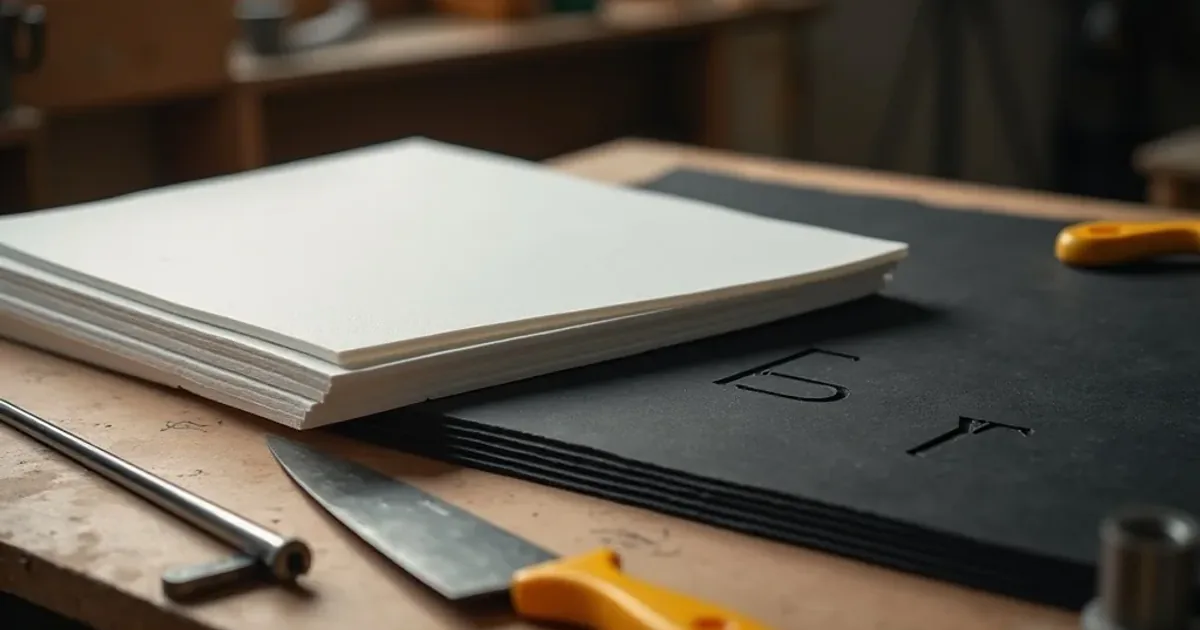
If you work in signage, display, or fabrication in Canada, PVC foam board is probably already in your shop, even if you call it Sintra, Komatex, foam PVC, or just foam board. It is the flat sheet that prints without primer, cuts with a knife, and weighs half of what acrylic does, and we ship it every week from our North York warehouse to sign shops, exhibit builders, and contractors across the country. This guide is the full picture: what the material actually is, how it is made and graded, the complete thickness range with our live Canadian pricing, how it fabricates, how long it lasts outdoors, and how to buy it without overpaying. If you are still deciding whether foam board is the right substrate at all, our sign board material guide sorts it against acrylic, ACM, and polycarbonate job by job.
Key takeaways:
- PVC foam board is rigid polyvinyl chloride foamed to a fine closed-cell structure, light and stiff, waterproof, and easy to cut, route, and print.
- At about 0.55 g/cm3 it is the lightest rigid sheet in the trade, less than half the weight of acrylic or 3mm ACM, and under a quarter of glass.
- The brand names (Sintra, Komatex, Palight, Celtec, Forex) all describe the same class of material; the specification matters, not the label.
- Our 4x8 ft sheets run $28.13 to $186.53 CAD in white and $35.81 to $134.83 in black, well under small branded cut-piece pricing.
- It is an indoor and short-term outdoor material. UV, not moisture, is its limit; for permanent exterior work, ACM is the tougher call.
What PVC Foam Board Actually Is
PVC foam board is rigid polyvinyl chloride expanded with a blowing agent into a fine, closed-cell foam and consolidated into a solid, homogeneous sheet. In plain terms, it is the same base plastic as a white PVC pipe, foamed down to roughly half its solid density so it stays rigid and stiff while becoming light enough to cut with hand tools. It is solid all the way through, not a skin over a hollow core, so a sawn or routed edge comes out the same colour and texture as the face.
The foam structure is the whole trick. Blowing the PVC into millions of tiny closed cells drops the density from about 1.4 g/cm3 for solid PVC to around 0.55 for the board we stock, without giving up much stiffness. Those closed cells are sealed pockets, so the sheet does not wick or absorb water the way wood, MDF, or paper-faced foam core does. That combination, rigid but light, waterproof but workable, is genuinely hard to find in any other flat sheet, and it is why the material became the default substrate of the sign and display world.
How it is made explains why it behaves so consistently on the shop floor. Manufacturers extrude the PVC compound with a chemical blowing agent, and as the hot sheet leaves the die the agent releases gas that expands the polymer into its fine cellular core before it cools and sets into a flat panel. In free-foam production the cells stay uniform across the full cross-section, which is what gives the standard signage sheet its even density and clean routing behaviour.
The payoff of that process is predictability. The result is a board that is remarkably flat, dimensionally stable, and consistent from sheet to sheet, so a shop can order the same gauge months apart and get material that cuts and prints the same way both times. That consistency is easy to take for granted until you work a cheap off-spec sheet with soft spots or a warped memory, at which point the value of a properly made panel becomes obvious on the router table.
There is a safety property baked into the chemistry too. PVC is roughly 57 percent chlorine by mass, and chlorine is a natural flame retardant, so the material is self-extinguishing: it stops burning once you remove the flame source. Genuine expanded PVC carries a Class A fire rating under ASTM E84 surface burning tests in thin gauges, typically 3mm and under, which is exactly why it is specified for interior signage and trade show builds where fire code is in play. That same chlorine content is also the reason you must never laser cut it, a point we come back to under fabrication.
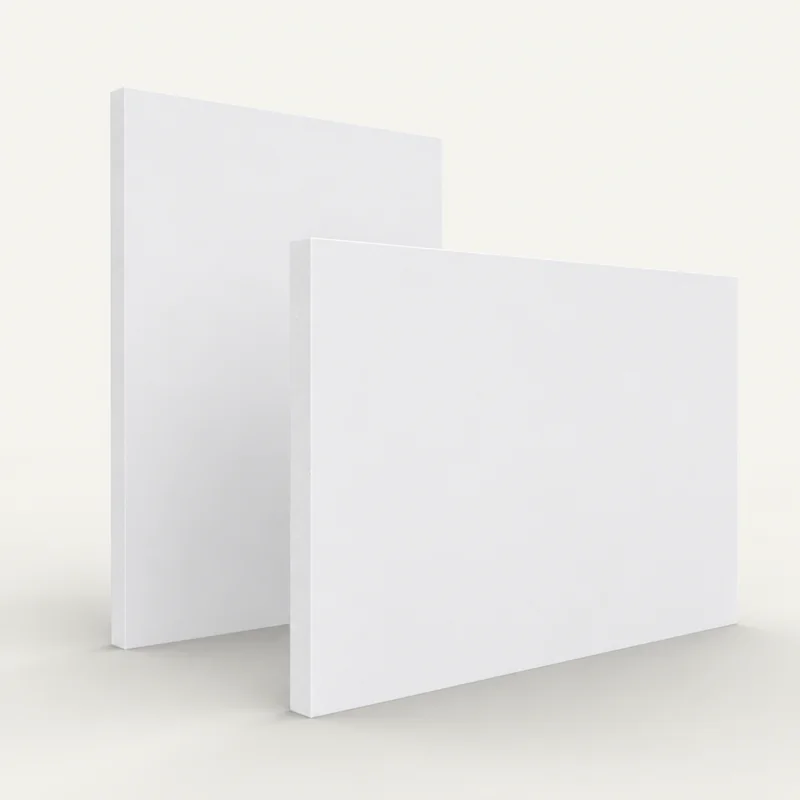
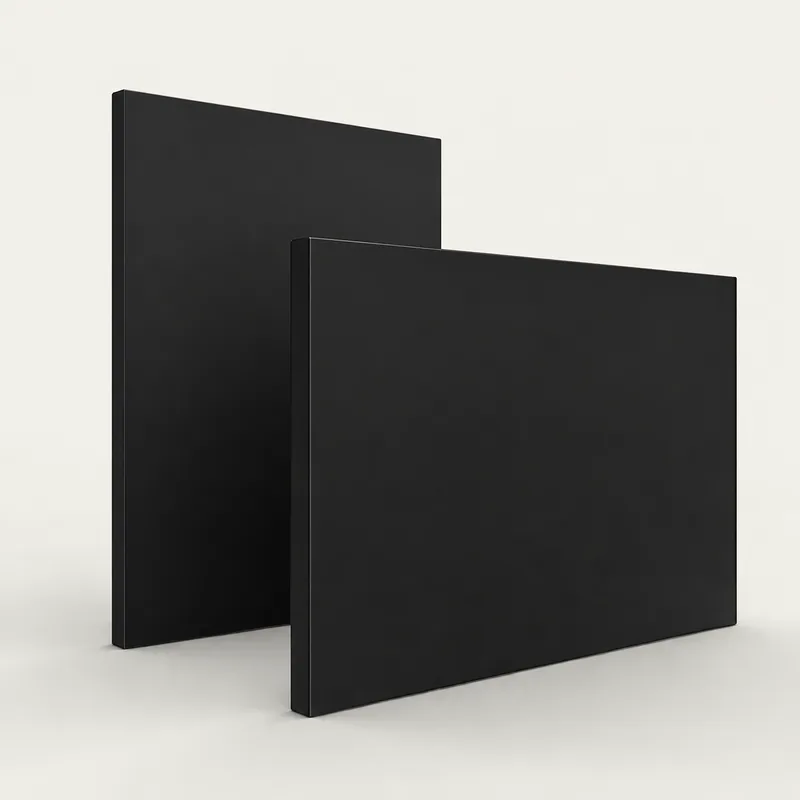

One naming point that trips up first-time buyers: PVC foam board is not the same thing as foam core. Foam core (the presentation board sold in art stores) is a paper-faced polystyrene sandwich that dents, absorbs water, and is meant to be disposable. PVC foam board is solid expanded PVC through and through, rigid and moisture-proof enough for permanent signs, displays, and wall panels. If a job has to survive handling, weather, or years of service, it needs foam board, not foam core.
The One Property That Defines It: Weight
Weight is the property that decides most PVC foam board purchases, because at about 0.55 g/cm3 it is the lightest rigid sheet material a fabricator can buy. A full 4x8 ft panel of 6mm foam board weighs roughly 10 kg, which is a genuine one-person lift, while the same sheet in acrylic is over 21 kg and in glass would be a two-person hazard. When a trade show booth has to fly to a convention and get built by two people in a morning, or when fifty printed panels have to ship across the country, that weight gap turns directly into lower freight and easier handling.
Set against the other flat sheets a sign shop or contractor might reach for, the density difference is stark. The chart below plots the real material densities side by side, and PVC foam board sits at the bottom by a wide margin.
Read that chart and the appeal is obvious. PVC foam board is less than half the density of acrylic, and of our 3mm ACM, which we weighed at almost exactly the same figure as acrylic. It is under a quarter of glass, yet it holds an edge on a router and stays flat in a frame. The trade-off for that lightness is softness: the same foam structure that makes it light also makes the surface easier to dent or scratch than a hard acrylic or metal face, which is why it lives indoors and on printed work rather than on high-touch surfaces. For most signage and display jobs, that is a trade every fabricator makes gladly.
The weight advantage compounds across a project. A retail rollout with two hundred store signs, an exhibition program touring six cities, or a wayfinding package for an office tower all move and install faster in foam board than in any heavier substrate, and the labour saving over a full job often dwarfs the material cost difference. We see customers choose foam board for exactly this reason even when a heavier sheet would technically work: the sign has to be handled by real people, and lighter wins.
The saving reaches the freight bill too. On a cross-country shipment from our Ontario warehouse out to British Columbia or Alberta, the same panel count moves for less in foam board than in acrylic, because carriers price on actual and dimensional weight and a pallet of foamed sheet simply weighs half as much. For a shop running regular material shipments, that difference adds up across a year.
PVC Foam Board Grades and Brands, Decoded
The brand printed on the masking film matters far less than most buyers think, because the major names all describe the same class of expanded PVC. Sintra, made by 3A Composites, became the everyday word for the whole category the way Plexiglas did for acrylic, but Komatex by Kommerling, Palight by Palram, Celtec by Vycom, and Forex by 3A Composites are all rigid foamed PVC sheet. A fabricator quoting you Komatex and one quoting Sintra board are offering the same material; what actually separates a good sheet from a bad one is the specification underneath the name.
Here is how the common brands map to the one material, so you can shop on spec instead of chasing a label:
| Brand name | Maker | What it actually is |
|---|---|---|
| Sintra | 3A Composites | Free-foam expanded PVC, the category standard |
| Komatex | Kommerling | Free-foam expanded PVC, signage and display grade |
| Palight | Palram | Free-foam expanded PVC, print and sign substrate |
| Celtec | Vycom | Expanded PVC, offered in tougher skinned grades |
| Forex | 3A Composites | Expanded PVC, 3A's second sign-grade line |
| Unbranded mill sheet | Various | Expanded PVC to the same density and gauge spec |
The one real grade distinction worth understanding is free-foam versus skinned board. Free-foam sheet, which is what most signage and display work uses, has a uniform cell structure all the way through and a low-gloss satin face that takes print and vinyl beautifully. Skinned board, produced by the Celuka process, forms a denser, harder outer skin during extrusion, giving a tougher, more impact-resistant surface at a slightly higher weight and cost. Skinned grades earn their place in cabinetry, machine guards, exhibit flooring, and structural panels that take knocks; free-foam is the right call for printed signs, displays, and models. Both are rigid expanded PVC, and both cut and bond the same way.
Three things are worth checking on any sheet regardless of the name on it. First, density and cell consistency: quality board holds an even structure across the whole sheet so it routes cleanly without soft spots that tear at the bit. Second, colour: standard stock is bright white or matte black, and the white should be a true, consistent white that prints accurately rather than a grey-tinted recycled blend that shifts your colours. Third, the fire rating where code requires it: confirm the documented ASTM E84 result and the gauge it applies to before you specify for an interior job. We stock foamed PVC in white and black specifically because it is the everyday sheet our sign and display customers reach for most, and our Sintra board buyer's guide digs deeper into how the brand name affects what you pay.
The Full Thickness Range and What Each Gauge Is For
For most buyers the working answer is 3mm, 6mm, or 10mm, but the full range runs from thin print faces up to thick structural bases, and matching the gauge to the job saves both money and grief. Thin board is a sign face and mounting substrate, the mid gauges do the structural signage and display work, and the thick end is for routed letters and pedestals. We stock white foam board in six thicknesses and black in four, all on the standard 4x8 ft sheet, and this is how we guide the choice:
| Thickness | Best for | Buying note |
|---|---|---|
| 3mm | Sign faces, vinyl substrates, print mounting, interior panels | Lightest and cheapest; flexes if unsupported over a span |
| 6mm | Standard flat-cut signage, exhibition panels, foam core upgrade | The volume seller and the default for most sign work |
| 10mm | Thicker sign bodies, dimensional letters, rigid display parts | Holds an edge on the router; the go-to for routed letters |
| 12mm | Large flat-cut letters, dimensional signage, sturdy panels | Steps up rigidity for bigger unsupported pieces |
| 18mm | Thick-panel signage, cabinet panels, display pedestals | Structural weight; confirm your router bit length first |
| 24mm | Maximum-thickness bases, deep letter bodies, thick structures | Heaviest gauge; white only in our stock |
A rule that saves the most money in practice: if you are replacing an existing panel, measure it and match it rather than guessing, because nominal and actual thickness do not always agree on older imported board. And if you are designing from scratch and torn between two gauges, take the thicker one. On a typical sign order the step from 6mm to 10mm is $28.60 per sheet, which is nothing against a panel that sags in its frame or a letter that feels flimsy on a reception wall. The same thickness-to-span logic we apply to acrylic, covered in our sheet sizes and thickness guide, carries straight over to foamed PVC.
Gauge also drives how you cut the sheet, which is worth thinking about before you order. Thin 3mm and 6mm board scores and snaps with a utility knife, so a shop with no power tools can still process it. From 10mm up you are into saw and router territory, and at 18mm and 24mm you need to confirm your router bit is long enough to clear the sheet in a single pass. A fabricator planning to cut deep letters from 24mm should check the tooling before the material lands, not after.
What PVC Foam Board Costs in Canada
A 4x8 ft sheet of white PVC foam board runs from $28.13 to $186.53 CAD at FIDAR System depending on thickness, and these are our live warehouse prices in North York, not estimates. Because the standard sheet is 32 square feet, the per-square-foot cost is low across the whole range, which is the core reason the material dominates high-volume signage:
| Thickness | White PVC foam (per 4x8 ft sheet) | Cost per square foot |
|---|---|---|
| 3mm | $28.13 | about $0.88 |
| 6mm | $45.73 | about $1.43 |
| 10mm | $74.33 | about $2.32 |
| 12mm | $85.33 | about $2.67 |
| 18mm | $123.83 | about $3.87 |
| 24mm | $186.53 | about $5.83 |
Black foamed PVC sits a little higher because the pigment loading costs more, and we stock it in four gauges: $35.81 for 3mm, $52.31 for 6mm, $85.33 for 10mm, and $134.83 for 18mm. The premium is small and predictable, $6.58 to $11.00 a sheet, so choosing black to save a print pass on dark signage is almost always worth it. Because black foam is coloured through the body, a routed edge stays black with no painting, which is a real time saver on dimensional letters.
Two numbers are worth carrying into any budget. First, that per-square-foot figure: 6mm white at about $1.43 per square foot is a fraction of what small branded Sintra cut pieces cost at a craft or hardware store, so for anything past a couple of small panels the full-sheet route wins decisively. Second, the material sits inside a large and growing market, which keeps supply steady and pricing competitive. The global rigid PVC foam market was valued near $2.0 billion in 2023 and is projected by Allied Market Research to reach $3.1 billion by 2033, a projected 4.3 percent annual growth rate driven largely by signage and construction demand.
Pricing out a PVC foam board run?
Tell us the gauge, colour, and quantity and we will quote full sheets or cut-to-size, with same-week GTA delivery or freight anywhere in Canada from our North York warehouse.
Choosing White, Black, or a Custom Colour
White handles the large majority of jobs, black covers most of the rest, and any other colour comes from print, paint, or vinyl rather than a stock coloured sheet. That is worth understanding before you order, because it changes how you should think about colour on a foam board project. We stock the material in bright white and matte black precisely because those two cover the overwhelming share of what the trade actually buys, and everything else is applied on top.
White is the workhorse and the default for a simple reason: it is the ideal print base. A true, consistent white lets solvent, UV, and latex inks reproduce accurately, so a printed graphic looks the way the file intended without a colour cast fighting it. It is also the standard substrate for vinyl application, since coloured or cut vinyl reads correctly over a neutral white ground. If you are printing full-colour graphics or applying light-coloured vinyl, white is almost always the right sheet.
Black earns its place wherever the finished piece needs a dark base or dark cut edges. Because our black board is coloured through the body rather than surface-coated, a routed or sawn edge stays black with no painting, which is a real time saver on dimensional letters and layered signs. Sign shops reach for black to skip a base-coat print pass on dark designs, to build non-reflective display backers and exhibition backwalls, and to cut logo elements that need clean black edges straight off the router.
For a specific brand colour, the practical route is to print it, wrap it in coloured vinyl, or spray it with a PVC-compatible paint rather than hunting for a stock coloured sheet, since coloured expanded PVC is a limited-run specialty item that rarely justifies the cost or lead time. One caution when comparing suppliers: a bargain grey-tinted board is usually a recycled blend, and that grey cast will shift your printed colours, so specify a true white when print accuracy matters. Our white PVC foam board range and black PVC foam board both ship in the full stock thickness ladder from our North York warehouse.
Where PVC Foam Board Sits Among Sheet Materials
No single sheet is right for every job, and the clearest way to see where PVC foam board fits is to map it against the materials it competes with on the two axes that decide most projects: cost and outdoor durability. Plot those, size each bubble by weight, and the landscape sorts itself out. Foam board lands in the bottom-left, cheap and light, built for indoor and short-term outdoor life; the premium, permanent materials sit up and to the right.
Bubble size = material weight (density). Bigger bubble, heavier sheet.
Positioning is FIDAR's read of documented material properties and current CAD pricing, not a lab ranking.
The map makes the decision almost mechanical. If your priorities are cost, weight, and indoor use, PVC foam board is the answer and you can stop looking. If you need optical clarity or a material that lights up, that is acrylic territory in the middle of the map. If the panel has to survive years of Canadian sun, freeze-thaw, and wind on the side of a building, you are up in ACM and glass country in the top-right, where the cost and weight climb but so does the lifespan. Very few real jobs land dead centre, which is why naming your top two priorities usually settles the material fast.
What the map does not show is that a single project often uses more than one of these sheets, each on the component that suits it. A backlit storefront sign uses acrylic for the glowing face and foam board for the opaque returns and backer; a trade show booth pairs printed foam panels with a few acrylic accent pieces. The skill is not picking one material for everything, it is knowing which part of the job gets which sheet, and our PVC foam board versus acrylic comparison walks through that split in detail for signage.
PVC Foam Board vs the Boards It Gets Confused With
PVC foam board gets lumped in with a handful of other flat boards that look similar on a shelf but behave very differently, and picking the wrong one is a common and avoidable mistake. Foam core, gatorboard, corrugated plastic, and MDF all compete for some of the same jobs, so it helps to know exactly where each one wins and where it fails. The short version: foam board is the durable, waterproof, routable middle ground between disposable presentation boards and heavy construction sheet.
| Board | What it is | Where it beats foam board | Where it loses |
|---|---|---|---|
| PVC foam board | Solid expanded PVC | Baseline: waterproof, routable, durable | Softer face than acrylic or metal |
| Foam core | Paper-faced polystyrene | Cheapest, lightest for one-time indoor use | Dents, absorbs water, disposable |
| Gatorboard | Wood-fibre faced foam | Stiffer large panels, hard face | Not waterproof, edges damage easily |
| Corrugated plastic | Fluted polypropylene | Cheapest for temporary yard signs | Flimsy, ribbed, not a flat solid surface |
| MDF | Compressed wood fibre | Cheaper for interior millwork | Heavy, swells with moisture, not for signs |
Foam core is the one people mix up most, because both get called foam board in casual use. Foam core is the paper-faced polystyrene board from the art store: fine for a one-time presentation or a mounted photo indoors, but it dents under a fingernail, wicks up water, and delaminates over time. If a job has to be handled repeatedly, survive any moisture, or last more than a season, it needs solid PVC foam board, not foam core. The distinction is the difference between a disposable board and a permanent one.
Corrugated plastic, sold as Coroplast, is the fluted polypropylene used for cheap temporary yard signs, and it competes only on price for throwaway work. It is hollow and ribbed rather than a flat solid surface, so it will not route into clean letters or take a premium print the way foam board does. Gatorboard, a wood-fibre-faced foam, is stiffer than foam board in very large panels and has a harder face, but it is not waterproof and its edges chip, so it stays indoors. MDF is cheaper for interior cabinetry but is heavy and swells the moment it gets wet, which rules it out for signage and any wet-area panel. Across the sign and display trades that the International Sign Association represents, rigid PVC foam board is the substrate that balances cost, durability, and workability better than any of these alternatives.
What Sign Shops, Builders, and Fabricators Use It For
Almost anywhere a rigid, printable, lightweight, waterproof board is needed indoors, which covers a remarkably wide span of trades. The material earns its keep across signage, display, architecture, and industry, and the jobs we supply it for break into a few clear families.
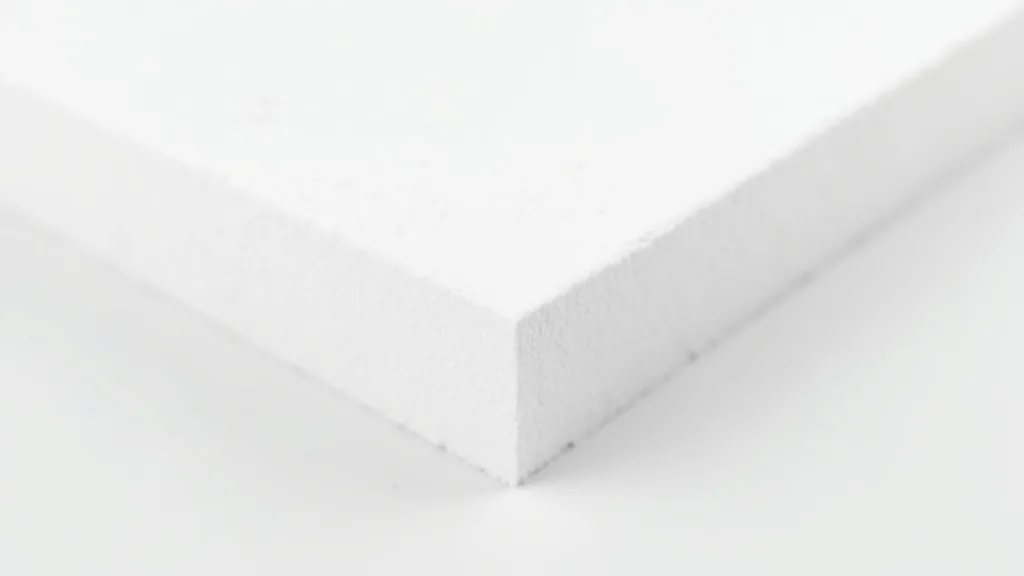 The fine, even closed-cell structure of expanded PVC is what keeps the board light, rigid, and waterproof.
Signage and graphics. This is the bread and butter. Sign shops buy 3mm and 6mm sheets by the stack for directional signs, corporate lobby panels, real estate signs, and wayfinding, because the satin surface takes solvent, UV, and latex inks straight off the printer with no primer and takes vinyl film just as easily. A Mississauga sign shop can print, laminate, and cut a full sheet of directional signs in an afternoon.
Dimensional letters and routed shapes. Thicker 10mm to 24mm board goes on the CNC router to become dimensional letters, logo elements, and layered signs. Because the colour runs through the whole sheet, a routed edge on black board stays black with no painting, so a Toronto sign shop cutting a reception-wall letter set will reach for 10mm foam for exactly that reason.
Exhibitions, trade shows, and retail displays. Display builders love the weight. A big printed panel ships cheaply and installs without a crew, which is decisive when a booth flies to a show. Point-of-purchase and retail displays use both colours for lightweight, rigid, semi-disposable structures that survive a seasonal campaign and cost little to replace.
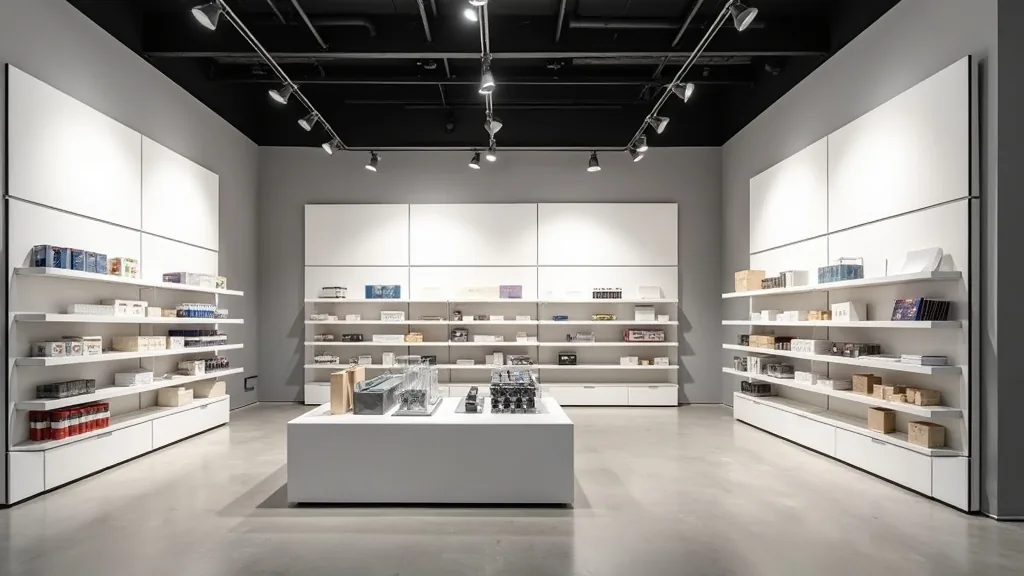 Lightweight PVC foam board builds rigid, shippable retail and point-of-purchase display structures.
Architecture, models, and millwork. Design studios cut thin board for scale models because it scores, folds, and glues cleanly, and interior fabricators use it for feature wall panels, decorative cladding accents, and lightweight cabinetry parts. Its dimensional stability and clean routed edge make it a practical millwork substrate where wood would be heavier and less moisture-tolerant.
Wet areas and industrial panelling. Here the closed-cell structure is the whole point. Because the board does not absorb water, it works as bathroom wall panelling, shower surrounds, splashbacks, change-room walls, and food-service surfaces where wood-based board would eventually swell and fail. PVC's chemical resistance extends that into industrial splash panels, machine guards, and cleaning-area walls. Our PVC sheets installation guide covers the mounting and joining details for that kind of permanent panel work.
Healthcare, marine, and specialty environments. The same waterproof, wipeable, chemically resistant qualities that suit a bathroom make the sheet a fit for demanding specialty settings. Clinics and labs use it for hygienic wall protection and equipment panels that get wiped down constantly, boat builders use it for lightweight interior panels and lockers that shrug off spray and humidity, and greenhouse growers use it for partition panels and bench surfaces that live in a warm, wet environment year round. In each case the appeal is identical: a rigid, moisture-proof panel that stays dimensionally stable where a wood-based board would swell, warp, or grow mould. It is not a structural building material and it will not carry load like plywood, but as a functional lightweight panel in a tough, wet, or hygienic environment, foamed PVC is hard to beat, and it installs with the same basic tools a sign shop already owns.
Not sure which gauge or colour your project needs?
Send us the application and we will tell you exactly which PVC foam board spec fits, with Canadian pricing and cut-to-size options. No pressure, just a straight answer.
Get a free quoteHow to Cut, Route, and Bond It
Easily, which is a large part of why the trade loves the material: PVC foam board is one of the most forgiving flat sheets a fabricator can work with. It cuts with a utility knife on thin gauges and a saw or CNC router on thick ones, bonds with contact cement or PVC solvent weld, and routes to a clean edge that rarely needs sanding. Matching the method to the gauge is all there is to it.
The cutting methods, by gauge:
- Score and snap for 3mm and 6mm. Run a sharp knife along a metal straightedge for two or three passes, then snap over a table edge. Clean and fast with no power tools.
- Circular or table saw for 10mm and up. A fine-tooth or carbide-tipped blade at a steady feed rate gives a crisp edge. Keep the feed moving so the blade never lingers and melts the cut.
- CNC router for shapes, letters, and volume. A single-flute O-flute upcut bit clears chips and prevents buildup, and foamed PVC routes to a smooth edge with no fuzz. This is the standard production method in sign shops.
For joining pieces, contact cement applied to both faces is reliable for most display and panel assemblies, while a PVC solvent weld such as Weld-On 2007 gives a stronger, permanent structural joint. Mechanical fastening works too, but the foam's lower density means screw pull-out strength is lower than in solid material, so use screws with wide washers and do not over-torque. For gentle curves and returns, the board line-bends with a strip heater once it softens around 130 to 150 degrees Celsius, and for sharp folds most fabricators V-groove the back and fold along the groove.
One firm rule overrides everything else: do not laser cut PVC foam board. Because the material is roughly 57 percent chlorine by mass, a laser vaporizes it into hydrogen chloride gas that corrodes the machine optics and rails and is genuinely hazardous to breathe. Acrylic is the laser-friendly plastic, as our acrylic laser cutting guide explains; foamed PVC belongs on the router and the saw. Keep the two materials straight in your shop and both your lungs and your laser will thank you.
Prefer to talk it through? Call us at +1 (416) 857-7555 for real answers from the warehouse floor.
Printing, Painting, and Finishing PVC Foam Board
The satin face of PVC foam board takes graphics more readily than almost any other rigid sheet, which is the other half of why the sign trade runs on it. It accepts direct digital print, vinyl film, and paint without fuss, so a shop can turn a blank sheet into a finished sign using whatever process it already owns. Knowing the options helps you brief a printer or plan a job cleanly.
For direct printing, the smooth, consistent white surface takes solvent, UV-cured, and latex wide-format inks straight onto the board with no primer, which is exactly why it is a default flatbed and roll-to-roll substrate. UV flatbed printing in particular lays a crisp, durable image directly on the sheet, and the result laminates well for extra protection. For applied graphics, sign-grade pressure-sensitive vinyls stick reliably to a clean foam board face, so cut vinyl lettering, printed wraps, and coloured film all apply the same way they would to any quality substrate. Wipe the surface with isopropyl alcohol first and skip the primer.
Painting is straightforward with the right product. PVC foam board takes acrylic and solvent-based paints formulated for plastics, and a light scuff with fine sandpaper plus a plastic-compatible primer gives spray or brush finishes a strong grip. Because the board is coloured through the body, small edge nicks on a painted piece are far less visible than on a surface-coated material, which keeps painted signs looking clean longer.
Edge and surface finishing is minimal, which is part of the appeal. A cleanly routed edge usually needs no work at all, and a sawn edge only wants a quick pass with 120-grit paper to knock off any burr. For a premium look on thick dimensional letters, some fabricators lightly flame-polish or seal the slightly more open cell structure at a cut edge, though most signage never needs it. For any printed sign heading outdoors, the finishing step that matters most is a UV laminate, which is the single best way to extend the life of the graphic in Canadian sun, as the next section covers.
How PVC Foam Board Holds Up Outdoors in Canada
Standard PVC foam board is an indoor and short-term outdoor material, rated for roughly one to three years of Canadian exposure before UV begins to chalk and fade the surface. The thing that surprises people is what does and does not threaten it. Moisture, rain, and freeze-thaw are not the enemy, because the closed-cell structure simply does not absorb water, so the board will not swell, rot, or delaminate through a wet Ontario spring or a Prairie winter. Sunlight is the limiting factor: prolonged UV slowly degrades the surface, dulling the finish and washing out unprotected print.
That means the outdoor lifespan is really a question of surface protection. A printed sign finished with a UV laminate, or produced with UV-stable inks, comfortably pushes past three years, and many well-protected foam board signs serve five years or more in real Canadian conditions. Left bare and unprotected, the same sheet fades faster in a high-sun exposure like a south-facing storefront. For a temporary event sign, a real estate panel, or a seasonal display, unprotected board is fine; for anything meant to last, budget the laminate.
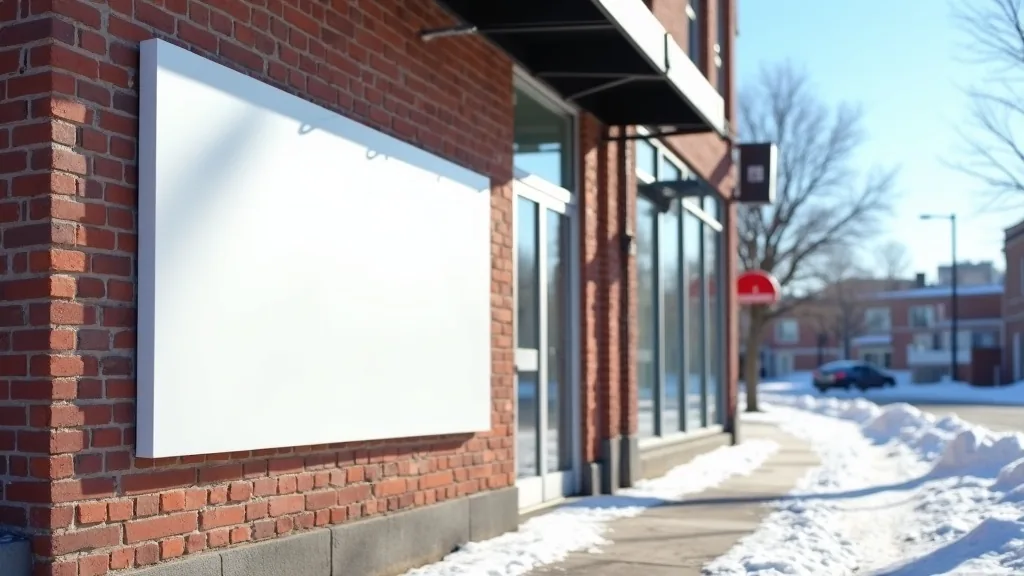 With a UV laminate or UV-stable inks, printed PVC foam board handles years of Canadian outdoor exposure.
The one technical detail worth planning for in the Canadian climate is thermal movement. Rigid PVC expands and contracts noticeably with temperature, at roughly 0.07 mm per metre per degree Celsius, so a 2.4 metre panel can move on the order of several millimetres between a minus 20 winter and a hot summer surface temperature. On an exterior installation, that means leaving expansion gaps at fasteners and edges rather than pinning the panel rigidly, or it will bow. Fasten through slightly oversized holes and let the sheet breathe with the seasons. For a permanent exterior sign or building cladding that must survive a decade of sun, freeze-thaw, and wind load, we would still point you to an ACM aluminum composite panel, which is built for exactly that duty, and our ACM sign fabrication guide covers how to cut, V-groove, and print it once you switch materials.
Weighed against the alternatives for a Canadian outdoor sign, foam board occupies a sensible middle: cheaper and lighter than acrylic or ACM, tougher and far more weather-tolerant than any wood-based board, and perfectly suited to the huge category of signage that lives one to three seasons or lives outdoors under a protective finish. Knowing that limit, and designing to it, is what separates a foam board sign that performs from one that disappoints.
Foam PVC Cut to Size: Pieces, Letters, and Full Sheets
Most people who search for foam PVC do not want a 4x8 sheet sitting in their garage. They want twelve panels at 18 by 24 inches, or a set of letters, or one odd-shaped backer for a sign that is already half built. That is the part of the job we do every day, and it is where buying from a stocking foam PVC supplier beats a big-box shelf.
We cut all six white gauges and all four black gauges on our own CNC router, from 3mm right up to 24mm. We never put PVC in the laser, for the chlorine reason covered below. How you order depends on what you need:
| What you need | Where to order it | How it is priced |
|---|---|---|
| Full 4x8 sheets | White PVC sheets or black PVC foam board | The sheet price on the page |
| Standard pieces: 12x12, 12x24, 19x24, 24x24 or 24x32 inches | The Cut to Size tab on the same product pages | Priced live on the page, per piece |
| Any other rectangle, or shapes, holes and cutouts | The cut-to-size configurator | Material share plus router time, shown before you order |
| Routed letters, logos, or a mixed job | Our quote request with your file | Quoted by a person, usually the same day |
A couple of things make the numbers kinder than people expect. We nest your pieces for maximum yield across the sheet, turning each one whichever way fits, so you are not paying for a whole sheet to get three parts out of it. And setup is charged once per run, so the price per piece drops as the quantity goes up, with volume discounts from 50 pieces of the same size.
If you are unsure whether a job belongs on the configurator or in a quote, send it as a quote. Someone will look at it and tell you, and nobody minds.
Buying PVC Foam Board Sheets in Canada
Buy from a plastics supplier who stocks the full thickness range as 4x8 ft sheets and can tell you the density, gauge, and colour they are shipping, because that is where the pricing and the selection both live. The Canadian sourcing landscape splits three ways: hardware and craft stores carry small branded pieces at premium per-square-foot prices, big-box print suppliers carry printable board in a limited gauge range, and industrial plastics suppliers like us stock white and black across the full thickness range with cut-to-size service. For anything past a couple of small panels, the full-sheet route wins on price every time, and our guide to choosing a plastic sheet distributor in Canada covers the questions worth asking any supplier.
FIDAR System stocks the full PVC and foam board range at our North York warehouse: white expanded PVC foam board in six thicknesses from 3mm to 24mm and black in four from 3mm to 18mm, all on 4x8 ft sheets. We offer warehouse pickup Monday to Saturday, same-week delivery across the GTA, and carrier freight to the rest of Canada, and cut-to-size runs through the configurator or our quote request when a job does not need full sheets. If you are weighing foam board against another substrate, our where to buy PVC sheets in Canada guide and our ACM panel guide round out the options, and you can always contact our team to talk through a gauge or a colour before ordering. Call ahead for pickup and we will stage your sheets at the dock.

TORONTO WAREHOUSE Unit 29, 601 Magnetic Drive, North York, ON, M3J 3J2
Phone: +1 (416) 857-7555 Office: +1 (416) 726-2428 Email: info@fidarsystem.com
Frequently Asked Questions
Written by
Red Seal Fabricator · 15 yrs hands-on experience
James is a Red Seal certified fabricator with 15 years of practical experience cutting, shaping, and installing acrylic, PVC, and composite panels. He writes practical, tool-in-hand guides for sign shops, fabricators, and serious DIYers who want real answers from the shop floor.
Reader Reviews
Loading reviews…