

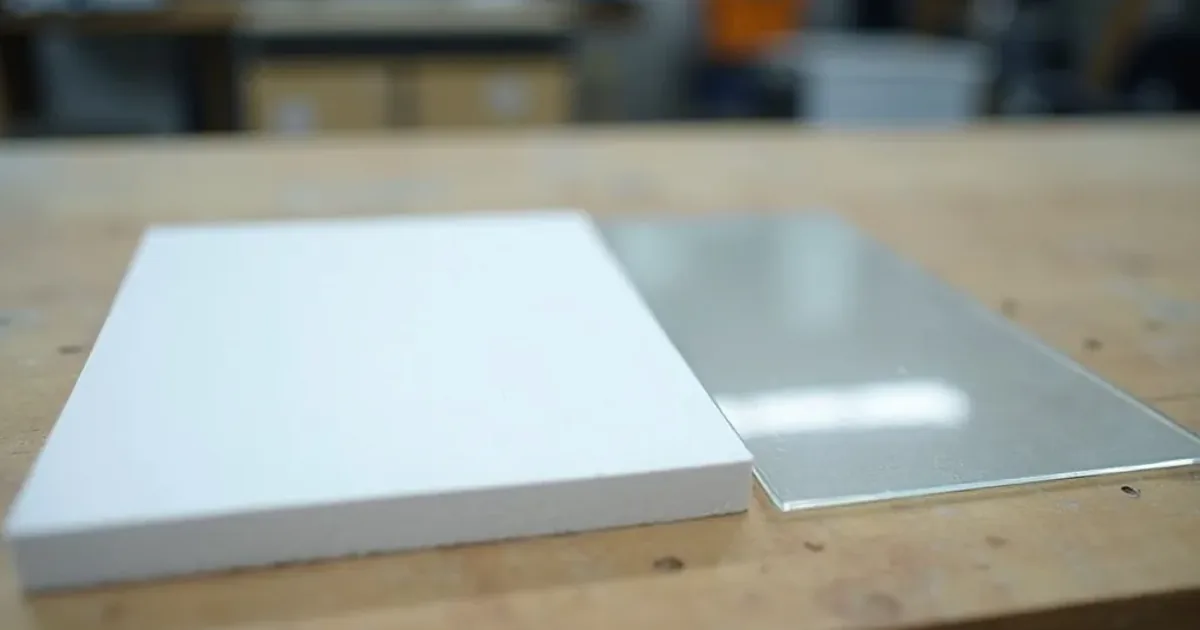
Walk into any sign shop in Canada and you will find two flat sheets doing most of the work: PVC foam board and acrylic. Together they cover the majority of the signage we quote every week from our North York warehouse, and the question we field constantly is which one a given job actually needs. The honest answer is that they are not really competitors so much as specialists, and picking the wrong one either wastes money or produces a sign that fails at its job.
Foam board is the lightweight, low-cost, print-anywhere workhorse. Acrylic is the clear, glossy, premium material that lights up and lasts. This guide puts them side by side on the things that matter for a sign, with real Canadian pricing from our shelves, so you can match the material to the sign instead of defaulting to whatever is on the rack. For the deeper material background, our complete PVC foam board guide for Canada and our complete acrylic buying guide for Canada each cover one side in full.
Key takeaways:
- PVC foam board is far cheaper: about one-third the price of acrylic at common sign gauges, and less than half the weight.
- Acrylic wins on clarity and light. It transmits about 92 percent of light and is the only choice for backlit and channel letter faces.
- Foam board prints direct with no primer and cuts with basic tools. Acrylic needs more care but laser cuts to a flame-polished edge.
- For outdoor life, acrylic lasts 10 years or more; standard foam board is a one to three year outdoor material without UV protection.
- Most professional sign programs use both, matched to each component. The skill is knowing which part gets which sheet.
What's the Difference Between PVC Foam Board and Acrylic?
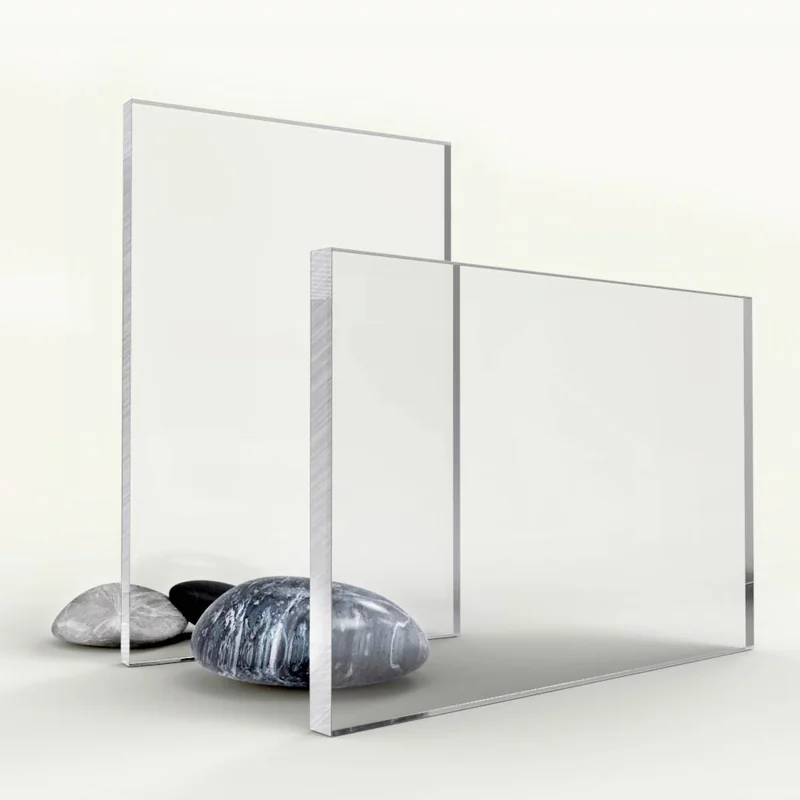
PVC foam board is a rigid, closed-cell foamed plastic sheet, lightweight and opaque with a matte print-ready surface. Acrylic is a solid, dense, glass-clear plastic (PMMA) with a hard glossy face. One is built to be printed on and handled cheaply; the other is built to be seen through, lit up, and kept looking sharp for years.
That core split drives every other difference. Foam board, sold under brand names like Sintra and Palight, has a density around 0.55 g/cm3 and a cellular core that makes it light and easy to cut but soft and opaque. Acrylic, sold as Plexiglas or plain cast and extruded sheet, is a homogeneous solid at 1.19 g/cm3 with roughly 92 percent light transmission in its clear form, a property documented in the PMMA material references. One is foam; one is glass-like plastic.
For signs specifically, that means foam board owns the flat, printed, opaque work, and acrylic owns anything transparent, illuminated, or premium. We stock both across a wide thickness range because a busy sign program almost always needs each of them, often on the same project.
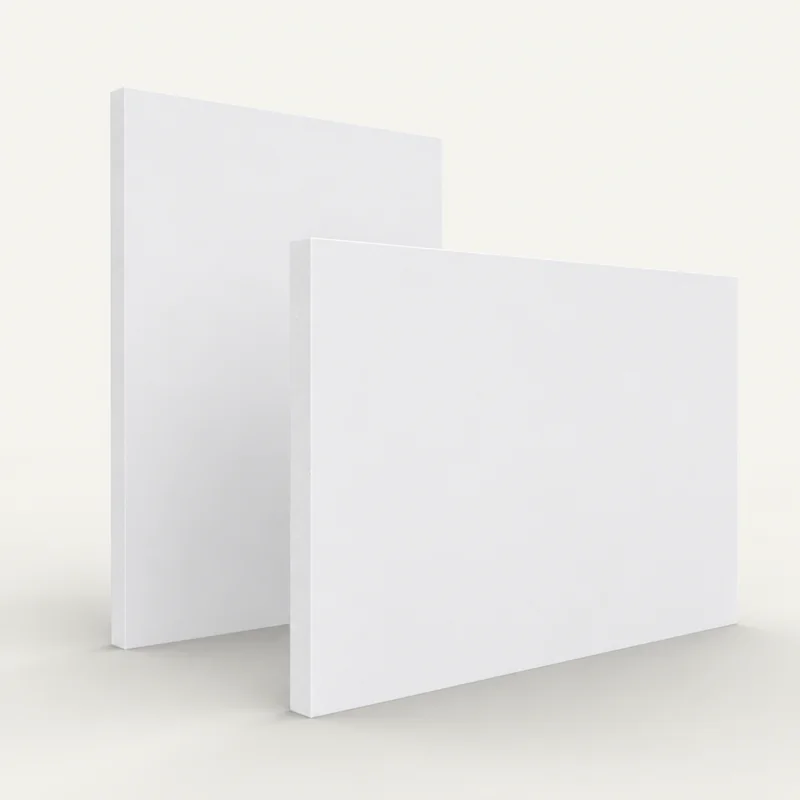
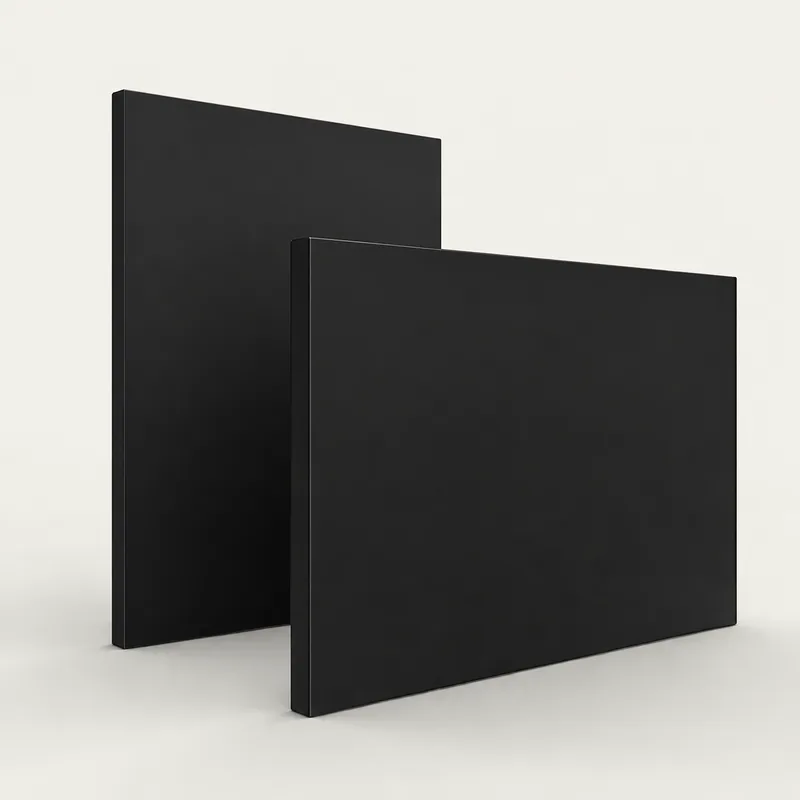
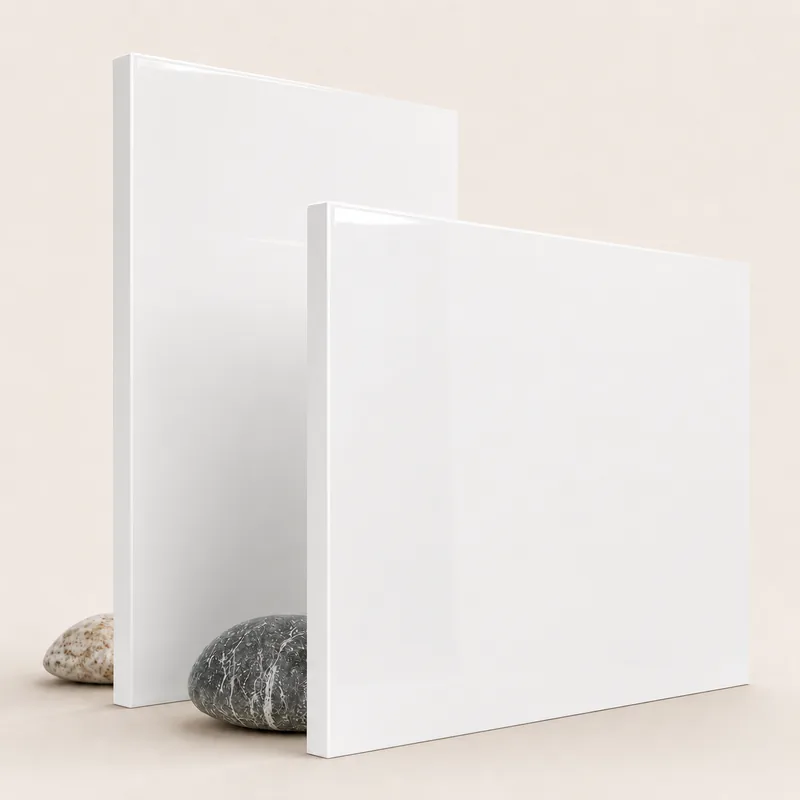
PVC Foam Board vs Acrylic for Signs: The Head-to-Head
Neither material is better overall; each is better at specific things. Set against the six factors that decide most sign jobs, foam board leads on cost, weight, and print-readiness, while acrylic leads on clarity, laser cutting, and outdoor life. The chart below scores each material on those factors for sign-making.
Suitability for sign-making, 1 = poor to 5 = excellent, rated by FIDAR from documented material properties and current CAD pricing.
Read the shape and the decision almost makes itself. If your priorities sit on the left of that chart, cost, weight, and printing, foam board is the answer. If they sit on the right, clarity, laser edges, and years outdoors, acrylic is. A directional sign printed in volume leans hard one way; an illuminated storefront face leans hard the other. Very few real sign jobs land dead centre, which is why the choice is usually clearer than buyers expect once they name their top two priorities.
The ratings come straight from documented properties and our own pricing, not opinion. The cost and weight gaps are measured facts, the clarity and laser behaviour are inherent material traits, and the outdoor scores reflect how each sheet actually ages in Canadian conditions. Everything below puts real figures behind each axis.
Which Is Cheaper for Signs, PVC Foam Board or Acrylic?
Foam board, by roughly three to one. This is the single biggest reason it exists as a sign material. At the gauges sign shops buy most, a full 4x8 ft sheet of white PVC foam board costs a fraction of the acrylic equivalent, and the gap holds across the range. These are our live warehouse prices in North York, not estimates:
| Substrate (4x8 ft sheet) | Thin sign gauge | Standard sign gauge |
|---|---|---|
| White PVC foam board | $28.13 (3mm) | $45.73 (6mm) |
| Clear extruded acrylic | $77.78 (3mm) | $158.08 (6mm) |
| Clear cast acrylic | $80.27 (2.8mm) | $160.57 (5.5mm) |
| White acrylic (opaque) | $95.47 (2.8mm) | $182.37 (5.5mm) |
Put in plain multiples: at the thin gauge, white acrylic costs about 3.4 times what the white foam board does, and clear extruded acrylic about 2.8 times. At the standard gauge, white acrylic runs close to 4.0 times the price of the 6mm foam. For a customer printing fifty directional signs, that difference decides the quote. A full 4x8 sheet is 32 square feet, so 6mm foam works out to about $1.43 per square foot against roughly $5.70 for white acrylic at the same footprint.
The takeaway is not that acrylic is overpriced; it is that you are paying for clarity, hardness, and weatherability that a printed directional sign does not use. Spend the money where the sign needs it. Our guide to buying acrylic sheets in Canada breaks down where the acrylic premium is genuinely worth it, and our white PVC sheets range shows the full foam pricing ladder.
Pricing out a sign run? Get both quoted.
Tell us the sign and the quantity and we will price PVC foam board and acrylic side by side, with cut-to-size and same-week Ontario delivery from our North York warehouse.
When Is PVC Foam Board the Right Sign Material?
Whenever the sign is flat, printed, opaque, and lives mostly indoors. Foam board is the default substrate for the highest-volume categories of signage in Canada, and its mix of low cost, light weight, and no-primer printing is hard to beat for that work.
 Flat-cut PVC foam board is the standard substrate for printed wayfinding and directional signage.
The jobs it owns:
- Printed flat-cut and directional signs. Real estate signs, event signage, wayfinding, and corporate lobby panels. A Mississauga sign shop can print, laminate, and cut a full sheet of these in an afternoon on 3mm or 6mm foam.
- Trade show and exhibition panels. At roughly 10 kg for a 6mm 4x8 sheet, big panels ship cheaply and install without a crew, which matters when a booth flies to a show and two people build it in a morning.
- Dimensional routed letters. Thicker 10mm and 18mm sheets route on a CNC into logo elements and reception-wall letters, and because black foam is coloured through the body, routed edges stay black with no painting.
- Point-of-purchase and retail displays. Lightweight, rigid, and cheap enough to be semi-disposable for a seasonal campaign.
For the fabrication and mounting details on this kind of work, our PVC sheets installation guide and the full PVC and foam board category cover the specifics. If a sign is going to be printed and screwed to a wall, foam board is almost always the right call.
When Is Acrylic the Right Sign Material?
Whenever the sign has to be transparent, illuminated, premium, or built to last outdoors. Acrylic costs more and demands more care to fabricate, but it does things foam board physically cannot, and for those jobs there is no substitute.
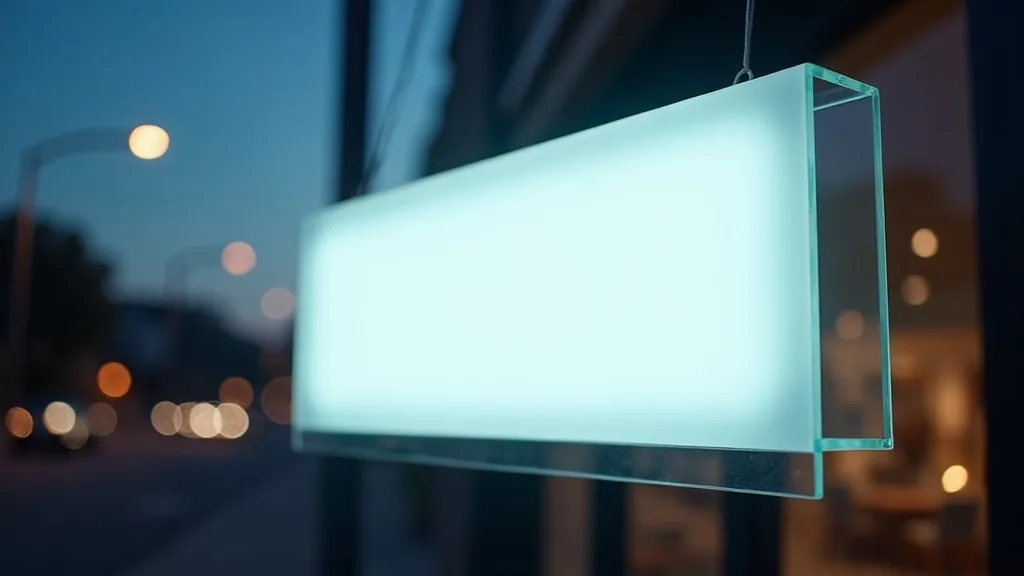 Only acrylic transmits light evenly enough for backlit sign faces and channel letters.
Where acrylic is the only real answer:
- Illuminated and backlit signs. Channel letter faces, light boxes, and cabinet signs rely on acrylic's 92 percent light transmission to glow evenly, the focus of our guide to acrylic and LED lighting. We stock clear cast acrylic and specialty white acrylic in the 7508 code specifically for LED sign faces.
- Premium dimensional signage. Polished-edge acrylic letters and layered logos on a corporate reception wall read as high-end in a way a matte foam sheet cannot.
- Permanent outdoor signs. Cast acrylic survives a decade or more of Canadian sun without yellowing, where standard foam board needs UV protection to last past a few seasons.
- Laser-cut detail work. Acrylic laser cuts to a clean, flame-polished, glass-like edge, ideal for intricate cut shapes and engraved plaques.
The trade-off is real cost and weight, so acrylic earns its place on the parts of a sign that need it, not the whole sign by default. Our acrylic versus polycarbonate comparison is worth a look if impact resistance is also on your list.
Not sure which substrate your sign needs?
Send us the design and application. We will tell you exactly where foam board fits and where acrylic earns its cost, with Canadian pricing for both.
Get a free quoteHow Do PVC Foam Board and Acrylic Compare to Cut, Route, and Laser?
Foam board is the more forgiving material on the shop floor, and acrylic is the more capable one in a laser. Both cut cleanly on a CNC router with a single-flute O-flute bit, which is how most production sign shops process either sheet, but their behaviour with hand tools and lasers is where they split.
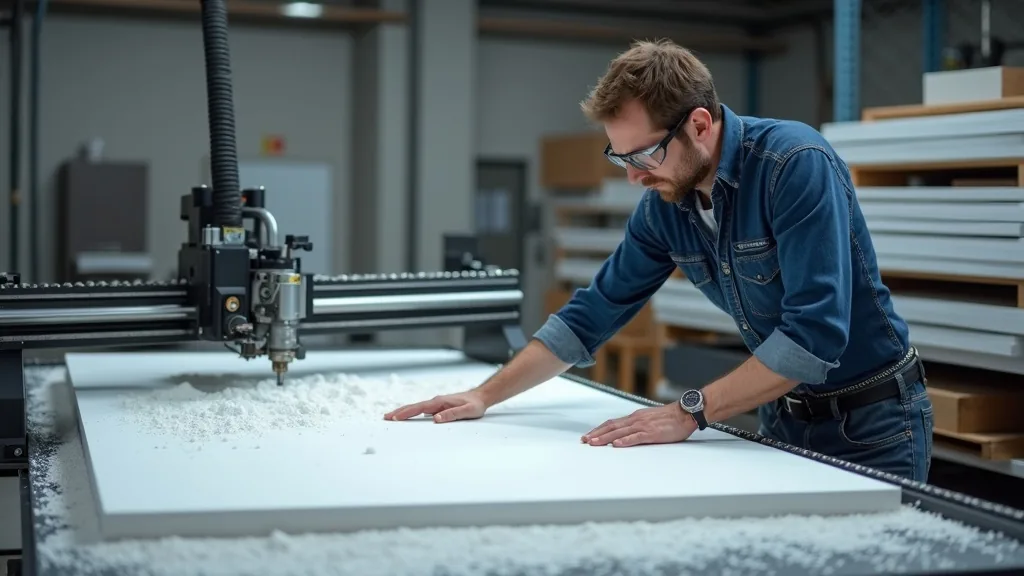 Both sheets route cleanly on a CNC, but only acrylic belongs in a laser cutter.
Foam board scores and snaps with a utility knife on thin gauges and routes without cracking, melting, or chipping, so a newer fabricator gets clean results quickly. Acrylic is harder and more brittle: it needs a fine-tooth carbide blade or a laser, drill holes must be oversized to prevent stress cracks, and it will craze if it is bonded or fastened under load. The upside is that acrylic laser cuts beautifully, while foam board must never go near a laser. Both bond well, though the chemistry differs: foam takes contact cement and PVC solvent weld, while acrylic joins with a capillary solvent cement like Weld-On 4 that cures nearly invisible.
That laser rule is a safety issue, not a preference. PVC is roughly 57 percent chlorine by mass, and vaporizing it releases hydrogen chloride gas that corrodes the machine and is hazardous to breathe, a hazard rooted in the chemistry of polyvinyl chloride. Keep foam board on the router and the saw, and send acrylic to the laser, as our acrylic laser cutting guide covers in detail. For matching thickness to span on either material, our sheet thickness guide applies to both.
Prefer to talk it through? Call us at +1 (416) 857-7555 for real answers from the warehouse floor.
Can You Use PVC Foam Board and Acrylic Together?
Yes, and the best sign programs do it constantly. Treating this as an either-or choice is the most common mistake we see. A single professional sign often uses both materials, each on the component that suits it, which is exactly how experienced fabricators control cost without sacrificing quality.
A backlit storefront sign is the classic example: the glowing face is clear or white acrylic for its light transmission, while the opaque returns, the backer panel, and the concealed raceway are foam board to save weight and cost where nobody is looking through the material. A trade show booth might use printed foam board for the large wall panels and a few polished acrylic accent pieces at eye level where the premium finish is noticed. A layered lobby logo often mounts crisp acrylic letters onto a routed foam backer, pairing the finish of one material with the cost of the other. The International Sign Association documents this mixed-substrate approach as standard practice across the sign trade.
The same logic extends past these two materials, and our sign shop's guide to sign board material runs the full substrate list job by job, with per-square-foot pricing for every sheet we stock.
The principle is simple: spend on acrylic where the sign is seen through or lit, and save with PVC foam board everywhere else. Get that split right and you get a sign that performs like an all-acrylic build at a fraction of the material cost. The broader signage market backs the demand for both, with the rigid PVC foam segment alone projected by Allied Market Research to reach $3.1 billion by 2033.
Where to Buy PVC Foam Board and Acrylic Sheets for Signs in Canada
From a supplier who stocks both in full sheets and can cut either to size, so you can build a whole sign from one order. Buying foam from one source and acrylic from another adds freight, delays, and mismatched lead times to a project that should ship together.
FIDAR System stocks white and black PVC foam board in six and four thicknesses, plus clear cast, extruded, white, and black acrylic, all in 4x8 ft sheets at our North York warehouse. We quote both materials side by side, cut to size through our quote request, and ship across Canada with same-week Ontario delivery and freight elsewhere. If you are weighing a specific sign job, our guide to where to buy PVC sheets in Canada and our ACM panel guide round out the substrate options. When a sign needs a rigid aluminum-faced panel instead, our ACM panel pricing and ordering guide lists the finishes and 4x8 prices, and the ACM sign fabrication guide covers how to cut, V-groove, and print it. You can always contact our team to talk through a material choice before ordering.


TORONTO WAREHOUSE Unit 29, 601 Magnetic Drive, North York, ON, M3J 3J2
Phone: +1 (416) 857-7555 Office: +1 (416) 726-2428 Email: info@fidarsystem.com
Frequently Asked Questions
Written by
Red Seal Fabricator · 15 yrs hands-on experience
James is a Red Seal certified fabricator with 15 years of practical experience cutting, shaping, and installing acrylic, PVC, and composite panels. He writes practical, tool-in-hand guides for sign shops, fabricators, and serious DIYers who want real answers from the shop floor.
Reader Reviews
Loading reviews…