

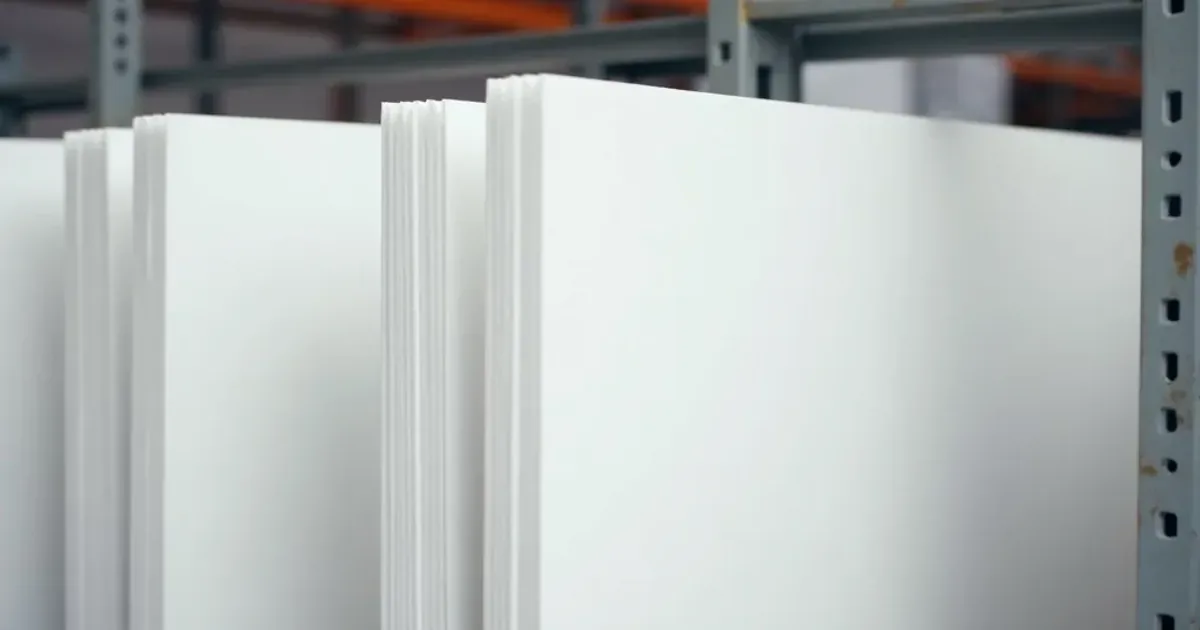
Sintra is not really a material. It is a brand name that took over its whole product category, the way Canadians say Kleenex instead of facial tissue or Ski-Doo instead of snowmobile. When a sign shop in Mississauga or a display builder in Vancouver phones us asking for "a few sheets of Sintra board," what they need is expanded PVC foam sheet, and we ship it every week from our North York warehouse.
The name is worth understanding before you buy, because it quietly shapes what you pay. Sintra is one brand of foamed PVC among a dozen, and searching for it by brand can push you toward boutique pricing on a material that is a commodity when you buy it as full sheets from a plastics supplier. This guide covers what we tell first-time buyers: what Sintra board is, whether the brand matters, what it is good at, real Canadian pricing, and how it stacks up against acrylic and ACM. For the wider material picture, our complete guide to PVC foam board in Canada is the full reference on the material, and our guide to buying PVC sheets in Canada covers grades and suppliers in depth.
Key takeaways:
- Sintra board is expanded (foamed) closed-cell PVC sheet, a brand from 3A Composites that became the generic name for the whole category.
- Komatex, Palight, Celtec, and Forex are the same class of material under different brands. The specification matters, not the label on the sheet.
- At about 0.55 g/cm3 it weighs less than half of acrylic, cuts with basic shop tools, and takes print and vinyl with no primer.
- Our 4x8 ft sheets run $28.13 to $186.53 CAD in white and $35.81 to $134.83 in black, which is $0.88 a square foot at 3mm and far less than small branded cut pieces.
- It is an indoor and short-term outdoor material. For permanent exterior signs, ACM is the tougher choice.
What Is Sintra Board, Exactly?
Sintra board is a sheet of moderately expanded, closed-cell PVC pressed into a homogeneous board with a low-gloss satin finish. If someone at the counter asks for "Sintra material", this is what they mean. In plain terms, rigid plastic foamed to a fine, even cell structure so it stays light and stiff while cutting like a dream. It is solid all the way through, not a skin over a core, so routed and sawn edges come out the same colour as the face.
The brand belongs to 3A Composites, the Swiss-owned manufacturer that also makes Forex and the Dibond aluminum panels many sign shops know. Per 3A's own spec sheet, genuine Sintra comes in 1mm to 12.7mm gauges, and it is self-extinguishing with a Class A fire rating under ASTM E84 in gauges of 3mm and under. Which means our 18mm and 24mm foam PVC is thicker than anything sold under the Sintra name, a handy thing to know when a job calls for a deep routed letter. Those two traits, clean fabrication and a real fire rating, are why it dominates the interior signage and display world rather than the general construction aisle.
What makes it behave so well on a router table is the foam structure itself. The closed cells mean it does not soak up water like wood or paper-faced board, and the density (around 0.55 g/cm3 for the sheets we stock) is low enough that a full 4x8 panel is genuinely a one-person lift. That combination, rigid but light, waterproof but workable, is hard to find in any other flat sheet.
Is Sintra Board the Same as PVC Foam Board?
Yes. Sintra is expanded PVC foam board, and any foamed PVC sheet made to the same density and gauge performs identically regardless of the brand printed on the masking. The material is a commodity; the name is marketing. This is the single most useful thing to understand before you order, because it opens up your supplier options and your pricing.
The brand names you will run into all describe the same product class. Foamed PVC is sold as Komatex by Kommerling, Palight by Palram, Celtec by Vycom, and Forex by 3A Composites, alongside regional brands like Trovicel and Vekaplan. A fabricator quoting you "Komatex" and one quoting "Sintra board" are offering the same rigid foam sheet. What actually separates a good board from a bad one is the specification underneath the name, and there are three things worth checking.
- Density and consistency. Quality expanded PVC holds an even cell structure across the whole sheet, so it routes cleanly and does not have soft spots that tear at the bit. Cheap off-spec board varies enough that edge quality suffers on detailed cuts.
- Colour and surface. Standard stock is bright white or black. The white should be a true, consistent white that prints accurately, not a grey-tinted recycled blend that shifts your colours.
- Fire rating, where it matters. For code-driven interior work, you want documented self-extinguishing behaviour. Confirm the ASTM E84 rating and the gauge it applies to before you specify.
We stock foamed PVC in white and black precisely because it is the everyday substrate our sign and display customers reach for most. Whether you call it Sintra board, PVC foam, or expanded PVC, it is the same sheet on our racks.

What Is Sintra Board Used For in Canada?
Almost anywhere a rigid, printable, lightweight board is needed indoors. Sintra board is the quiet workhorse behind most of the signage and display work happening in the country, and the jobs we supply it for break down into a few clear groups.
Flat-cut and printed signage. This is the bread and butter. Sign shops buy 3mm and 6mm sheets by the stack for directional signs, corporate lobby signage, real estate panels, and wayfinding. The smooth surface takes solvent, UV, and latex inks straight off the printer with no primer, and it takes vinyl film just as easily. A shop can print, laminate, and cut a full sheet of signs in an afternoon.
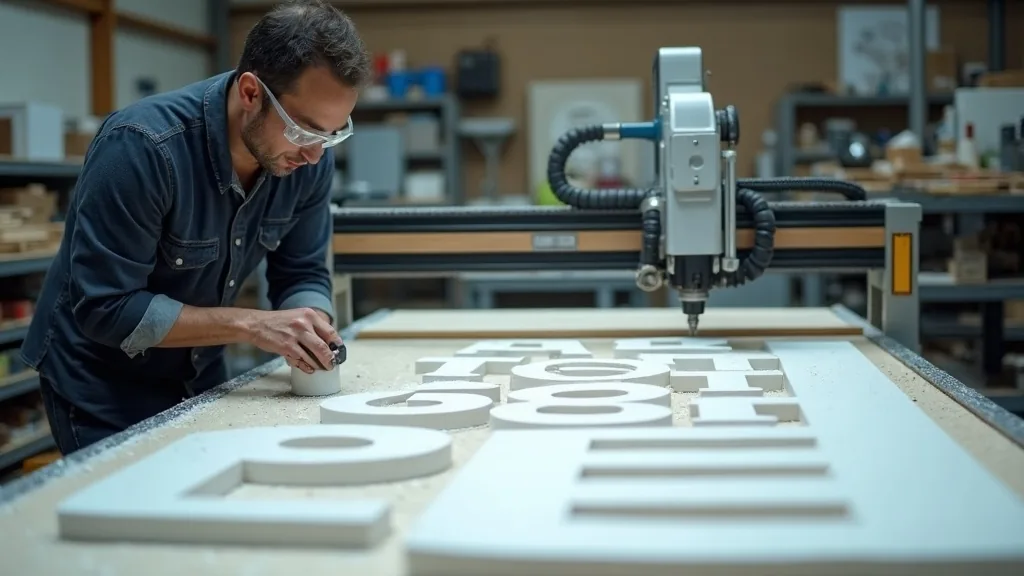 CNC routing dimensional letters from a white PVC foam board sheet in a Canadian sign shop.
Dimensional letters and routed shapes. Thicker 10mm to 18mm board goes on the CNC router to become dimensional letters, logo elements, and layered signage. Because the colour runs through the whole board, a routed edge on a black sheet stays black with no painting. A Toronto sign shop cutting a set of reception-wall letters will typically reach for 10mm PVC foam for exactly this reason.
Trade shows, exhibitions, and retail displays. Display builders love the weight. At 0.55 g/cm3, a big panel ships cheaply and installs without a crew, which matters when a booth has to fly to a convention and get built by two people in a morning. The International Sign Association represents a sign, graphics, and display industry made up of thousands of firms across North America, and rigid PVC foam is one of the core substrates holding much of that work together.
Architectural models and interior panelling. Design studios cut thin Sintra board for scale models because it scores, folds, and glues cleanly. On the construction side, its closed-cell, waterproof structure makes it a sound pick for bathroom and wet-area wall panels where wood-based board would eventually fail. Our PVC sheet installation guide for Canada walks through the mounting and joining details for that kind of work.
How Much Does Sintra Board Cost in Canada?
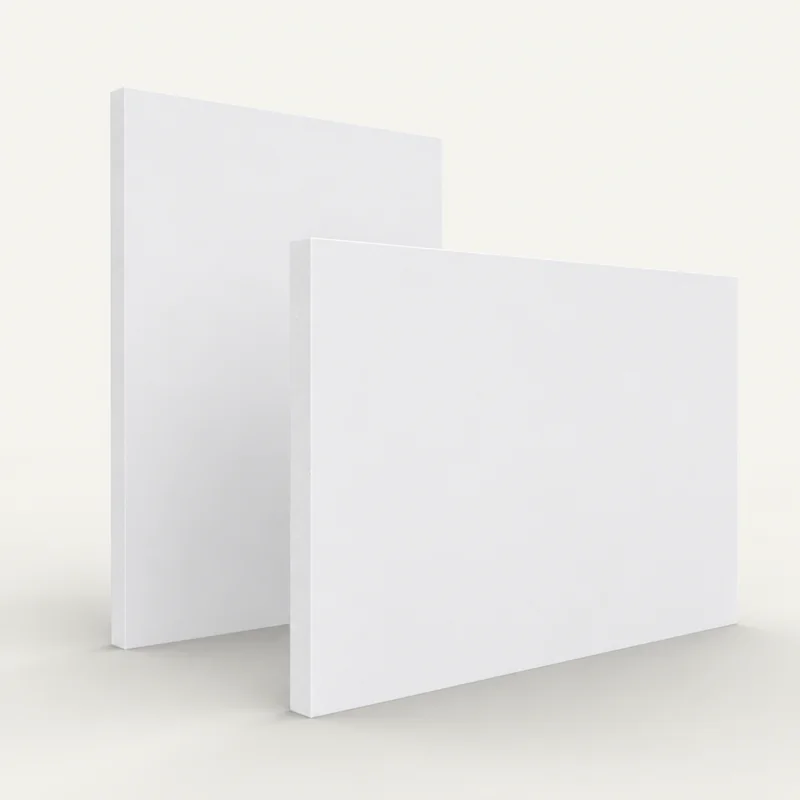
White expanded PVC foam board in the standard 4x8 ft format runs from $28.13 to $186.53 CAD per sheet at FIDAR System, depending on thickness. These are our live warehouse prices from North York, not estimates:
| Thickness | White PVC foam (CAD per 4x8 ft sheet) | Price per square foot |
|---|---|---|
| 3mm | $28.13 | $0.88 |
| 6mm | $45.73 | $1.43 |
| 10mm | $74.33 | $2.32 |
| 12mm | $85.33 | $2.67 |
| 18mm | $123.83 | $3.87 |
| 24mm | $186.53 | $5.83 |
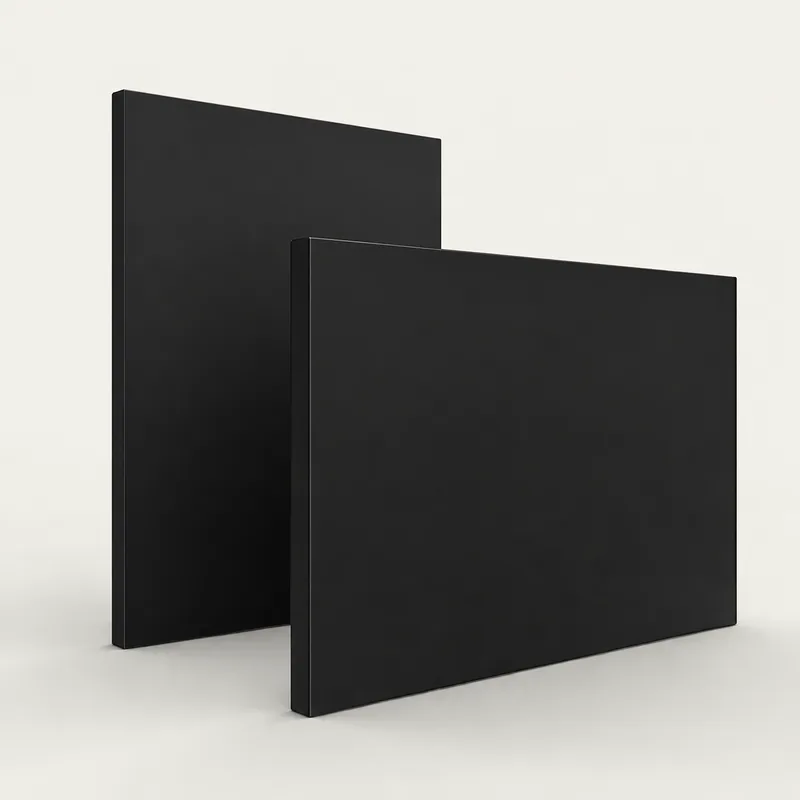
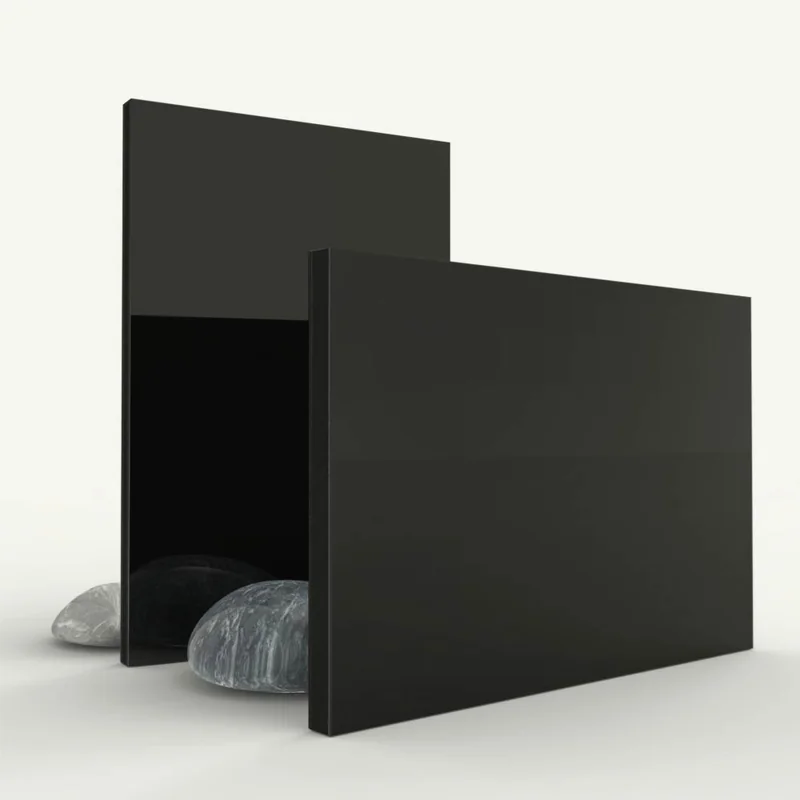
Black foamed PVC sits a little higher because the pigment loading costs more, and we stock it in four gauges. The gap is consistent across thicknesses, which is easiest to see side by side:
Two pricing points worth carrying into your budgeting. First, a full 4x8 sheet is 32 square feet, so 6mm white works out to about $1.43 per square foot and 3mm to roughly $0.88. Hold those numbers against any small cut-piece price you are quoted for branded Sintra elsewhere, and the full-sheet math usually settles the question fast. Second, the black premium is small and predictable, $6.58 to $11.00 a sheet, so choosing black to save a print pass on dark signage is almost always worth it.
Zoom out and the demand behind these prices is real: the global rigid PVC foam market was valued near $2.0 billion in 2023 and is projected by Allied Market Research to reach $3.1 billion by 2033, a projected 4.3 percent annual growth rate driven largely by signage and construction. It is not a niche material; it is one of the most-used flat sheets in the trade.
Ready to price out Sintra-grade PVC foam board?
Full sheets or cut to size on our CNC router, with same-week GTA delivery or freight anywhere in Canada from our North York warehouse. Tell us your gauge and quantity.
What Thickness of Sintra Board Do You Need?
For most buyers the answer is 6mm or 10mm. Thin 3mm is a sign face and print-mounting board, the mid gauges do the structural signage work, and the thick end is for routed letters and display bases. Matching gauge to the job saves both money and grief, so here is how we guide it:
| Thickness | Best for | Buying note |
|---|---|---|
| 3mm | Sign faces, vinyl substrates, print mounting, interior panels | The lightest, cheapest option; flexes if unsupported over a span |
| 6mm | Standard flat-cut signage, exhibition panels, foam-core upgrade | The volume seller; the default for most sign work |
| 10mm | Thicker sign bodies, dimensional letters, rigid display parts | Holds an edge on the router; the go-to for routed letters |
| 12mm | Large flat-cut letters, dimensional signage, sturdy panels | Steps up rigidity for bigger unsupported pieces |
| 18mm | Thick-panel signage, cabinet panels, display pedestals | Structural weight; confirm your bit length before routing |
| 24mm | Maximum-thickness bases, deep letter bodies, thick structures | Heaviest gauge; white only in our stock |
A rule that saves the most money: if you are replacing an existing panel, measure it and match it rather than guessing, because nominal and actual thickness do not always agree on old imported board. If you are designing from scratch and torn between two gauges, take the thicker one. On a typical sign order the step from 6mm to 10mm is $28.60 per sheet, which is nothing against a panel that sags in its frame. The same thickness-to-span logic we use for acrylic, covered in our sheet sizes and thickness guide, applies to foamed PVC.
How Do You Cut and Fabricate Sintra Board?
Easily, which is a large part of why the trade loves it. Sintra board cuts with a sharp utility knife on thin gauges and a fine-tooth saw or CNC router on thick ones, bonds with contact cement, and routes to a clean edge that rarely needs sanding. It is one of the most forgiving flat sheets a fabricator can work with.
 Score-and-snap works cleanly on thin PVC foam board with a sharp blade and a straightedge.
The methods, matched to gauge:
- Score and snap for 3mm and 6mm. Run a sharp knife along a metal straightedge two or three passes, then snap over a table edge. Clean, fast, no power tools.
- Circular or table saw for 10mm and up. A fine-tooth or carbide blade at a steady feed rate gives a crisp edge. Keep the feed moving so the blade never lingers and melts the cut.
- CNC router for shapes, letters, and volume. A single-flute O-flute upcut bit clears chips and prevents buildup, and PVC foam routes to a smooth edge with no fuzz. This is the standard method in production sign shops.
One firm rule: do not laser cut it. PVC is roughly 57 percent chlorine by mass, and a laser vaporizes that into hydrogen chloride gas that corrodes your machine optics and is genuinely hazardous to breathe. Acrylic is the laser-friendly plastic, as our acrylic laser cutting guide explains; foamed PVC belongs on the router. For bonding, contact cement applied to both faces is reliable for most assemblies, and a PVC solvent weld gives a stronger permanent joint on structural pieces.
Prefer to talk it through? Call us at +1 (416) 857-7555 for real answers from the warehouse floor.
Sintra Board vs Acrylic vs ACM: Which Should You Choose?
It depends on whether the job is about weight and cost, appearance, or outdoor durability. These three sheets cover most flat-panel signage work in Canada, and each wins in a different lane. Foamed PVC is the value and fabrication choice, acrylic is the optics and finish choice, and ACM is the exterior durability choice.
| Property | Sintra board (PVC foam) | Acrylic (PMMA) | ACM (aluminum composite) |
|---|---|---|---|
| Weight | Very light, about 0.55 g/cm3 | About 1.19 g/cm3 | About the same as acrylic at 3mm (3.56 kg/m2, weighed) |
| Best environment | Indoor, short-term outdoor | Indoor display and glazing | Permanent exterior |
| Surface and print | Prints direct, no primer | Best clarity and gloss | Premium metal finish |
| Fabrication | Knife, saw, router; very easy | Router and laser; easy | Router and score; needs metal blades |
| Laser cutting | No, off-gasses chlorine | Yes, flame-polished edges | No, it is metal |
| 3mm 4x8 sheet at FIDAR | $28.13 (white) | $77.78 (clear extruded) | From $63.18 |
In practice: a directional sign, a printed retail display, or a routed lobby letter set should be foamed PVC, because those jobs live indoors and reward light weight and low cost. A retail display case, an engraved award, or a backlit sign face should be acrylic, because those exist to be looked at or through. A permanent storefront sign or exterior cladding panel should be ACM, because it has to survive years of Canadian sun, freeze-thaw, and wind. We stock all three at the warehouse for exactly that reason, since no single sheet is the right answer to every job. For a deeper head-to-head on the two most common sign substrates, see our PVC foam board vs acrylic sheets for signs comparison, and for the full picture across every substrate we stock, our plastic sign board material guide works through the choice job by job with pricing per square foot.
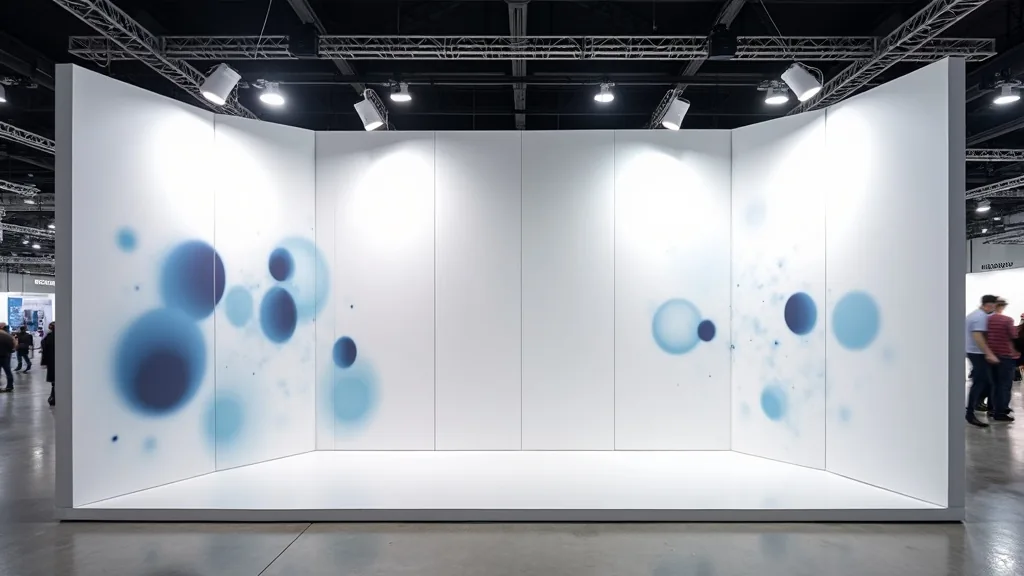 Lightweight PVC foam board panels form clean, shippable trade show and exhibition structures.
Sintra board, acrylic, or ACM? Get a straight answer.
Tell us the application and we will tell you which sheet actually fits, with Canadian pricing for all three. No pressure, just a spec.
Get a free quoteSintra Board Cut to Size
A lot of Sintra board is bought for jobs that never need a whole 4x8 sheet. Twenty wayfinding panels, a set of shelf talkers, one backer for a lobby sign. We cut all of it here on our CNC router, in every gauge we stock from 3mm to 24mm, and it never goes near the laser.
Five standard sizes, 12x12, 12x24, 19x24, 24x24 and 24x32 inches, are priced right on the white PVC sheets and black PVC foam product pages: pick a size and a quantity and the price shows before you order, with volume discounts from 50 pieces of the same size. Any other rectangle, or a piece with holes and cutouts, goes through the cut-to-size configurator, which shows the price before you order. Letters, logos and mixed jobs come through the quote request, and a person looks at every one.
That is usually the cheapest way to buy Sintra board by the piece in Canada, because you pay for your share of the sheet and the router time, not a craft store markup on a pre-cut square.
Where Can You Buy Sintra Board in Canada?
From any plastics supplier who stocks full sheets and can tell you the density, gauge, and colour they are shipping. The Canadian sourcing landscape splits three ways: hardware and craft stores carry small branded pieces at premium per-square-foot prices, big-box print suppliers carry printable board in limited gauges, and industrial plastics suppliers like us stock the full thickness range as 4x8 sheets with cut-to-size service. For anything past a couple of small panels, the full-sheet route wins on price every time. Our guide to choosing a plastic sheet distributor in Canada covers the questions worth asking any supplier.
FIDAR System stocks white and black expanded PVC foam board across the full PVC and foam board range at our North York warehouse, with warehouse pickup, same-week delivery across the GTA, and carrier freight to the rest of Canada. Cut-to-size runs through the configurator or our quote request when your project does not need full sheets, and you can always contact our team to talk through a gauge or a colour before ordering. Warehouse pickup runs Monday to Saturday; call ahead and we will stage your sheets at the dock.

TORONTO WAREHOUSE Unit 29, 601 Magnetic Drive, North York, ON, M3J 3J2
Phone: +1 (416) 857-7555 Office: +1 (416) 726-2428 Email: info@fidarsystem.com
Frequently Asked Questions
Written by
Red Seal Fabricator · 15 yrs hands-on experience
James is a Red Seal certified fabricator with 15 years of practical experience cutting, shaping, and installing acrylic, PVC, and composite panels. He writes practical, tool-in-hand guides for sign shops, fabricators, and serious DIYers who want real answers from the shop floor.
Reader Reviews
Loading reviews…