Material
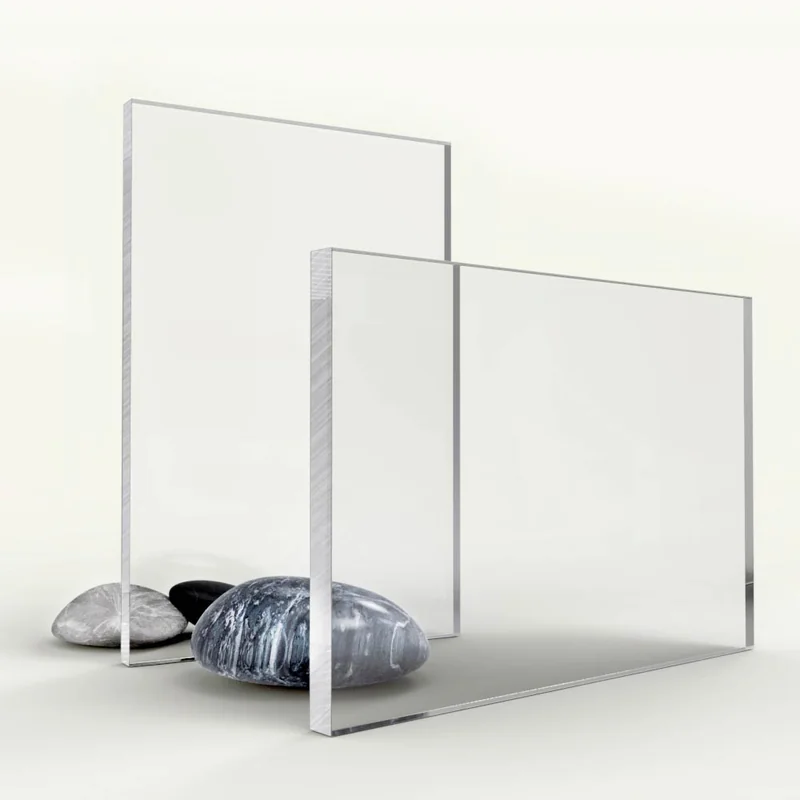
Cast PMMA (Polymethyl Methacrylate)
Light Transmission
92%
Color Code
#000 Clear
Surface
Glossy both sides, masked
UV Resistance
Moderate (outdoor use without UV coating not recommended)
Density
1.19 g/cm³
Tensile Strength
70 MPa
Heat Deflection
95°C
Flammability
Slow burning
Standard Sheet Sizes
3×6 ft · 4×8 ft
Thickness Range
1mm – 25mm
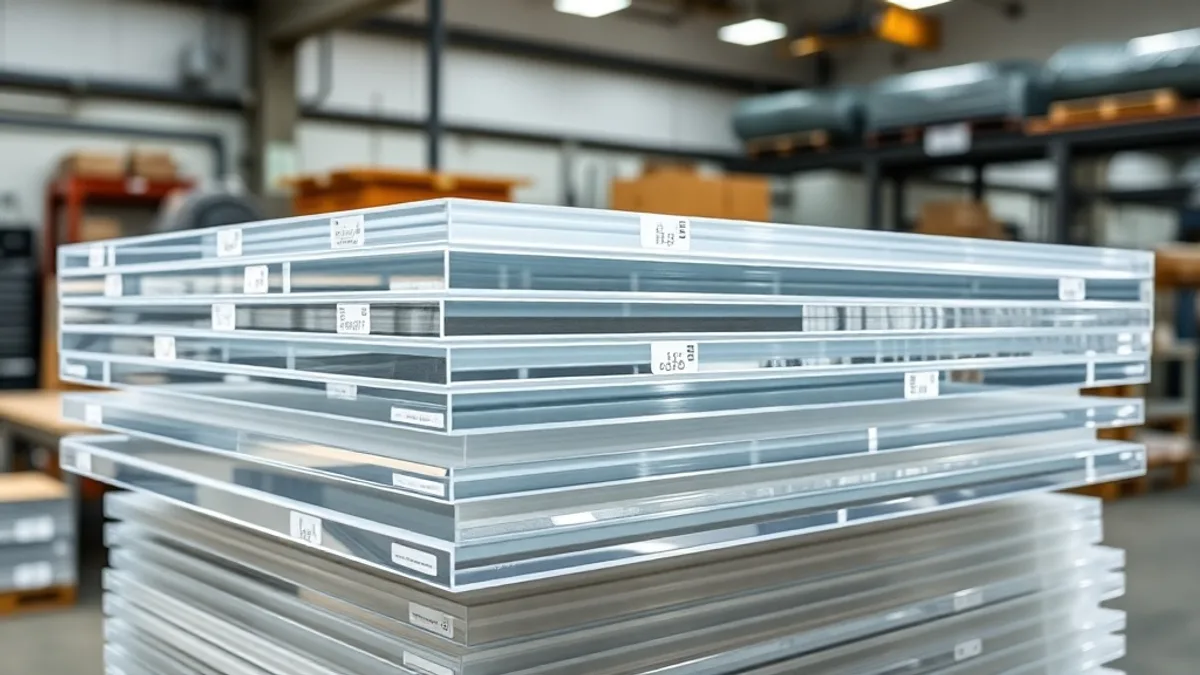
Clear cast acrylic sheets stacked in a sign fabrication workshop

FIDAR System's cast clear acrylic sheets are manufactured using the cell-cast process, which produces superior optical clarity and tighter thickness tolerances compared to extruded acrylic. The result is a sheet with excellent surface quality, minimal internal stress, and outstanding machinability.

Why Choose Cast Acrylic?

Cast acrylic is the preferred choice for applications where appearance and precision matter. Unlike extruded acrylic, the cast process allows for:

  • Tighter thickness tolerance (±0.4mm vs ±0.8mm for extruded)
  • Better surface hardness and scratch resistance
  • Superior optical clarity with no internal stress birefringence
  • Better chemical resistance
  • Easier laser engraving — the material turns white/frosted when engraved

Applications

Cast clear acrylic is used across a wide range of industries and applications:

  • Point-of-sale displays and retail fixtures
  • Protective glazing and sneeze guards
  • Signage faces and light boxes
  • Aquariums and water features
  • Architectural elements and partitions
  • Laser engraving and cutting
  • Machine guards and safety barriers

Fabrication

Cast clear acrylic can be cut, drilled, routed, laser-cut, and thermoformed. It bonds well with acrylic cements and can be polished to a high gloss finish. Remove protective masking only when the fabrication process is complete.

Awards & Promotions

Laser Engraved Awards & Trophies

Cast acrylic is the industry standard for laser-engraved awards and recognition plaques. When the laser engraves the surface, the material turns a bright, clean white - creating sharp contrast for logos, text, and fine detail. The 2.8mm and 4.3mm thicknesses are most common for desktop awards.
Signage & Graphics

LED Sign Faces & Light Box Panels

Clear acrylic front panels for illuminated channel letter signs, cabinet signs, and backlit light boxes. The 92% light transmission allows interior LED strips or modules to project through the face evenly. Typically 2.8mm to 5.5mm depending on sign cabinet depth.

Commercial Interiors

Retail Counter Sneeze Guards

4.3mm (3/16") and 5.5mm (1/4") cast acrylic are the most common thicknesses for counter-mounted and freestanding sneeze guards in restaurants, pharmacies, reception desks, and checkout counters across Canada.

Aquatics & Vivarium

Custom Aquarium Panels

Thicker gauges - 9mm, 12mm, 18mm, and 25mm - are used by custom aquarium builders for panel tanks, display aquariums, and vivarium enclosures. Cast acrylic is preferred over glass for larger installations due to its lighter weight and ability to be fabricated with solvent cement joints.

Retail & Visual Merchandising

Point-of-Sale Display Fixtures

Retail fixture fabricators use cast clear acrylic for brochure holders, product risers, shelf dividers, and countertop display cases. The material's optical clarity and ease of fabrication make it a go-to for custom retail display shops across Ontario and British Columbia.

Industrial Manufacturing

Machine Guards & Safety Enclosures

Clear acrylic panels (9mm–12mm) are commonly used as machine guard panels on CNC equipment, presses, and automated assembly lines - allowing operators to see the process while being protected from chips and debris.

How to Fabricate Cast Clear Acrylic Sheets

1

Measure and mark

Mark cut lines on the protective masking film using a fine-tip marker or scoring tool. Keep the masking on throughout fabrication to protect the surface.

2

Cut to size

Use a circular saw with a fine-toothed carbide blade, a table saw, or a jigsaw with a plastic-cutting blade. Score-and-snap works for straight cuts on thinner sheets (up to 4.3mm).

3

Drill holes

Use standard HSS or brad-point drill bits at moderate speed. Apply light pressure and back the sheet with scrap wood to prevent chipping on exit.

4

Laser cut or engrave

For CO2 laser cutting, cast acrylic produces flame-polished edges and clean white engrave results. Use air assist to clear debris and reduce edge discolouration.

5

Bond with solvent cement

Apply acrylic solvent cement (such as IPS Weld-On 3 or 4) to join pieces. Capillary action draws the cement into the joint. Hold the joint in place for 30–60 seconds, then allow 24 hours for full cure.

6

Remove masking

Remove the protective masking film last, after all cutting, drilling, and bonding is complete. Polish edges with a buffing wheel and polishing compound if a clear, polished edge is required.

Thickness Selection Guide

Cast Clear Acrylic Sheets thickness guide
ThicknessBest For
1mm – 1.5mmThin display overlays, framing inserts, light-duty protective covers
2mm – 2.8mm (~1/8")POP display panels, brochure holders, thin acrylic frames, small sign faces
4.3mm (~3/16")Sneeze guards, medium-duty display cases, light box faces, picture frame glazing
5.5mm (~1/4")Counter guards, retail display cases, partition inserts, signage panels
9mm (~3/8")Machine guards, thick display cases, safety barriers, heavy-duty framing
12mm (~1/2")Structural display units, thick panel glazing, aquarium side panels
18mm – 20mm (~3/4")Thick architectural panels, aquarium front and bottom panels, load-bearing displays
25mm (~1")Large aquarium panels, structural glazing, specialty architectural applications
Comparison between Cast Clear Acrylic Sheets and Extruded Acrylic
PropertyCast Clear Acrylic SheetsExtruded Acrylic
Thickness tolerance±0.4mm (tight, precise)±0.8mm (looser)
Surface hardnessHigher - more scratch-resistantSlightly softer surface
Heat deflection95°C80°C
Laser engravingProduces clean white/frosted resultPossible, but less consistent result
Chemical resistanceBetter resistance to solventsAdequate for most uses
Price (per sheet)Higher - premium materialLower cost
Thin gauge availability1mm minimum2mm minimum, but lower cost at 2–3mm

Cast acrylic is manufactured by pouring liquid PMMA monomer into glass molds and curing it slowly. This produces tighter thickness tolerances (±0.4mm), better surface hardness, a higher heat deflection temperature (95°C vs. 80°C), and superior laser engraving results. Extruded acrylic is pushed through a die at high speed, making it lower cost but with slightly looser tolerances and a softer surface. For professional fabrication, signage, and aquariums, cast is the standard choice. For high-volume laser cutting where cost matters, extruded is a reasonable alternative.

Yes - cast clear acrylic is one of the best materials for CO2 laser cutting. The laser produces a smooth, flame-polished edge that requires no secondary finishing, unlike machined edges. When laser engraving (rather than cutting), cast acrylic produces a clean, bright white frosted result - ideal for awards, nameplates, and engraved signage.

The most commonly used thicknesses for counter-mounted sneeze guards in Canada are 4.3mm (3/16") and 5.5mm (1/4"). The 4.3mm is suitable for most retail counter and reception desk applications. The 5.5mm is preferred for wider panels or freestanding barriers where additional rigidity is required.

Yes. FIDAR System ships from our North York, Ontario warehouse to addresses across Canada - including Toronto, Ottawa, Montreal, Vancouver, Calgary, and Edmonton. For large orders or freight shipping, contact us for a shipping quote. GTA customers also have the option to pick up directly from our warehouse.

There is no minimum order quantity on standard-size cast clear acrylic sheets. You can purchase a single sheet at the listed per-sheet price. Volume pricing is available for orders of 10 or more sheets of the same SKU - contact us for a bulk quote.

Yes. Cast acrylic can be thermoformed using a strip heater, line-bending tool, or oven. The material becomes pliable at approximately 140°C–180°C and holds its formed shape once cooled. It is suitable for creating bends, curves, and simple formed shapes. Thinner sheets (2mm–5.5mm) are most commonly thermoformed.

Cast acrylic has moderate UV resistance but it is not UV-stabilized unless specifically noted. For extended outdoor exposure, we recommend using a UV-resistant protective coating or selecting a UV-stabilized variant. For outdoor signage in direct sun, cast acrylic is commonly used with the understanding that it may yellow slightly over many years without UV protection.