

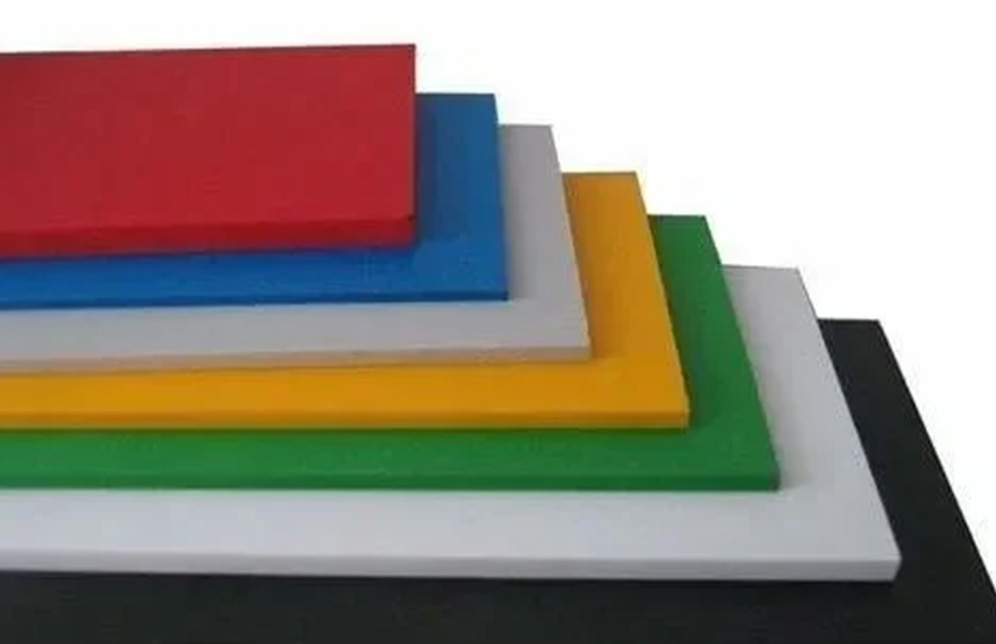
PVC sheet (rigid polyvinyl chloride in flat panel form) is one of the most practical construction and signage materials available in Canada, and one of the most underused by people who haven't worked with it before. It's waterproof, lightweight, easy to cut, accepts printed graphics beautifully, and tolerates Canadian outdoor conditions better than wood-based substrates that absorb moisture and swell. Once you install it properly, it's essentially maintenance-free.
This guide covers the full installation process for PVC sheets across the three most common Canadian applications: interior wall cladding, signage substrates, and outdoor applications. If you're still deciding on the right material, see our guide on where to buy PVC sheets in Canada for sourcing context. We'll cover thickness selection, cutting techniques, mounting methods, and the details that separate a professional installation from one that fails prematurely.
Why PVC Sheet Works So Well in Canadian Conditions
Wood-based substrates (MDF, plywood, Dibond alternatives) absorb moisture. In Canadian climates, where buildings cycle through significant humidity changes and outdoor installations face freeze-thaw cycles, moisture absorption causes warping, delamination, and degradation of printed graphics. PVC sheet doesn't absorb moisture at all. It stays dimensionally stable through Canadian winters, summer heat, and the humidity swings that come between.
This is why PVC has become the standard substrate for restaurant menu boards, exterior signage, wet-area wall cladding, and any application where a substrate that maintains its flatness over years of exposure matters. It's also why it's the default material for temporary barriers, construction site signage, and trade show displays that get repeatedly installed and removed.
The other practical advantage is machinability. PVC sheet cuts with woodworking tools (table saw, jigsaw, router) without the airborne silica dust hazard of cement board or the fiber release of composite panels. Chips are large and easy to control, and the cut edge is clean enough for most applications without additional finishing.
PVC Sheet Grades and What They Mean
Not all PVC sheets are equivalent. Understanding the grade you're buying matters for your application.
Expanded (foam) PVC: Also called sintra or foamex, this is the most common signage substrate. It has a closed-cell foam core between solid PVC skin layers. It's very lightweight, easy to cut, and accepts direct print and painted finishes. Our complete PVC foam board guide for Canada and Sintra board buyer's guide break down pricing, thickness selection, and fabrication in detail. Typical thickness range: 3-13 mm. Not structural: don't use it for load-bearing applications.
Solid PVC sheet: Denser, heavier, stronger than foam PVC. Used for structural applications: machine guards, tank liners, chemical-resistant partitions, wet-area cladding that needs mechanical strength. Available in a wider thickness range (1-50 mm).
UV-stabilized PVC: Incorporates UV absorbers for outdoor use. Standard PVC degrades and becomes brittle under UV exposure; UV-stabilized grades maintain their properties significantly longer. For any exterior application in Canada, UV-stabilized material is required.
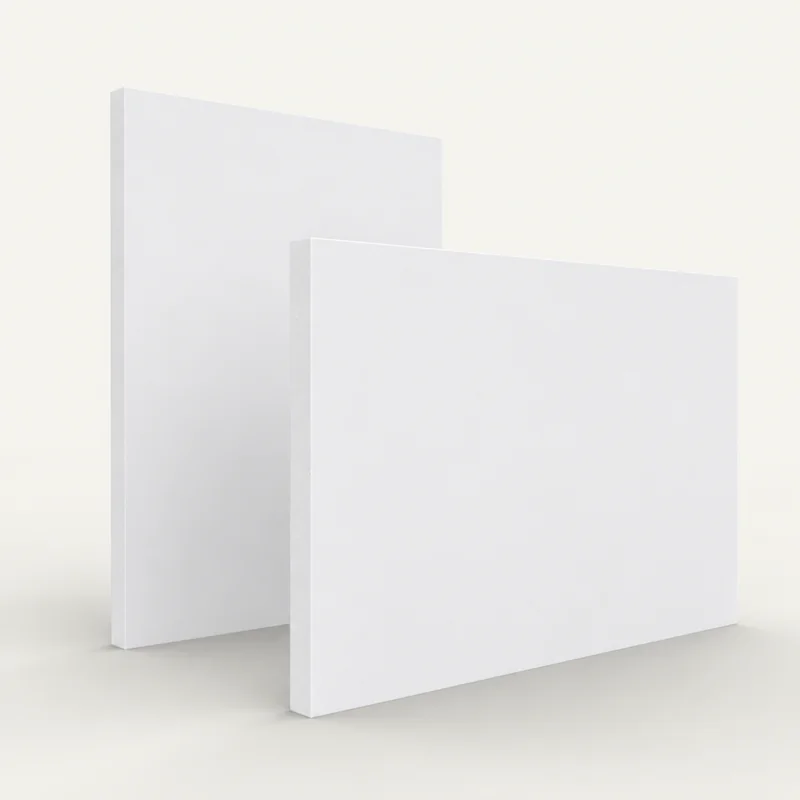
White vs. colored PVC: White is the standard for signage because it provides the brightest base for printed graphics. Black PVC is used for industrial applications, shadows/reveals in architectural applications, and as a backing material.

Thickness Selection by Application
| Application | Thickness Range | Recommended |
|---|---|---|
| Trade show displays, table signs | 3-5 mm | 3 mm (foam PVC) |
| Indoor signage (wall-mounted) | 4-6 mm | 5 mm |
| Restaurant menu boards | 5-6 mm | 5 mm (direct print) |
| Interior wall cladding | 4-6 mm | 5-6 mm |
| Outdoor signage, low-rise | 6-8 mm | 6 mm UV-stabilized |
| Outdoor enclosures, panels | 6-12 mm | 8-10 mm |
| Industrial partitions, chemical barriers | 10-20 mm | 12 mm solid |
| Structural applications | 15-50 mm | Engineering required |
Cutting PVC Sheet: Techniques That Actually Work
Table saw: The fastest, cleanest method for straight cuts. Use a fine-tooth carbide blade (60+ teeth on a 10″ blade). Feed slowly: PVC generates heat and can melt slightly at the cut line if you push too fast. A melted edge is not a failure, just cosmetically inferior; clean it with a warm heat gun.
Circular saw: Good for breaking down large sheets. Same blade considerations as the table saw. Support the sheet fully during cutting to prevent blade binding.
Jigsaw: For curves, internal cutouts, and irregular shapes. Use a fine-tooth blade designed for plastic. Keep the blade speed moderate: high speed generates too much heat.
Router: For edge profiling, trimming, and creating grooves or channels. O-flute single-flute bits designed for plastic give the cleanest result.
Scoring: Works on thin foam PVC (up to 5 mm) for simple straight cuts. Score deeply with a sharp utility knife, fold at the score line, and snap. Cleaner than a saw for quick on-site cuts.
Laser cutting: Don't. PVC releases hydrogen chloride gas under a laser, which MIT's environment, health and safety office calls extremely dangerous, and which corrodes the laser's optics. Use a router, saw or knife instead, which is how we cut both white and black PVC for cut-to-size orders.
PVC Sheet Market Growth: Canada
PVC sheet demand in Canada has grown steadily alongside the expansion of digital printing services and the shift away from wood-based substrates in commercial signage and construction.
Step-by-Step Wall Cladding Installation
Wall cladding with PVC sheet is one of its highest-value applications, particularly for commercial kitchens, food processing facilities, healthcare spaces, and wet areas where hygiene and moisture resistance are priorities.
Step 1: Assess and prepare the substrate wall. PVC cladding can be applied over concrete block, drywall, plywood, or steel framing. The wall must be flat, clean, dry, and structurally sound. Any bumps or irregularities in the substrate will telegraph through the PVC panel. Fill and sand any gaps; prime bare concrete or drywall.
Step 2: Measure and plan your layout. Map the panel layout before cutting. Minimize visible seams by planning where joints fall relative to door frames, fixtures, and corners. Standard PVC sheet is 4×8: plan layouts around this module.
Step 3: Cut panels to dimension. Cut at the shop or on-site using a table saw or circular saw. Leave 2-3 mm expansion gaps at wall edges and at panel-to-panel joints: PVC expands with temperature, and tight joints will buckle in summer if no gap is left.
Step 4: Apply adhesive or mechanical fasteners. For permanent installations, a construction-grade contact adhesive (check compatibility with PVC: some adhesives attack PVC surface) or PVC-specific adhesive works well. Apply in horizontal bands 300 mm apart, allow to tack per adhesive instructions, then press the panel firmly into position and roll with a J-roller from center outward to eliminate air pockets.
For removable or adjustable installations, mechanical fastening with screws and color-matched cap heads is appropriate. Pre-drill PVC: it cracks around screws driven without pilot holes. Use fasteners with large bearing washers or caps to spread load. Never overtighten: PVC compresses easily.
Step 5: Seal joints and edges. PVC-compatible silicone sealant in matching color (usually white) at wall-edge joints and panel-to-panel seams seals against moisture intrusion and gives a clean finish. Tool the sealant smooth with a wet finger immediately after application.
Step 6: Install trim and finishing elements. PVC corner profiles, edge trim, and reveal strips are available to finish exposed edges professionally. These snap or adhere over raw edges and give the installation a completed, specification-level appearance.
Outdoor Sign Installation
Outdoor PVC signage installation in Canada requires accounting for Canadian climate conditions: freeze-thaw cycles, UV exposure, and wind loads.
Mounting systems: Use aluminum angle or extruded aluminum framing systems rather than wood for outdoor sign structures: wood expands and contracts at different rates than PVC and will cause stress at fastener points over time.
Fastener selection: Stainless steel fasteners only for outdoor applications. Standard steel fasteners will rust and stain the PVC within a season.
Expansion allowance: An outdoor sign panel in Canada may experience a temperature range of 70°C between a January night and a July afternoon. Allow approximately 5 mm of expansion gap per metre of panel length in your mounting system.
Printing and graphics: Direct digital print on PVC works well for outdoor signage. For longest life, apply a UV-protective overlaminate (typically 3-5 mil gloss or matte) to the printed surface. Without overlaminate, outdoor digital prints on white PVC typically last 3-5 years in Canadian conditions; with UV overlaminate, 5-7+ years.
Installation Tips for All Applications
- Pre-drill all fastener holes: never drive screws directly into PVC without pilot holes
- Use gaskets or rubber washers under fastener heads to distribute load and prevent cracking at stress points
- Clean PVC surfaces before bonding with isopropyl alcohol: removes release agents from the manufacturing process that interfere with adhesive bonding
- Handle large sheets with at least two people: thin foam PVC bends easily under its own weight and can crease if not fully supported during transport and installation
- Avoid sharp point loading: always distribute mounting forces over as large an area as possible
Where to Buy PVC Sheets in Canada
Quality matters significantly in PVC sheet. Generic imported foam PVC often has inconsistent density across the sheet, which affects flatness, cut quality, and print adhesion. We stock both white and black solid and foam PVC sheet grades in Toronto, with Canada-wide shipping. For outdoor applications, we carry UV-stabilized grades.
TORONTO: Unit 29, 601 Magnetic Drive, North York, ON, M3J 3J2 Phone: +1 (416) 857-7555 Sales: +1 (416) 726-2428 Email: info@fidarsystem.com
Related Resources
Further reading from FIDAR System:
- Complete PVC Foam Board Guide for Canada: the full pillar reference on the material, grades, thickness, pricing, and fabrication
- Where to Buy PVC Sheets in Canada: sourcing guide for PVC sheet across Canada
- What Is ACM Panel? Complete Guide for Canada: alternative panel system for commercial exterior cladding and signage
- Complete Guide to Buying Acrylic Sheets in Canada: broader plastic sheet purchasing guidance when a transparent alternative is needed
Standards and regulatory references:
- Health Canada: Canadian guidelines on plastic materials in construction, food-contact, and consumer product applications
- CSA Group: Canadian standards for building products, construction materials, and fire performance testing
Frequently Asked Questions
Written by
Red Seal Fabricator · 15 yrs hands-on experience
James is a Red Seal certified fabricator with 15 years of practical experience cutting, shaping, and installing acrylic, PVC, and composite panels. He writes practical, tool-in-hand guides for sign shops, fabricators, and serious DIYers who want real answers from the shop floor.
Reader Reviews
Loading reviews…