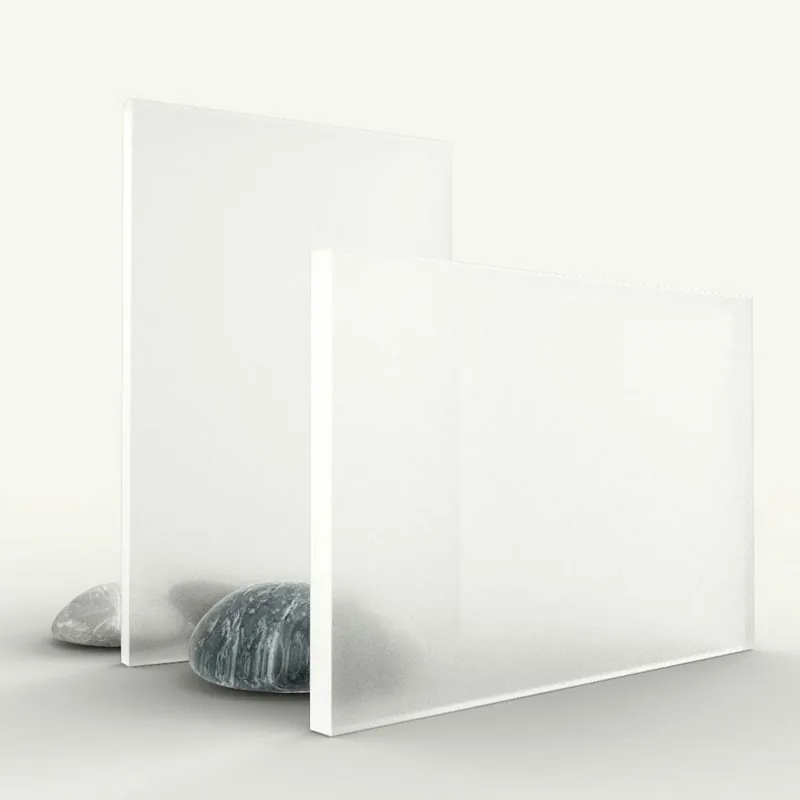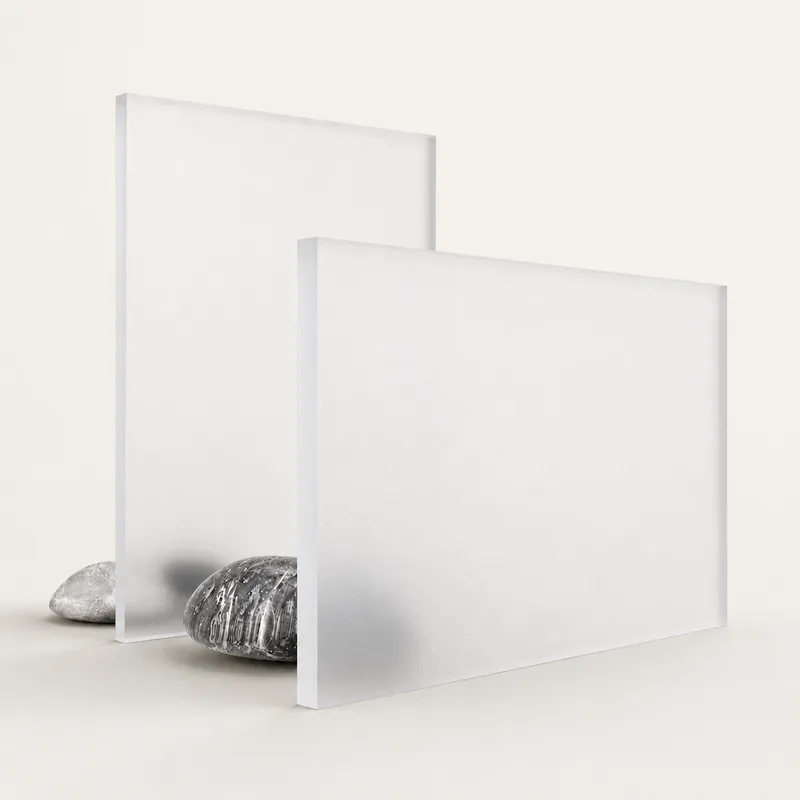
Material
Frosted polycarbonate (PC)
Type / Finish
Frosted / White Matte (single-sided)
Surface
Smooth gloss one side · Matte frosted one side
Frosted Finish
Co-extruded — permanent, non-delaminating
Impact Resistance
High (PC base material)
Temperature Range
-40°C to +120°C
Standard Sheet Size
4×8 ft
Thickness Options
3mm · 6mm
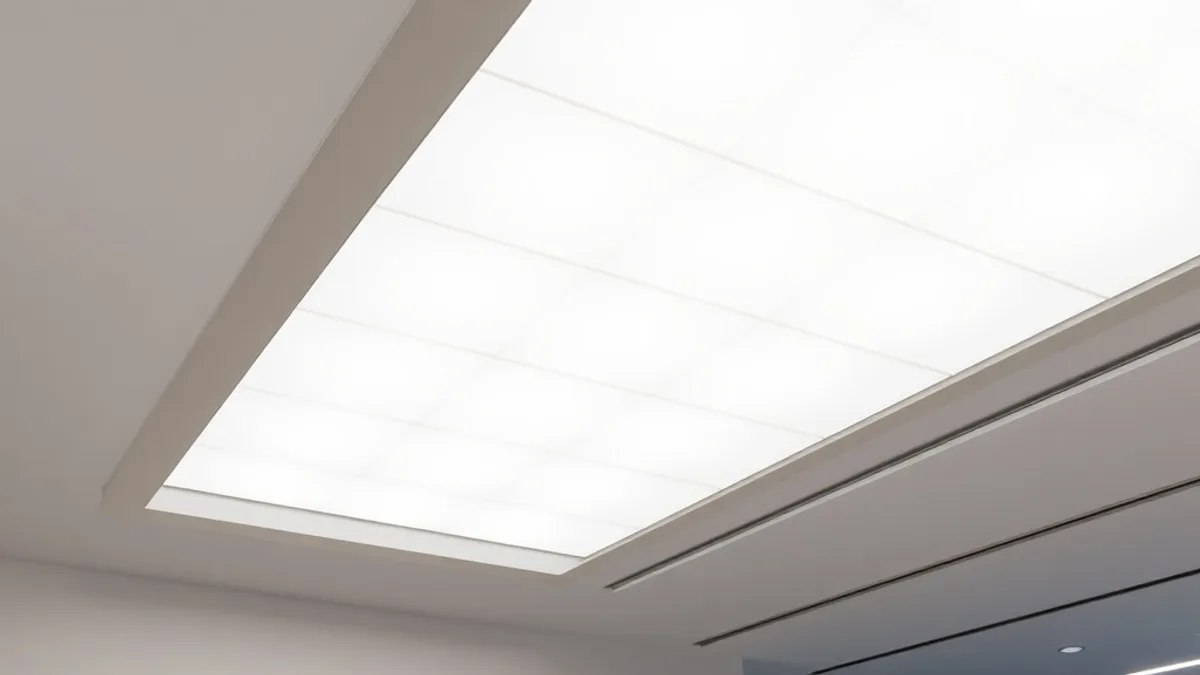
Frosted polycarbonate diffusion panels in an LED ceiling fixture

FIDAR System's single-sided frosted polycarbonate combines the impact resistance of PC with a factory-applied matte frosted finish on one side. The result is a panel that provides visual privacy while still transmitting light — ideal for partitions, doors, and LED diffusion applications where both properties are needed.

Properties

  • One smooth gloss side, one matte frosted side
  • Provides visual privacy while allowing diffused light transmission
  • Impact-resistant polycarbonate base — will not shatter like glass
  • Frosted finish is co-extruded — not a film coating, won't peel

Applications

  • Office partition inserts and glass door panels
  • Shower screen panels
  • LED panel diffusers (frosted side facing viewer)
  • Privacy glazing in commercial interiors
  • Cabinet door inserts

Fabrication Notes

Cut with standard PC tooling — circular saw, jigsaw, or laser. The frosted side is sensitive to abrasion; keep masking on until installation. Orient the frosted side according to the application: for privacy panels, face frosted side toward the view; for LED diffusers, face toward the light source.

Commercial Interiors

Office Partition & Door Panel Inserts

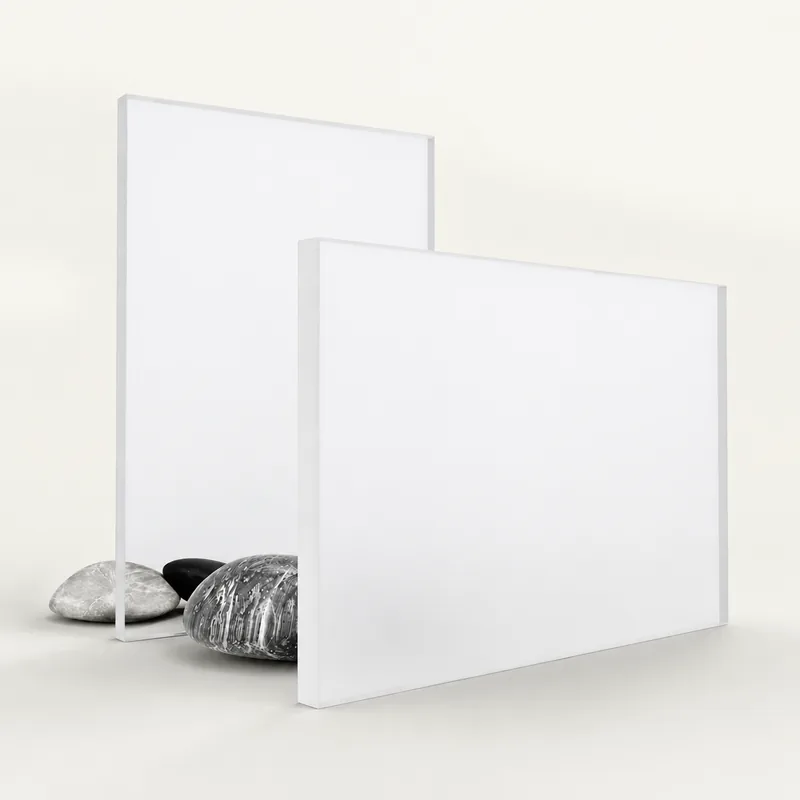
Single-sided frosted polycarbonate is used as glazing inserts in office partition systems and glass-look door panels where visual privacy is required without sacrificing light transmission. The impact resistance of polycarbonate makes it safer than frosted glass in door applications.
Construction & Renovation

Shower Screens & Wet-Area Panels

Frosted polycarbonate is used for shower screen panels and wet-area privacy glazing where the impact resistance and safety of polycarbonate are preferred over glass or acrylic alternatives. The 6mm thickness is typically used for framed shower door applications.

Signage & Lighting

LED Diffuser Panels

Single-sided frosted polycarbonate functions as a light diffuser - the frosted side scatters LED point sources while the smooth gloss side presents a clean face. Used in illuminated sign faces and architectural lighting where a clear-looking diffuser panel is required.

Furniture & Cabinet Making

Cabinet Door Inserts

The 3mm frosted polycarbonate is used as a shatter-safe insert in kitchen cabinet doors, retail display cases, and office furniture - particularly in environments where child safety or occupant safety is a design consideration.

Architecture & Construction

Exterior Canopies & Covered Walkways

The 6mm frosted polycarbonate is used in covered walkway canopy panels and exterior architectural glazing applications where a translucent but privacy-providing panel is needed. The wide operating temperature range (-40°C to +120°C) makes it suitable for Canadian outdoor conditions.

Healthcare & Institutional

Healthcare & Clean Room Partitions

Frosted polycarbonate is specified for healthcare exam room partitions, clean room dividers, and clinical environment glazing where a non-shattering, cleanable, semi-opaque panel meets both safety and privacy requirements.

How to Fabricate Single-sided Frosted Polycarbonate Sheets

1

Identify Sides

Frosted polycarbonate has one smooth gloss side and one matte frosted side. Identify them before cutting and mark on the masking film which side is which. Orientation in the final application depends on the use case - face frosted outward for privacy panels; face frosted inward (toward LED) for light diffuser applications.

2

Cut to Size

Use a circular saw with an 80T+ fine-tooth blade or a jigsaw for cuts. PC must be cut through - do not score-and-snap. Feed steadily; forcing the blade causes edge melting or cracking. For holes, use a standard twist drill at low speed with a backer board to prevent exit-side chipping.

3

Deburr Edges

Sand cut edges with 220-grit sandpaper to remove burrs and sharp corners. No flame-polishing - heat applied to the frosted side can locally alter the matte appearance. The edge will remain translucent but not frost-matched to the face - for exposed edges in finished installations, use edge trim or framing.

4

Install

For partition panels, set into a frame or track system - avoid adhesive contact directly on the frosted surface. For structural glazing applications, use PC-compatible structural silicone sealant. Maintain a 2–3mm clearance around all edges for thermal expansion.

5

Clean

Remove masking at installation. Clean with a soft microfibre cloth and mild soap. Do not use alcohol, ketone, or aromatic solvents - these will permanently dull the frosted surface. A solution of mild dish soap and warm water is the safe daily-use cleaner for frosted PC panels.

Thickness Selection Guide

Single-sided Frosted Polycarbonate Sheets thickness guide
ThicknessBest For
3mm (~1/8")Office partition inserts, cabinet door panels, shower screen panels, thin privacy glazing, LED diffusers
6mm (~1/4")Heavier-duty partition panels, structural door inserts, larger glazing applications, high-impact environments
Comparison between Single-sided Frosted Polycarbonate Sheets and P95 Frosted Acrylic
PropertySingle-sided Frosted Polycarbonate SheetsP95 Frosted Acrylic
Impact resistanceHigh (PC - bends, won't shatter)Standard (acrylic - brittle on sharp impact)
Frosted surfaceCo-extruded - permanent, non-peelingSurface-applied matte - equally permanent
Temperature range-40°C to +120°CUp to ~95°C heat deflection
Light transmissionHigh - frosted PC allows significant light~70% (similar range)
Available thicknesses3mm and 6mm2.8mm, 4.3mm, 5.5mm
PriceHigher (PC premium)Lower

Both are single-sided frosted panels that provide privacy and light diffusion. The key difference is the base material: frosted polycarbonate is impact-resistant (it bends rather than breaking), has a wider temperature range (-40°C to +120°C), and is self-extinguishing - making it the preferred choice for door panels, safety glazing, and wet areas. Frosted acrylic (P95) is more cost-effective and available in more thicknesses (2.8mm, 4.3mm, 5.5mm), making it better suited for display, partition inserts, and decorative applications.

For privacy panels and partition applications, install the frosted (matte) side facing the area where visibility should be blocked. For LED diffuser applications, the frosted side is typically placed facing the LED light source (inward), so the viewer sees the smooth gloss side. Always orient the frosted surface based on the specific application requirement.

FIDAR System stocks single-sided frosted polycarbonate in 4×8 ft sheets, in 3mm and 6mm thicknesses. Cut-to-size service is available for custom dimensions. Contact us for details.

Keep masking film on the frosted side during all cuts to protect the surface from scratch and tooling marks. Use a circular saw with a fine-tooth blade (80T+) or a jigsaw for straight and curved cuts. Feed slowly and steadily - pushing too hard can cause micro-cracking at the cut edge. PC cannot be scored-and-snapped; always cut through cleanly. Sand cut edges lightly with 220-grit if needed.

Frosted polycarbonate is FDA-compliant for food contact in many formulations, but confirm the specific product meets your application's food safety requirements before specifying. In food service environments (sneeze guards, partition panels), 6mm frosted PC is commonly used for its combination of safety, clarity, and ease of cleaning. It should be cleaned with mild detergent - avoid abrasive cleaners or strong solvents.

Standard polycarbonate can yellow under prolonged UV exposure without a UV-stabilized coating. If you are using frosted PC in direct outdoor sunlight for an extended period, we recommend verifying whether the specific product you are ordering has UV stabilization. For long-term outdoor glazing where optical clarity must be maintained, discuss UV-stabilized polycarbonate options with our team.