

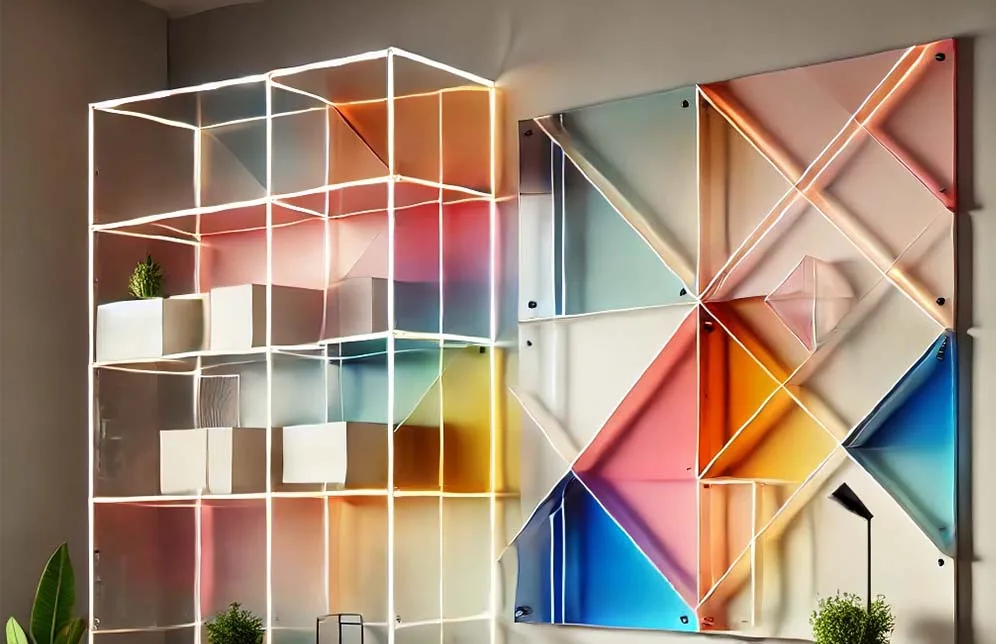
Clear acrylic sheet is one of those materials that sounds simple until you start sourcing it seriously. Walk into a hardware store and you'll find a few small format sheets in limited thicknesses. Talk to a specialty supplier and suddenly there are a dozen thickness options, two manufacturing types, several coating variations, and a meaningful quality spectrum from unknown Asian imports to certified European brands. The difference between them (in price, performance, and application suitability) is significant.
This guide explains what you're actually comparing when you shop for clear acrylic, what quality differences to look for, how to match material to application, and where to source it reliably in Canada. For full specifications including thickness selection by use case, see our acrylic sheet sizes and thickness guide.
What Makes Clear Acrylic "Clear"
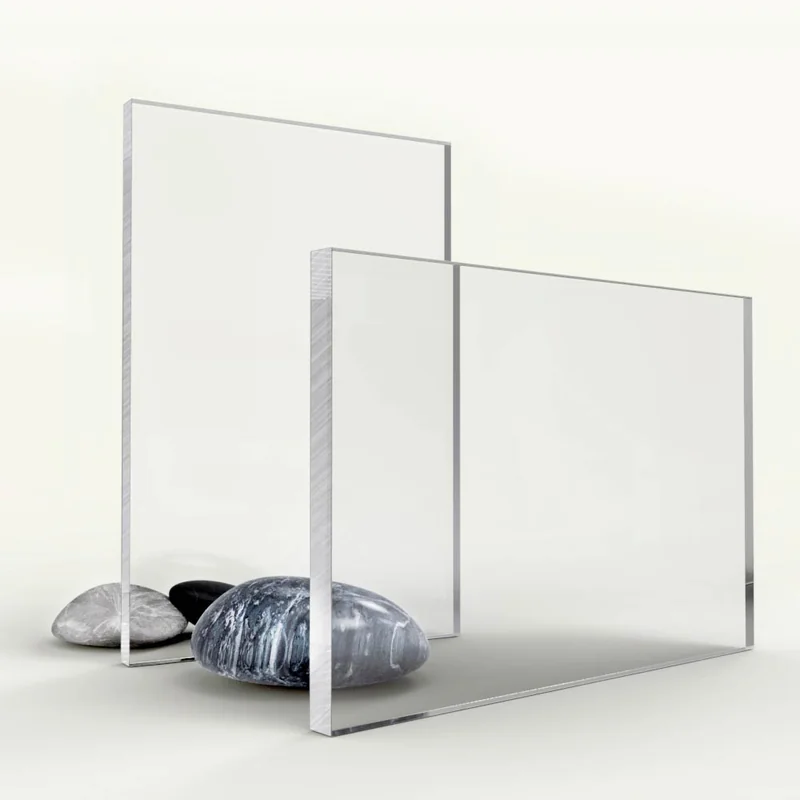
The defining property of acrylic sheet (the reason it's used for displays, signage, barriers, and architectural glazing instead of alternative plastics) is its optical clarity. Quality cast acrylic transmits up to 92% of visible light, which is actually better than most glass formulations and significantly better than other clear plastics like polycarbonate (87%) or PET (86%).
That 92% figure comes from the inherent optical properties of PMMA (polymethyl methacrylate), but it's achieved consistently only with quality manufacturing. Lower-grade material, particularly poorly-formulated extruded acrylic, can show optical distortions (slight waves or ripples visible when you look through the sheet at an angle) that reduce perceived clarity even if measured transmission values are similar.
For applications where clarity genuinely matters (retail display cases, illuminated signs, showcases, clear partitions in premium spaces), the material grade determines the result. Specify cast acrylic from a named manufacturer for these applications.
Cast vs. Extruded: The Clarity Difference in Practice
The manufacturing method affects more than just clarity:
| Property | Cast Acrylic | Extruded Acrylic |
|---|---|---|
| Light transmission | 92% | 88-90% |
| Optical distortion | None | Slight (angle-dependent) |
| Surface quality | Excellent | Good |
| Laser cutting | Flame-polished edges | Gummy, cloudy edges |
| Scratch resistance | Better | Slightly lower |
| Thermoforming | More consistent | Acceptable |
| Cost | Higher | Lower (15-25%) |
For display cases, signage, and precision fabrication: cast acrylic is the correct choice. For windows, general glazing, and applications where edge quality and perfect optical clarity aren't critical: extruded acrylic is a cost-effective and appropriate alternative.

Applications Where Clear Acrylic Excels
Retail Displays and Display Cases
Clear acrylic is the material of choice for retail product displays (cases, risers, showcase covers, and point-of-sale displays) because it presents products without visual interference. The material is rigid enough to hold its shape without framing, light enough to reposition easily, and clear enough to essentially disappear visually.
Standard retail display applications: 3-5 mm cast acrylic for cases and covers; 2-3 mm for risers and simple shelf dividers; 5-6 mm for free-standing showcase cases.
Protective Barriers and Sneeze Guards
Post-2020, clear acrylic barriers became a standard commercial fixture across Canada. The 6 mm thickness has become the de facto specification for most countertop barriers and office partitions: it's rigid enough to stay flat without framing, clear enough to maintain visual connection, and economical enough for widespread installation.
For barriers subject to more regular physical contact, stepping up to 8 mm adds meaningful rigidity. For very large unsupported panel spans, 8-10 mm is appropriate.
Architectural Glazing and Panels
Architects and interior designers specify clear acrylic for stair railings (replacing glass for weight and safety reasons), balustrade panels, interior partitions, and feature walls. Cast acrylic performs best for these applications because the flawless optical surface quality is visible in well-lit architectural environments.
Thermal expansion must be accounted for in architectural applications: acrylic expands and contracts significantly more than glass with temperature changes.
Signage: Backlit and Edge-Lit Applications
Clear acrylic transmits light along its edges, a property that glass doesn't share in the same way. An LED strip on the edge of a clear acrylic panel causes the edge to glow uniformly, creating the "edge-lit" effect used in illuminated logos, menu boards, and decorative signage.
For backlit applications where the full panel face is illuminated, opal/diffuser acrylic (such as P95 grade) is more appropriate than clear, as it distributes light evenly across the face. See our buyer's guide to frosted acrylic sheet in Canada for stocked gauges, sheet prices and LED setback guidance.
Clear Acrylic vs. Glass: When to Choose Each
Clear acrylic and glass look similar but differ in properties that matter for specific applications:
Choose acrylic when: Weight is a concern (acrylic is ~50% lighter); safety matters (acrylic doesn't shatter into sharp fragments); complex shapes are needed (acrylic can be laser cut, routed, and thermoformed); impact resistance is important.
Choose glass when: Scratch resistance is paramount (glass is significantly harder); temperature resistance is needed (glass handles higher temperatures); maximum UV transmission is required for certain optical applications.
For most commercial interior applications in Canada (signage, barriers, furniture, architectural features), clear acrylic is the practical choice.
Clear Acrylic Market Growth in Canada
Thickness Guide for Clear Acrylic
| Thickness | Weight (kg/m²) | Typical applications |
|---|---|---|
| 2 mm | 2.4 | Overlays, decorative accents, labels |
| 3 mm | 3.6 | Small signs, light diffusers, craft projects |
| 4 mm | 4.8 | Menu boards, POS displays |
| 5 mm | 6.0 | Countertop displays, small cases |
| 6 mm | 7.2 | Barriers, partitions, signage (commercial standard) |
| 8 mm | 9.6 | Furniture, large panels, exterior signs |
| 10 mm | 12.0 | Skylights, structural glazing |
| 12 mm | 14.4 | Heavy-duty structural applications |
Fabrication and Machining Benefits
Clear acrylic sheet fabricates predictably with standard commercial equipment:
Laser cutting: Cast acrylic vaporizes cleanly at the laser focal point, producing flame-polished, optically clear edges without additional finishing. This is the quality level that allows fabricators to use acrylic edges as design features in illuminated signs.
CNC routing: With O-flute single-flute cutters at appropriate speeds, CNC routing produces clean edges on acrylic. Suitable for complex shapes, profiled edges, and engraving.
Table saw cutting: Standard for straight cuts. 60+ tooth carbide blade, masking film on, moderate feed rate. Produces a clean edge adequate for most applications.
Thermoforming: Cast acrylic can be heat-formed at 160-180°C into curved and shaped forms. The material returns to its original clarity after cooling if handled correctly.
Bonding: Solvent cement (Weld-On 3, 4, or similar) fuses acrylic pieces at a molecular level, producing virtually invisible seams in clear applications. Strong, clear bonds are achievable with proper surface preparation.
Drilling: Use standard twist drill bits at moderate speed. Pre-drill pilot holes; start at a slow speed and let the bit feed at its natural rate. Clamp the sheet to prevent cracking at the exit hole.
What to Look for in a Clear Acrylic Supplier
The quality of your acrylic sheet supplier directly affects your fabrication results and project outcomes. Key criteria:
Material specification transparency: A quality supplier tells you clearly whether they're selling cast or extruded, which manufacturer, and what grade. Vague answers about "high quality material" are a red flag.
Thickness consistency: Ask for the manufacturer's published thickness tolerance. Our cast sheet comes from Hsin Hwa Chemical, which publishes ±8% of nominal from 2.8 mm to 15 mm (±0.22 mm at 2.8 mm). A supplier who cannot name a figure is guessing, and inconsistent thickness creates problems in precision fabrication.
Stock depth: For commercial buyers, a supplier who consistently has your standard thicknesses in stock is more valuable than one who's frequently on backorder. Ask about lead times before you're in a rush.
Cutting service: Suppliers who offer cut-to-size service are more likely to be serious operations with proper equipment and experience. It's also genuinely useful for buyers without in-house cutting capability.
Range: A supplier who stocks only 3 mm and 6 mm clear will let you down when you need 8 mm for a furniture application. A comprehensive supplier covers the full thickness range.
Why FIDAR System for Clear Acrylic in Canada
At FIDAR System, we supply clear acrylic sheets to sign shops, fabricators, contractors, and individual project buyers across Canada from our North York warehouse. Our range covers cast and extruded clear acrylic from 2 mm through 25 mm, including Evonik PLEXIGLAS® GS grades for demanding applications. We stock year-round with same-day or next-day availability for standard products.
For commercial buyers who need consistent material quality and reliable supply, we offer volume pricing and direct account relationships. For individual project buyers, we sell by the sheet with no minimum.
TORONTO: Unit 29, 601 Magnetic Drive, North York, ON, M3J 3J2 Phone: +1 (416) 857-7555 Sales: +1 (416) 726-2428 Email: info@fidarsystem.com
Related Resources
Further reading from FIDAR System:
- Complete Guide to Buying Acrylic Sheets in Canada: the comprehensive purchasing guide for cast and extruded clear acrylic
- Acrylic Sheet Sizes & Thickness Guide: select the right dimensions before placing your order
- Acrylic vs. Polycarbonate Sheets in Canada: confirm acrylic is the right material for your project
- Where to Buy Plexiglass in Toronto: Toronto-specific supplier options including pickup and cut-to-size services
Material specifications and manufacturer data:
- Evonik PLEXIGLAS®: technical data sheets, grade certifications, and optical performance specifications
- ASTM International: ASTM D4802 standard specification for polymethyl methacrylate (PMMA) acrylic plastic sheet
Frequently Asked Questions
Written by
Red Seal Fabricator · 15 yrs hands-on experience
James is a Red Seal certified fabricator with 15 years of practical experience cutting, shaping, and installing acrylic, PVC, and composite panels. He writes practical, tool-in-hand guides for sign shops, fabricators, and serious DIYers who want real answers from the shop floor.
Reader Reviews
Loading reviews…