

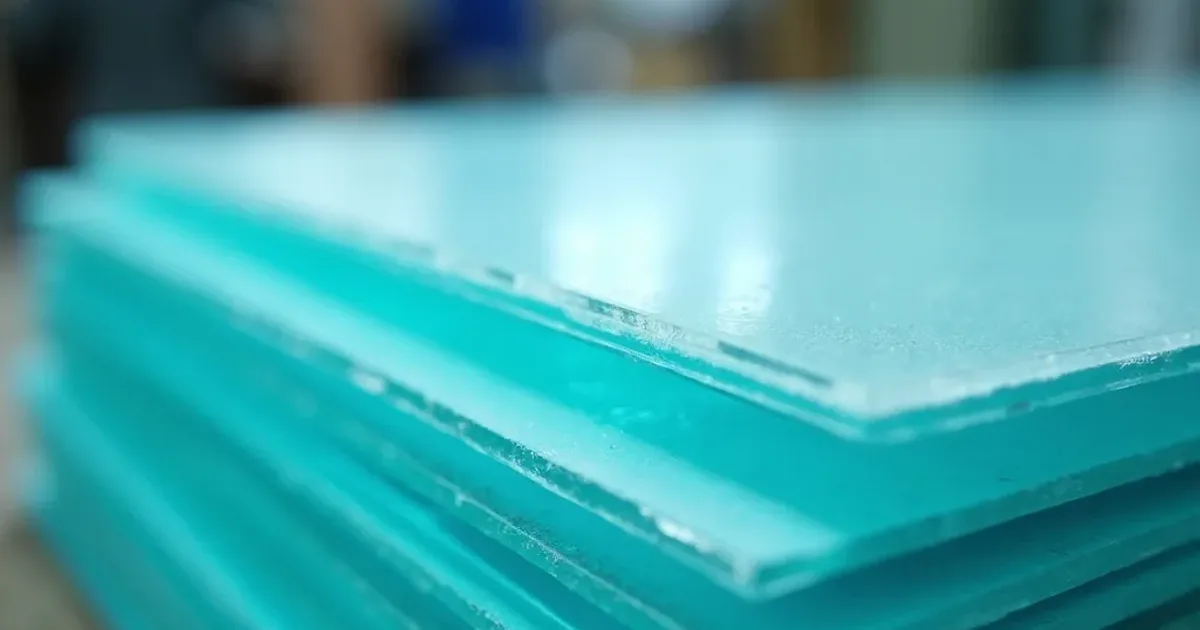
Lexan is not a material. It is a brand name that became so dominant that Canadians now use it the way they use Kleenex or Ski-Doo: as shorthand for the entire product category. The material underneath the name is polycarbonate, and when a machine shop in Hamilton or a contractor in Calgary asks us for "a sheet of Lexan," what they need is solid polycarbonate sheet cut to the right thickness.
That distinction matters for your wallet. Searching for Lexan by brand name in Canada often leads to small cut pieces at hardware store prices, while the identical material is available from industrial suppliers in full 4x8 ft sheets at a fraction of the per-square-foot cost. We supply that material every week from our North York warehouse, and this guide covers what we tell first-time buyers who call asking for Lexan.
For the full material deep dive covering formats, thickness selection, and Canadian installation practice, see our complete polycarbonate buyer's guide for Canada. This article focuses on the Lexan name itself: what it is, whether the brand matters, how it stacks up against plexiglass, and what it should actually cost you.
Key takeaways:
- Lexan is a polycarbonate brand, commercialized by GE in 1960 and owned by SABIC since 2007. The generic material is identical when made to the same specification.
- What matters is the spec sheet, not the brand: co-extruded UV protection, thickness tolerance, and a UL94 V-2 fire rating.
- Lexan and plexiglass are different materials. Polycarbonate wins on impact and cold bending; acrylic wins on clarity, scratch resistance, and price.
- In Canada, expect to pay $90.65 to $357.95 CAD per 4x8 ft sheet depending on thickness, with volume pricing from 10 sheets.
- Buy from a supplier who can confirm which side carries the UV layer. Generic sheet with no documentation is the most common source of failed outdoor installations.
What Is Lexan, Exactly?
Lexan is the registered trademark for polycarbonate resin and sheet first commercialized by General Electric in 1960, and owned today by SABIC, which acquired GE Plastics in 2007. It is one of the most successful genericized trademarks in industrial materials: the name became the product.
The same thing happened to acrylic a generation earlier, when Plexiglas went from one company's brand to the word everyone uses for clear acrylic sheet. The pattern repeats because buyers need a short word for a long chemical name, and "polycarbonate" loses to "Lexan" in every shop conversation.
Other manufacturers sell the same polymer under their own names. Covestro sells Makrolon, and Plaskolite sells Tuffak. A fabricator who quotes you "Makrolon" and one who quotes you "Lexan" are offering the same class of material, and what separates a good sheet from a bad one is not the brand on the masking film. It is the specification underneath it, which is where Canadian buyers should focus their attention.
Is Lexan Better Than Generic Polycarbonate?
No, provided the generic sheet is manufactured to the same specification. Polycarbonate is polycarbonate: the polymer chemistry that gives Lexan its impact resistance is identical in any properly made solid PC sheet. What actually varies between suppliers, and what you should verify before ordering, comes down to three things.
UV protection, and how it is applied. Quality outdoor-grade sheet has a UV-absorbing layer co-extruded into the surface during manufacturing, molecularly bonded so it cannot peel or wear away. Cheaper sheet uses a sprayed coating that degrades with weathering, or skips protection entirely. Unprotected polycarbonate yellows and embrittles within 2 to 3 years of Canadian sun. Our solid clear sheets carry a co-extruded UV layer on one side, and we mark which side on every order.
Thickness tolerance. Specification-grade sheet holds within plus or minus 0.2mm across the surface. Off-spec import sheet can vary enough that a guard panel sits proud of its frame and fails inspection. The savings on a cheap sheet disappear the first time a fabricator has to shim or re-cut.
Fire and safety certification. Machine guarding and public glazing applications need documented self-extinguishing behaviour, which means a UL94 V-2 rating you can show a safety officer. The Plastics Industry Association maintains material standards documentation for polycarbonate and related thermoplastics that is worth bookmarking if you write specifications regularly.
Our solid clear polycarbonate sheets meet all three requirements, which is why we describe them as Lexan-grade: same polymer, same performance, verified specification, without the brand markup.
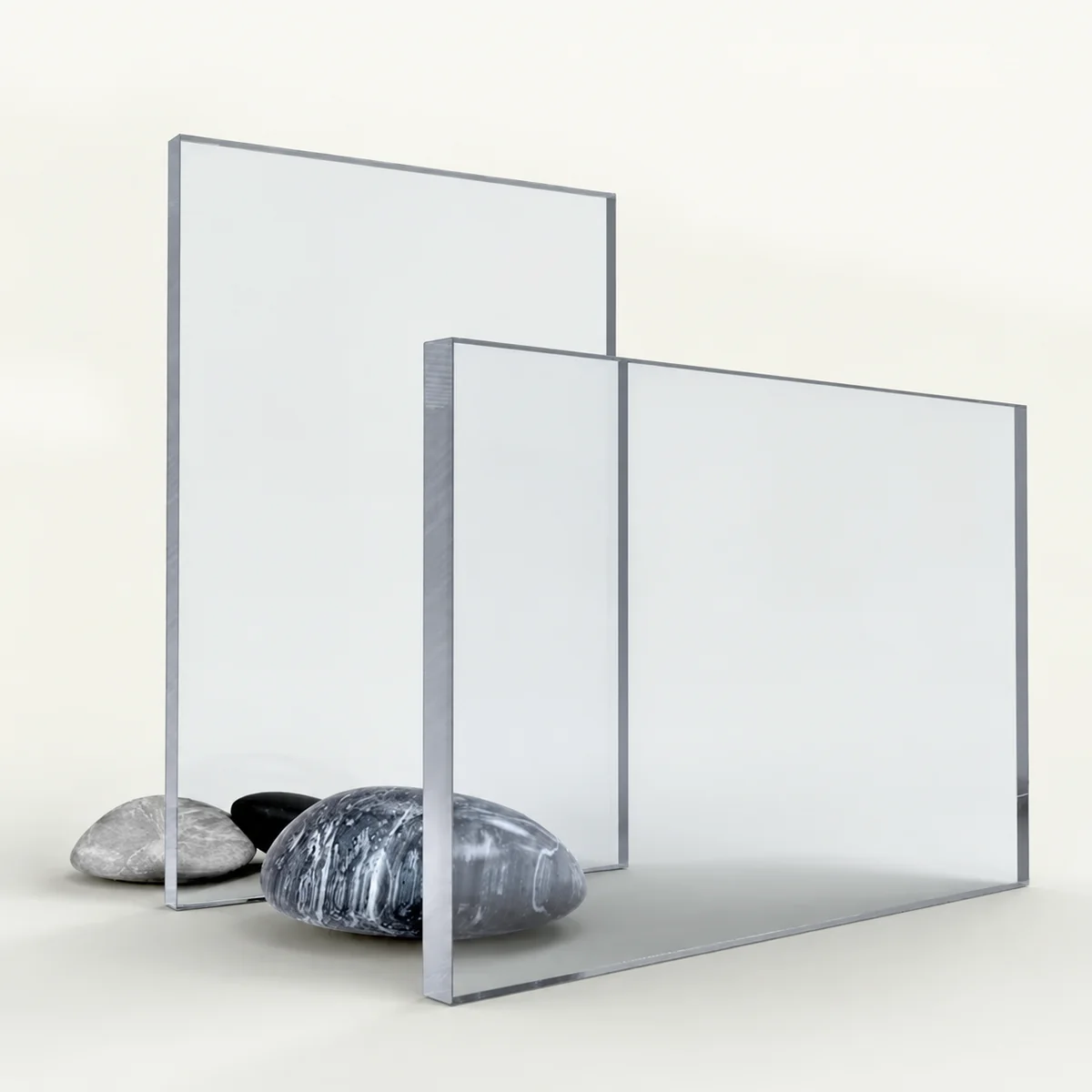
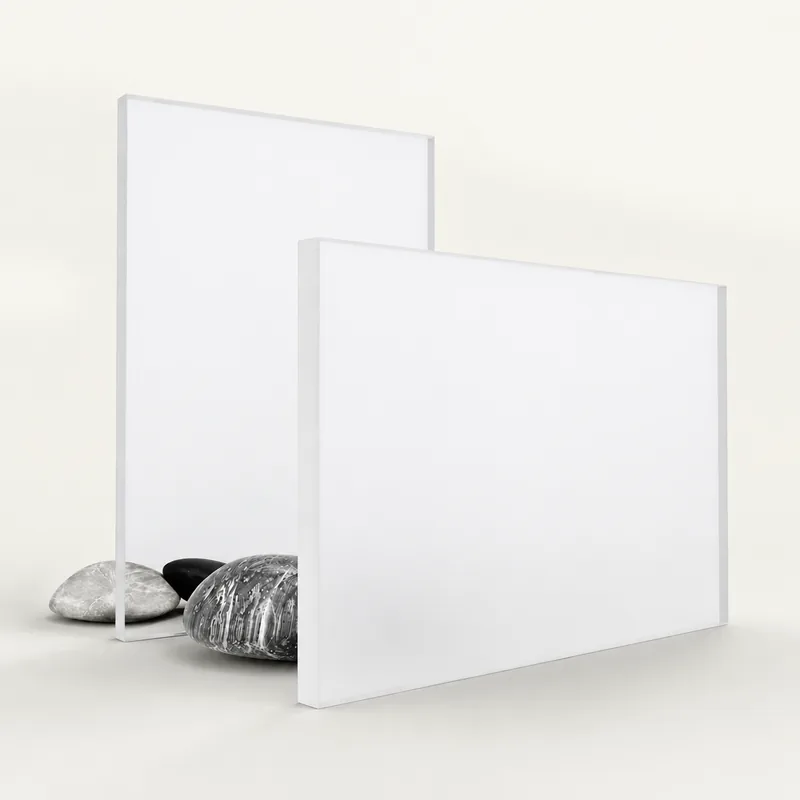
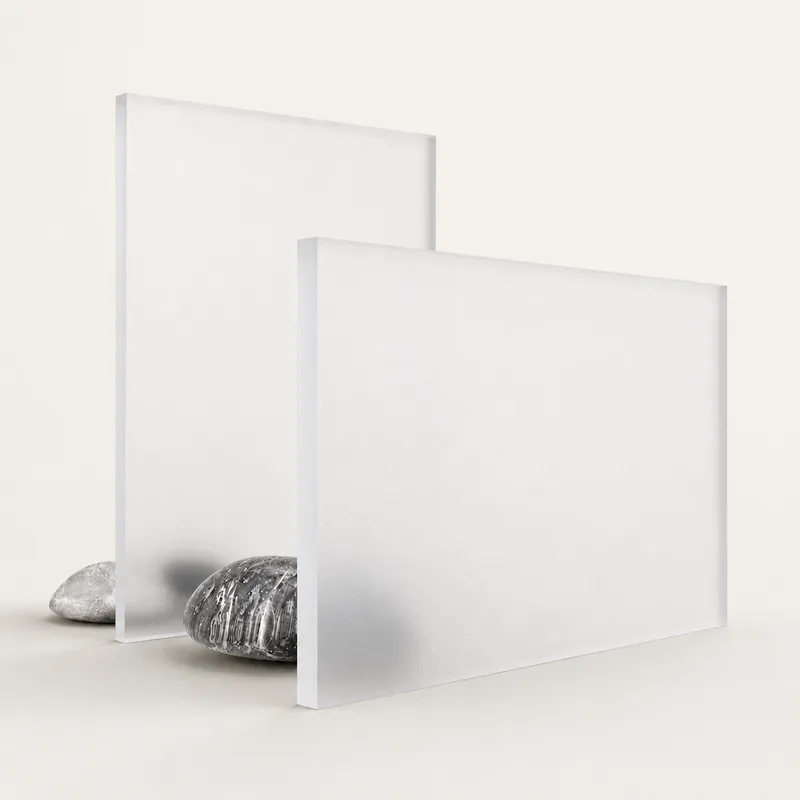
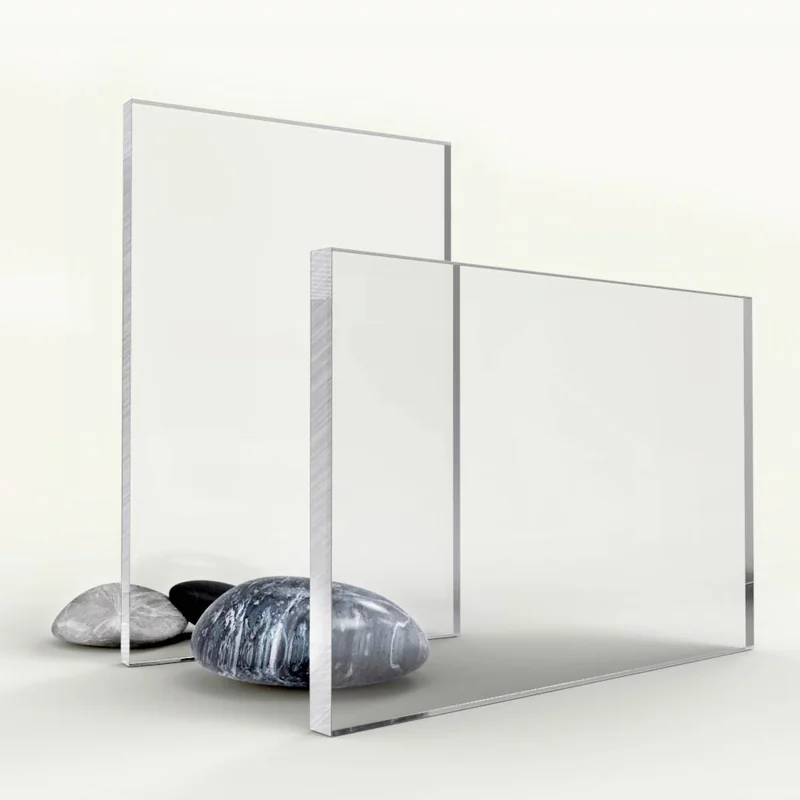
Lexan vs. Plexiglass: Which One Do You Need?
This is the single most common point of confusion we untangle on the phone. Lexan is polycarbonate and plexiglass is acrylic, and they are different materials with different strengths. Polycarbonate is the impact material; acrylic is the optics material. The right choice depends entirely on what the panel has to survive.
| Property | Lexan (polycarbonate) | Plexiglass (acrylic) |
|---|---|---|
| Impact resistance | Up to 250x glass, about 30x acrylic | About 10x glass |
| Light transmission | About 88% | 92%, the clearest plastic glazing |
| Scratch resistance | Softer surface, scratches more easily | Harder surface, holds clarity |
| Cold bending on site | Yes, without heat | No, cracks without heating |
| Laser cutting | Poor, edges discolour | Excellent, flame-polished edges |
| Fire behaviour | Self-extinguishing (UL94 V-2) | Slow burning |
| Cold weather | Impact-resistant to -40 C | Becomes more brittle in deep cold |
| Relative cost | Higher at most gauges | Lower at most gauges |
In practice: a CNC guard panel, a bus shelter pane, or a snowmobile windshield should be polycarbonate, because each one exists to absorb a hit. A retail display, an engraved award, a sign face, or an aquarium panel should be acrylic, because each one exists to be looked at or through. Our acrylic vs. polycarbonate comparison for Canada walks through the decision application by application, and the acrylic buying guide covers the plexiglass side in full.
One nuance worth knowing: acrylic's hardness means it stays optically clean for years in applications where polycarbonate would accumulate fine scratches. We stock cast clear acrylic alongside polycarbonate precisely because neither material is the right answer to every job.
Lexan or plexiglass? Get a straight answer.
Tell us the application and we will tell you which sheet actually fits, with Canadian pricing for both. No selling, just a spec.
Get a free quoteHow Much Do Lexan Sheets Cost in Canada?
Solid clear polycarbonate in the standard 4x8 ft format runs from $90.65 to $357.95 CAD per sheet at FIDAR System, depending on thickness. These are our live retail prices from the North York warehouse, not estimates:
| Thickness | Price (CAD per 4x8 ft sheet) |
|---|---|
| 2mm | $90.65 |
| 3mm | $103.85 |
| 4.5mm | $132.45 |
| 6mm | $203.95 |
| 9mm | $357.95 |
Two pricing observations from years of quoting this material. First, the premium over acrylic is wildly uneven across thicknesses: about 46% at 2mm, about 30% at 3mm, and almost nothing at 4.5mm, where polycarbonate at $132.45 sits within four dollars of comparable cast acrylic. If your project lands at that mid gauge, the impact upgrade is essentially free.
Second, buying "Lexan" in small cut pieces from a hardware chain routinely costs two to three times more per square foot than a full sheet from an industrial supplier. If your project needs more than a few small panels, price the full 4x8 sheet first and plan your cuts, or use a cut-to-size service and keep the offcuts.
For comparison shopping, remember that a full 4x8 sheet is 32 square feet, so 3mm works out to about $3.25 per square foot. Hold that number against any cut-piece price you are quoted elsewhere and the math usually settles the question. Volume pricing applies from 10 sheets of the same SKU, and commercial accounts get standing trade pricing.
Ready to price out Lexan-grade polycarbonate?
Volume pricing on 10+ sheets, cut-to-size service, and same-week Ontario delivery from our North York warehouse.
What Are Lexan Sheets Used For in Canada?
Anywhere a clear panel has to take a hit and stay in one piece. The applications we supply most often from the warehouse break down into four groups.
Machine guards and industrial safety panels. The classic use. A tool and die shop in Hamilton replacing a lathe guard, a packaging line in Brampton refitting enclosure panels, a fabricator in Kitchener building a new CNC router cell. For most guards, 3mm to 4.5mm solid sheet is standard, with 6mm for press and high-energy environments under CSA Z432 machine safety requirements.
Vehicle and recreational glazing. Snowmobile and side-by-side windshields are a deeply Canadian use of polycarbonate: the material flexes through impacts with branches and ice chunks at -30 C that would shatter anything else, which is exactly the temperature behaviour acrylic cannot match. Boat owners replacing hatch glazing face a genuine choice between the two materials; our marine acrylic guide covers when clarity and scratch resistance argue for acrylic instead.
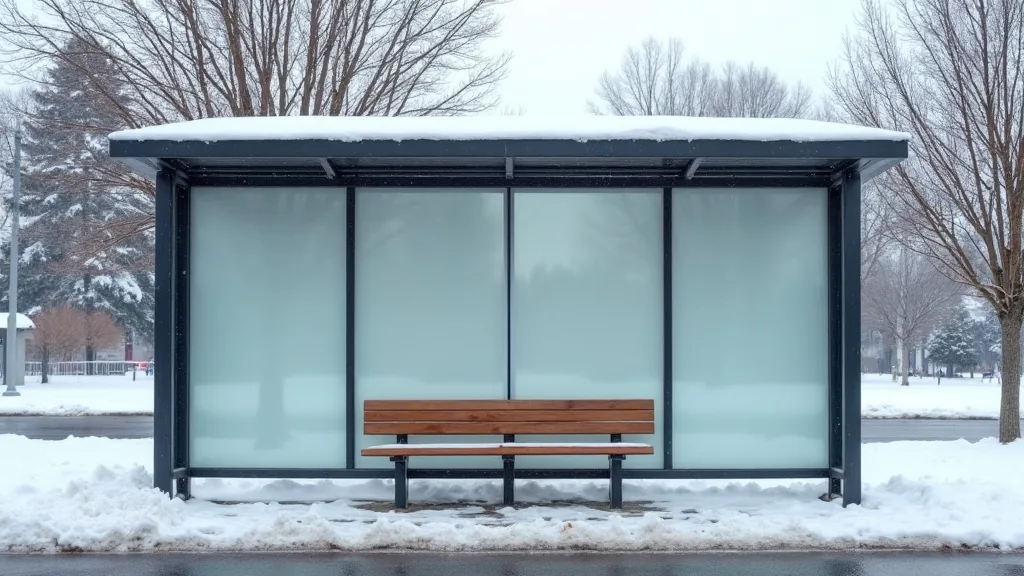 Transit shelter glazing is a standard polycarbonate application across Canadian cities.
Transit and public infrastructure. Bus shelters, station partitions, and covered walkways specify polycarbonate for vandal resistance. A struck panel dents and stays in place for scheduled replacement instead of becoming an emergency glass cleanup.
Skylights and overhead glazing. Solid sheet in 6mm to 9mm handles snow load and survives hail and maintenance traffic on commercial roofs. Heavy snow regions like interior BC and the Maritimes push specifications toward the thicker end, and provincial building codes set the minimum design loads.
For LED and lighting work, the diffusion variants matter more than the clear sheet: diffused white polycarbonate for even backlit sign faces and single-sided frosted for privacy and diffusion panels. Overhead glazing is its own decision, covered in our polycarbonate roof panels guide, and the full application landscape is mapped in our polycarbonate pillar guide.
How Thick Should Your Lexan Sheet Be?
For most buyers the answer is 3mm or 4.5mm. Light machine guards, sneeze barriers, and equipment covers run on 3mm; bus shelters, vandal-prone glazing, and busier guard panels step up to 4.5mm. Heavy guards and security glazing call for 6mm, and overhead or high-security work runs 9mm.
| Thickness | Typical use | Buying note |
|---|---|---|
| 2mm | Lightweight covers, thermoformed parts, cold-bent curves | Tightest cold-bend radius of the range |
| 3mm | Standard machine guards, shields, glazing inserts | The volume seller; replace like with like |
| 4.5mm | Transit glazing, medium-duty guards, vandal panels | The default when designing from scratch |
| 6mm | Heavy guards, structural partitions, security glazing | Specified for high-energy impact environments |
| 9mm | High-security and overhead structural panels | Heavy; confirm frame capacity before ordering |
Two buying rules save the most money and grief. If you are replacing an existing panel, measure it and match it rather than guessing from memory; nominal and actual thickness are not always the same on old imported sheet. If you are designing new and torn between two gauges, take the thicker one. On a typical guard order the step from 3mm to 4.5mm costs about $29 per sheet, which is nothing against the cost of a failed inspection or a repeat fabrication. The methodology behind matching thickness to load and span is the same one we use for acrylic, covered in our sheet thickness guide.
Can You Cut and Drill Lexan Yourself?
Yes, with ordinary shop tools and three rules. Polycarbonate cuts cleanly with a circular saw running an 80-tooth carbide blade or a jigsaw with a fine-tooth blade, fed steadily so the blade never lingers and remelts the cut. Score-and-snap, the standard trick for thin acrylic, does not work: the material is too tough to fracture at a score line, which is the whole point of buying it.
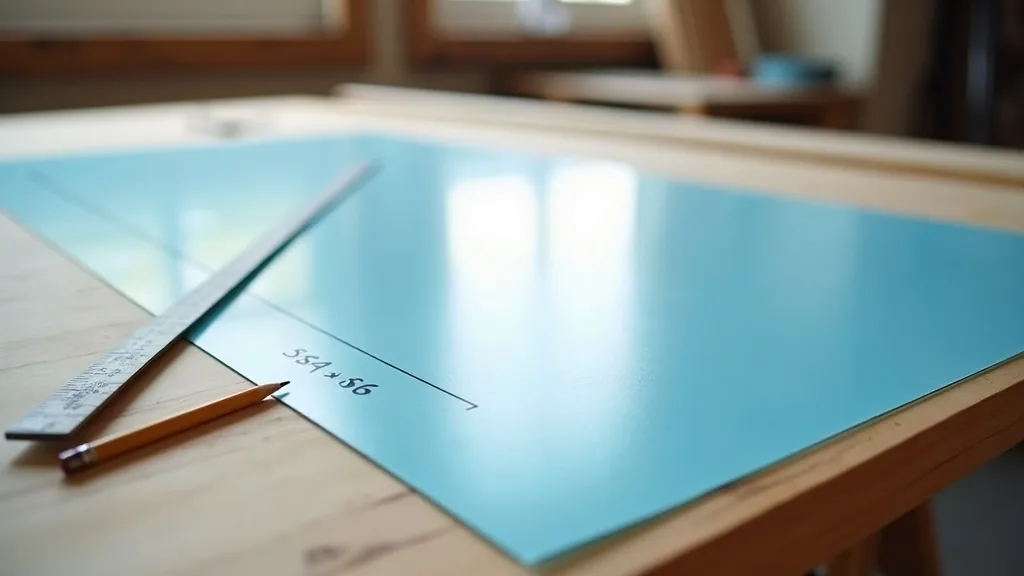 Measure and mark on the masking film, then cut with a fine-tooth blade.
The three rules that prevent the common failures:
- Keep the masking film on through cutting and drilling. It protects the soft surface from swarf scratches and marks the UV-protected side.
- Drill oversize. Fastener holes need 1 to 2mm of clearance over the bolt diameter. Polycarbonate moves with temperature, roughly 5mm across a 4 ft panel over a Canadian seasonal swing, and a tight hole becomes a crack by February.
- Avoid laser cutting. The edges discolour from heat absorption and the fumes are aggressive. If you run a laser shop, this is one material where the saw wins; acrylic is the laser-friendly substrate, as our laser cutting guide explains.
Cold bending is the bonus skill: a 3mm sheet curves to roughly a 450mm radius on site with no heating equipment, which is how curved canopy glazing gets installed without a thermoforming oven.
Prefer to talk it through? Call us at +1 (416) 857-7555 for real answers from the warehouse floor.
Where Can You Buy Lexan Sheets in Canada?
From any supplier who can answer two questions in writing: what is the thickness tolerance, and which side carries the co-extruded UV layer. If the answer to either is vague, the sheet is a gamble regardless of what name is on the film. Our guide to choosing a plastic sheet distributor in Canada covers the full red-flag list, and it applies to polycarbonate buying word for word.
The practical sourcing landscape in Canada looks like this: hardware chains carry small Lexan-branded pieces at premium per-square-foot prices, regional plastics distributors carry full sheets with variable documentation, and industrial suppliers like us stock specification-grade sheet with the paperwork to prove it. FIDAR System carries solid clear polycarbonate in all five thicknesses at our North York warehouse, alongside the full polycarbonate range, with warehouse pickup, same-week Ontario delivery, and freight quotes for the rest of Canada. Cut-to-size is available when your project does not need a full 4x8 sheet. Warehouse pickup runs Monday to Friday, 9:30am to 5:00pm, and Saturday, 9:00am to 1:00pm; call ahead and we will have your sheets staged and ready at the dock.

TORONTO WAREHOUSE Unit 29, 601 Magnetic Drive, North York, ON, M3J 3J2
Phone: +1 (416) 857-7555 Office: +1 (416) 726-2428 Email: info@fidarsystem.com
Frequently Asked Questions
Written by
B.Sc. Materials Engineering · 12 yrs industry experience
Sarah brings over 12 years of hands-on experience in Canada's plastics and composites industry. She specializes in material selection, industrial-grade specifications, and supply chain optimization for manufacturers, fabricators, and distributors across the country.
Reader Reviews
Loading reviews…