


When a boat window cracks, the instinct is usually to find the same glass and replace it like-for-like. One of our clients (a recreational boater) went through this process and came out the other side with something better than what was there before. His original window had developed a star-shaped crack from a docking incident. He needed something clear, durable, and workable enough that he could handle the replacement himself without sending the boat to a marine fabricator.
That search led him to cast acrylic sheet, and to us. His experience is a useful illustration of why acrylic has become the marine glazing material of choice for recreational craft across Canada. Marine use is one of the most demanding categories in our complete overview of plexiglass applications in Canada.
Why Marine Boat Windows Crack (and Why Acrylic Lasts Longer)
Marine glass windows crack for predictable reasons: point impact (dock lines, hardware, objects on deck), thermal stress (glass expands and contracts with temperature, and tight mounting systems don't allow for movement), and vibration fatigue (constant low-amplitude vibration from the engine can propagate cracks from existing surface defects).
The fundamental problem with glass in a marine environment is that it's brittle. Under sufficient impact, it shatters. Glass fragments in a marine environment, especially on a moving boat, are a safety hazard. Even before it shatters, glass can develop stress cracks that reduce visibility and compromise the structural integrity of the window.
Cast acrylic doesn't shatter. Under the same impact that would crack glass, acrylic deforms and may crack along stress lines, but it stays in place. The crack propagation in acrylic is significantly slower than in glass, and cracked acrylic typically continues to provide weather and wind protection even after damage. For marine applications where a failing window can quickly become a serious safety or comfort issue, this failure mode difference matters a great deal.
Acrylic is also approximately 50% lighter than glass at equivalent thickness. On a boat, weight above the waterline affects stability and performance. Replacing heavy glass marine windows with acrylic reduces topside weight, which can improve stability and fuel efficiency in small to medium craft.
Cast Acrylic for Marine Applications: Specification Details
Not all acrylic is appropriate for marine environments. The key requirements:
UV stability: The UV radiation at sea level and near water surfaces (reflected light from the water surface adds to direct UV exposure) is significant. Standard extruded acrylic without UV stabilization will yellow and become brittle within 2-3 seasons in Canadian marine conditions. UV-stabilized cast acrylic maintains its clarity and mechanical properties for 10-15+ years in marine service.
Optical clarity: Marine windows need to provide clear visibility: for navigation, docking, and safety. Cast acrylic at 92% light transmission provides better clarity than most marine glass. Extruded acrylic shows more optical distortion than cast, and the distortion worsens with UV degradation.
Impact resistance: Cast acrylic is approximately 5-17× more impact-resistant than glass (exact ratio depends on thickness). For marine applications, "won't shatter when hit by a dock line, cleat, or dropped tool" is a meaningful standard. Cast acrylic meets it; glass does not.
Saltwater resistance: Acrylic is chemically resistant to saltwater, common marine cleaning products, and most fuels and oils encountered in the marine environment. It maintains its properties in continuous saltwater exposure. Note: avoid solvent-based cleaners on acrylic; isopropyl alcohol and acetone attack acrylic surfaces.
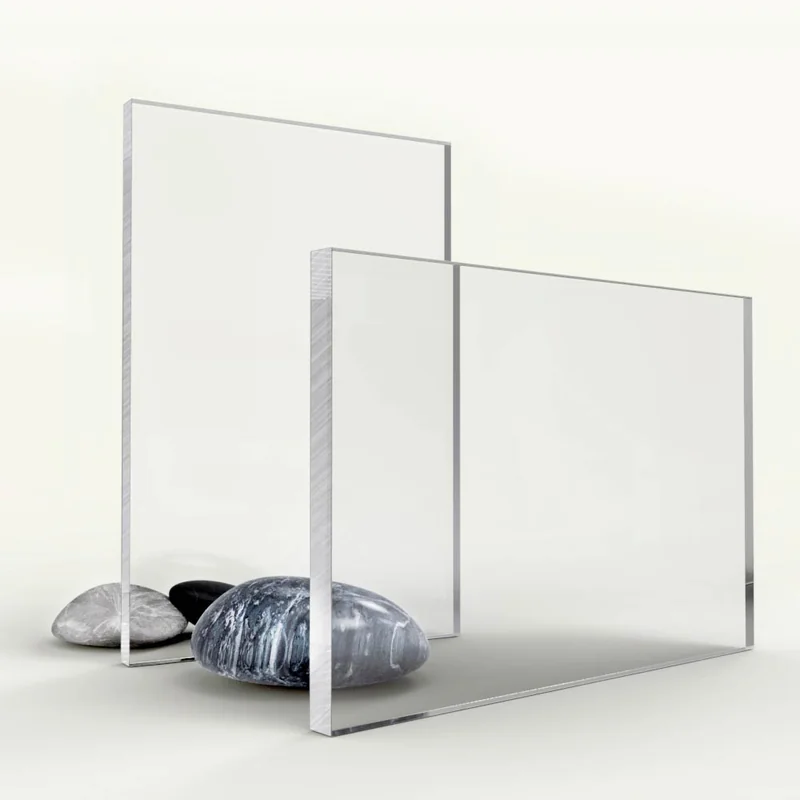
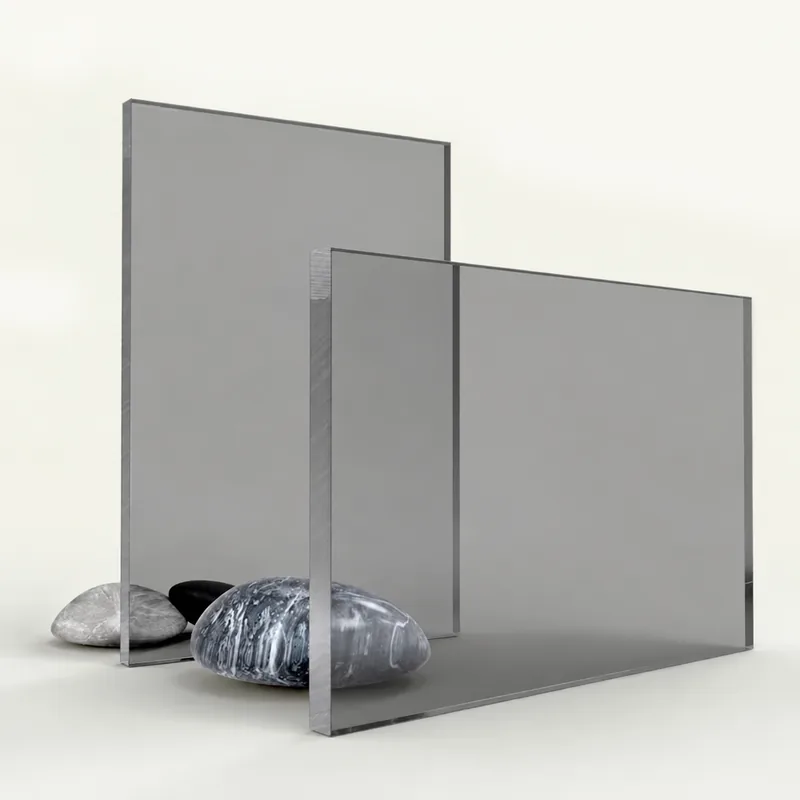
Marine Window Applications for Acrylic Sheet
Side Windows and Port Lights
The most common marine replacement application is side windows: the fixed or opening window panels in the cabin sides of powerboats, sailboats, and displacement vessels. These are typically flat panels mounted in rubber or aluminum frames, in thicknesses from 5 mm (for small openings in well-protected locations) to 10 mm (for larger windows exposed to sea conditions).
For sailboats, port lights (round or oval opening windows) are typically 5-6 mm cast acrylic. The curved geometry of traditional port lights is achievable through thermoforming (heating cast acrylic and pressing it into a mold), though most production replacement ports are flat panels trimmed to fit.
Windshields and Helm Stations
Power boat windshields handle higher structural loads than side windows: wind pressure at cruising speed, spray impact, and in some cases heavy wash from following seas. For windshield applications, 8-10 mm cast acrylic is typical for moderate-duty applications; 12 mm for larger offshore craft.
Windshields with curvature require thermoforming. The marine aftermarket supports DIY thermoforming for simple curves (single-axis curvature); complex compound curves require professional tooling. Many boat owners opt for flat panels that match the original geometry closely enough for their purposes.
Hatch Covers and Skylights
Translucent hatch covers on cabin roofs are a significant light source on enclosed cabin craft. Standard acrylic in clear or lightly tinted grades provides weather protection while admitting useful natural light below. For Canadian boats, UV-stabilized cast acrylic prevents yellowing that would reduce light transmission over time.
Acrylic hatch covers must be supported at their perimeter: large unsupported spans flex under foot traffic and sea conditions. For walk-on hatches, thickness requirements step up significantly: 12-15 mm minimum for spans that will be walked on.
The Client Case Study: DIY Marine Window Replacement
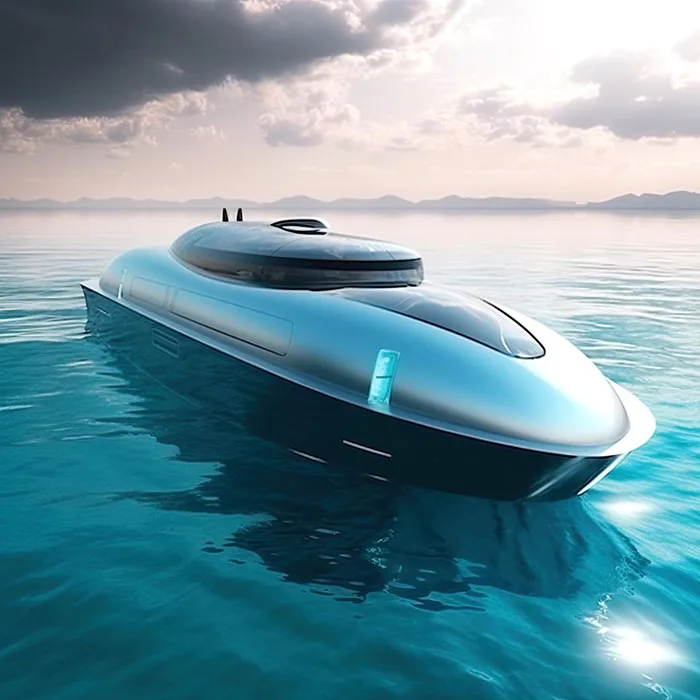
Our client's situation was typical of the small craft recreational boating market: a cracked window that needed replacement, a preference for doing the work himself, and a need for a material that would perform better than the original glass.
His process:
- Removed the damaged glass window and used it as a template to mark cut lines on his acrylic sheet
- Scored and snapped the thinner portions; used a jigsaw with a fine-tooth blade for the curved sections
- Sanded the cut edges with progressively finer sandpaper (220 through 600 grit) to remove saw marks
- Optionally flame-polished the visible edges for a cleaner appearance
- Re-mounted the acrylic in the existing rubber glazing channel with appropriate marine sealant at the bedding points
The result was a window that fit better than the original glass (acrylic is more forgiving of slight dimensional variations during installation), looked optically clear, and had survived two seasons of use without any sign of degradation by the time he reported back to us.

Marine Acrylic Demand Growth in Canada
Marine acrylic demand in Canada grew significantly with the 2020-2021 recreational boating boom (COVID-era outdoor recreation) and has sustained at elevated levels as the recreational marine fleet remains active.
Working with Marine Acrylic: Fabrication Guidance
Cutting: Use a fine-tooth saw blade (80-tooth carbide for table saw, fine-tooth jigsaw blade for curves). Keep the masking film on during cutting to prevent scratching the surface. Feed slowly: rushing generates heat that can melt the cut edge.
Scoring and snapping: Works on flat sheets up to 5 mm for straight cuts. Score deeply (multiple passes) with a sharp carbide scribe, then snap cleanly. Quick and toolless for simple rectangular replacements.
Edge finishing: Saw-cut edges are functional but rough. For a professional appearance and to remove potential crack initiation points: sand progressively (80, 120, 220, 400, 600 grit), then polish with a plastic polish compound. Optionally flame-polish for a clear, smooth edge.
Mounting: Use marine-grade sealant (3M 4200 or similar) at the bedding points. Allow for thermal expansion: acrylic expands more than glass with temperature changes. Don't mount rigidly in a frame that doesn't allow movement; cracks will develop at the stress points.
Cleaning: Mild soap and water with a soft cloth or chamois. Rinse thoroughly. Never use acetone, benzene, or lacquer thinner: these attack acrylic. Commercial acrylic cleaners (Plexus, 303 Plastic Cleaner) are appropriate for regular maintenance.
Anti-scratch protection: Marine environments are abrasive: salt crystals on a cloth wiped across an acrylic surface scratch it. The most effective protection is a dedicated acrylic UV and anti-scratch coating (Plexus Marine Grade is widely used) applied after cleaning. This also adds UV protection.
Thickness Selection for Marine Applications
| Application | Recommended Thickness | Notes |
|---|---|---|
| Small port lights, interior hatches | 5-6 mm | Protected locations, small spans |
| Cabin side windows (medium) | 6-8 mm | Standard for most recreational craft |
| Windshields, forward-facing panels | 8-10 mm | Wind and spray exposure |
| Large side windows, offshore craft | 10-12 mm | Larger spans, higher sea state exposure |
| Walk-on hatches | 12-15 mm | Load-bearing applications |
Where to Source Marine Acrylic in Canada
FIDAR System supplies UV-stabilized cast acrylic sheet from our North York, Toronto warehouse for marine and commercial applications. We supply standard 4×8 sheets and can provide cut-to-size for specific window replacement dimensions. Canada-wide shipping is available.
TORONTO: Unit 29, 601 Magnetic Drive, North York, ON, M3J 3J2 Phone: +1 (416) 857-7555 Sales: +1 (416) 726-2428 Email: info@fidarsystem.com
Related Resources
Further reading from FIDAR System:
- Top Uses for Plexiglass Sheets in Canada: the comprehensive guide to acrylic applications across recreational, commercial, and industrial markets
- Glass vs. Plexiglass for Residential and Commercial Use: the same material comparison applied to buildings and home glazing
- Acrylic Sheet Sizes & Thickness Guide: selecting the right thickness for marine spans and structural glazing loads
- Complete Guide to Buying Acrylic Sheets in Canada: UV-stabilized cast acrylic specifications and where to source it
Marine safety and standards:
- Transport Canada Marine Safety: Canadian regulations for recreational and commercial vessel construction and safety standards
- Canadian Marine Manufacturers Association (CMMA): Canadian recreational marine industry standards, safety resources, and market data
Frequently Asked Questions
Written by
B.Sc. Materials Engineering · 12 yrs industry experience
Sarah brings over 12 years of hands-on experience in Canada's plastics and composites industry. She specializes in material selection, industrial-grade specifications, and supply chain optimization for manufacturers, fabricators, and distributors across the country.
Reader Reviews
Loading reviews…