

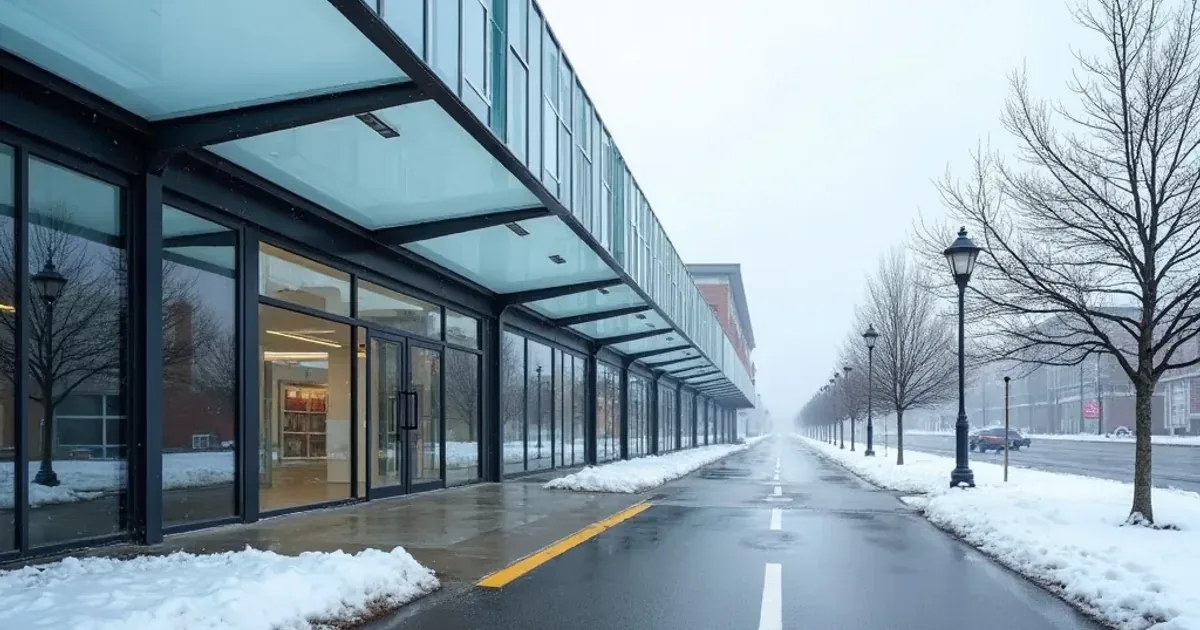
Polycarbonate roof panels cover a lot of ground in one phrase. The same three words describe a clear skylight over a Toronto atrium, a glazed walkway between two hospital blocks, and a corrugated patio cover on a cottage deck in Muskoka. Those are three different products at three different price points, and buying the wrong one is the most common mistake we untangle on the phone.
So this guide is built the way a roof is: load first, then span, then panel. We stock solid clear polycarbonate at our North York warehouse and ship it across Ontario every week, so the prices and gauges below come off real orders rather than a spec sheet. For the material itself, our complete polycarbonate buyer's guide for Canada covers the resin in full.
Key takeaways:
- Three formats share the phrase: solid sheet, multiwall, and corrugated. One resin, three very different products, and cross-format price comparisons are meaningless.
- Work from the load down. Every 1 kPa of roof snow load puts roughly 303 kg on a single 4x8 ft panel, which is why overhead work starts at 6mm and thin wall gauges do not belong on a roof.
- FIDAR System stocks solid clear polycarbonate from 2mm to 9mm. The 6mm roof gauge is $203.95 CAD per 4x8 sheet, about $6.37 per square foot.
- Thickness is half the answer. Support spacing is the other half, and both come from a span table for your own location's snow load.
- Polycarbonate moves about eight times as much as glass. An 8 ft panel travels roughly 11mm through a Canadian year, and that movement is what cracks panels at the fastener.
Three products share one search phrase
Polycarbonate roof panels are clear or tinted glazing sheets used instead of glass on skylights, canopies and covered structures. The material is up to 250 times more impact-resistant than glass and about half its weight, so a hailstone or a dropped tool dents the panel rather than shattering it onto whatever sits below. That single property is why polycarbonate dominates overhead glazing in Canada.
The confusion starts because the phrase is sold in three physical formats, and the homeowner pricing a carport and the architect specifying an atrium are shown the same search results.
Solid polycarbonate sheet
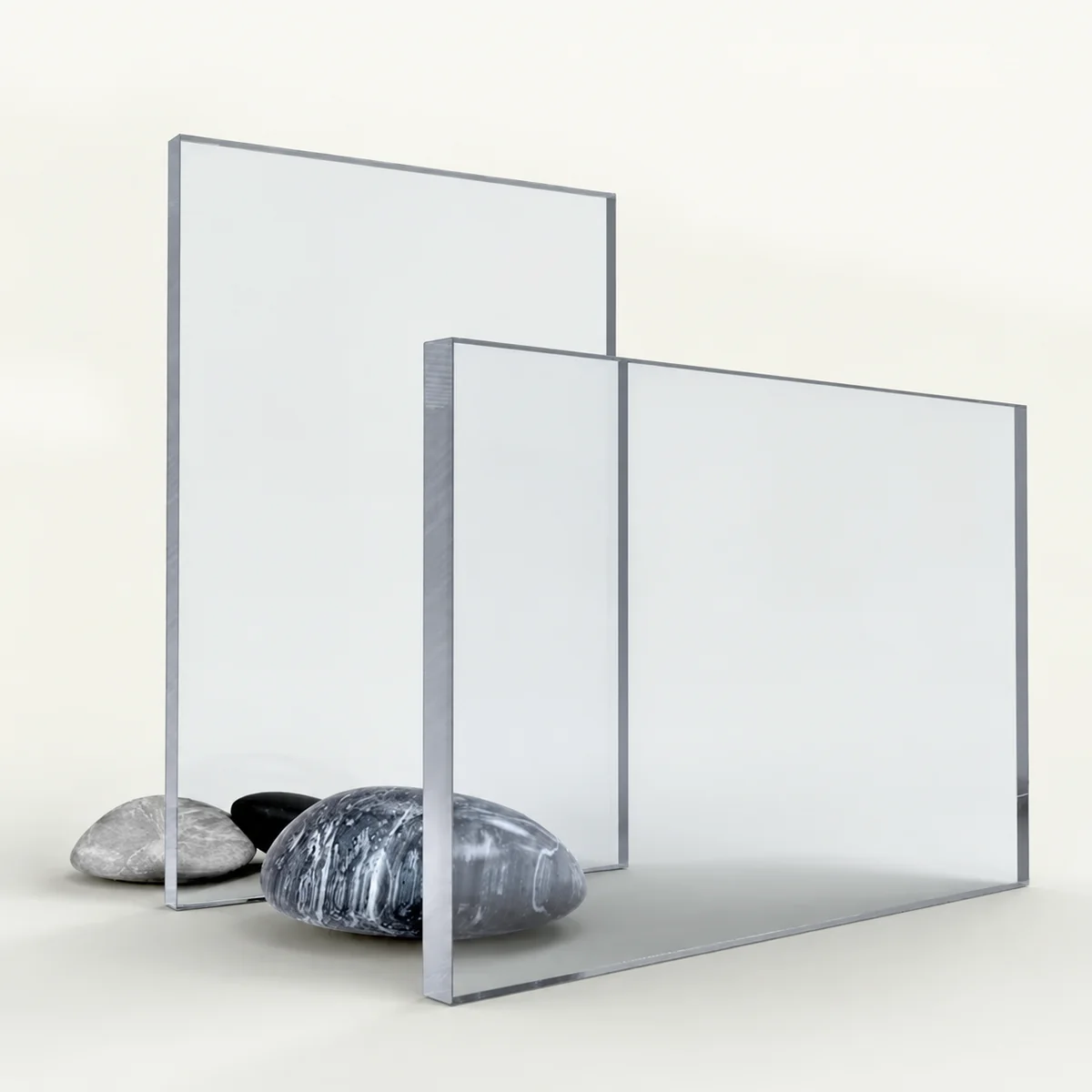
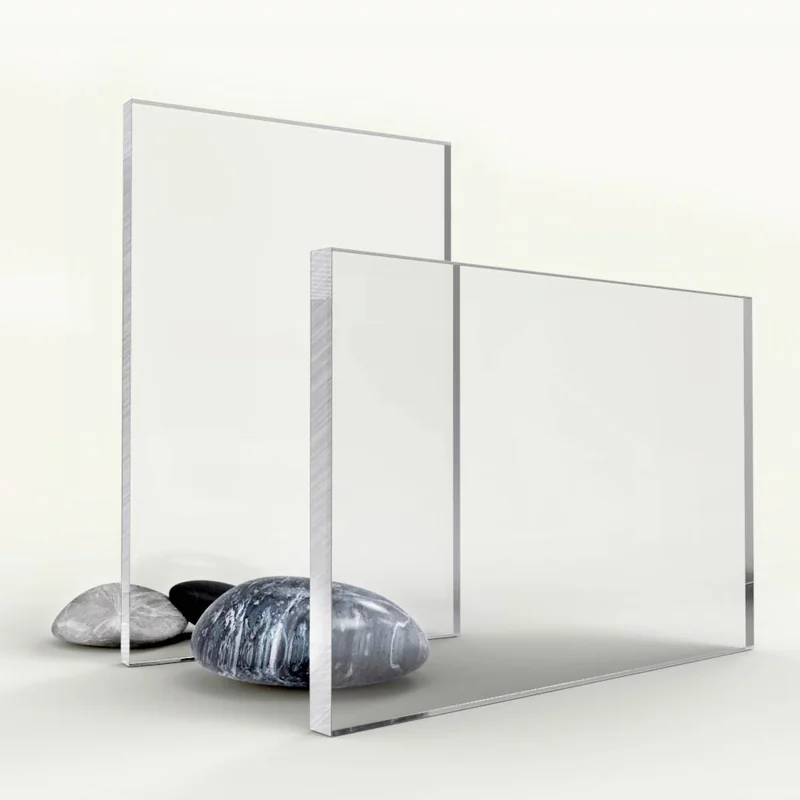
Solid sheet is a single flat layer, the same material we supply for machine guards and safety glazing. It transmits roughly 88% of light, takes the hardest hit of the three formats, and cold-bends on site for curved canopies. It carries no insulation value beyond the sheet itself, so it belongs on unheated structures: skylights, glazed walkways, entrance canopies and curved roof lights. This is the format we stock, from 2mm to 9mm, on our solid polycarbonate sheet page.
Multiwall polycarbonate
Multiwall has two or more thin layers joined by internal ribs, leaving hollow channels running the length of the panel. Those air gaps do the work, trapping still air the way a double-glazed window does, so multiwall is the default wherever the space underneath is heated: conservatories, pool enclosures, four-season patio rooms and commercial growing structures. Light transmission drops to roughly 50% to 80% depending on wall count and tint. Greenhouse glazing is a specification problem of its own, involving light diffusion, condensation and anti-drip coatings, and we treat it separately rather than folding it into a roofing guide. Our polycarbonate greenhouse panel guide works through light, heating loss, snow and drip for Canadian growers.
Corrugated polycarbonate
Corrugated panels are thin profiled sheets pressed into a wavy or trapezoidal shape for rigidity, the plastic cousin of corrugated metal roofing. They are the budget option: light, fast to install on a pergola or carport, cheap per square foot. Clear corrugated transmits up to about 90% of light, while solar-control versions pass only 20% to 50% to keep heat off a patio. They carry almost no insulation value and the profile has to match the support spacing. Brands such as Palram sell corrugated under names like Suntuf.
| Format | Light transmission | Insulation | Best roof use |
|---|---|---|---|
| Solid sheet | About 88% (clear) | Low, single layer | Skylights, canopies, glazed walkways, curved cold-bent roofs |
| Multiwall | About 50% to 80% | High, trapped air channels | Conservatories, pool enclosures, patio rooms, heated growing structures |
| Corrugated | 20% to 90% (tint dependent) | Low | Pergolas, carports, verandas, agricultural sheds |
One thing to settle before you order anywhere: these formats are not interchangeable, and a price comparison across them tells you nothing. A square foot of solid 6mm and a square foot of clear corrugated are different products solving different problems.
Start with the load, not the panel
Every roof question ends up being a load question, and in Canada the load is snow. The National Building Code of Canada works it out in Article 4.1.6.2 as S = Is[Ss(Cb Cw Cs Ca) + Sr]. Strip that back for an ordinary small roof and two terms matter to a panel buyer. Ss is the 1-in-50-year ground snow load for your specific location, tabulated site by site in the Code's Appendix C. Cb, the basic roof snow load factor, is 0.8 for any roof under about 70m across, dropping toward 0.6 in combination with the wind exposure factor only where a designer can show the roof stays swept clear.
The number that makes it real is the conversion. One kilopascal is about 102 kg per square metre, and a 4x8 ft sheet is 2.97 square metres, so every 1 kPa of roof snow load is roughly 303 kg sitting on a single panel. Three adults, standing on one 4 by 8 sheet, for as long as the snow stays up.
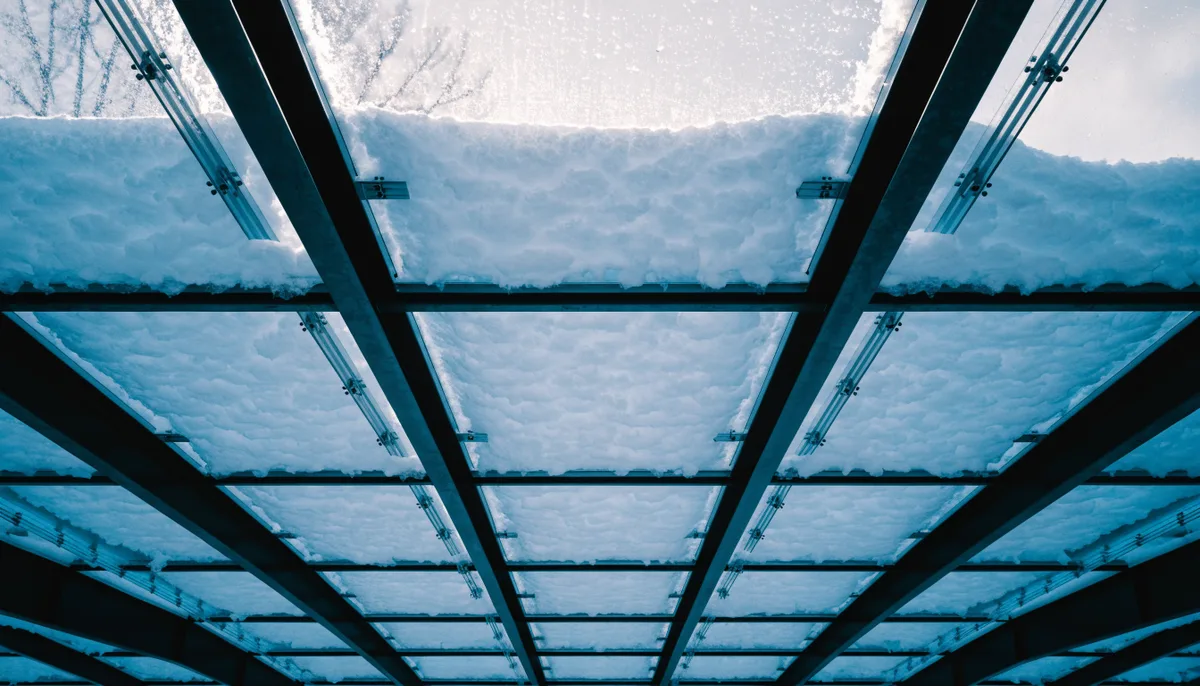 The load seen from the side that matters. Snow sitting on clear overhead glazing, with the purlin grid carrying it.
How much that comes to depends entirely on where the roof is, and the spread inside Canada is far wider than most buyers expect. British Columbia's own Appendix C climatic table lists a ground snow load of 1.1 kPa in Victoria, 1.8 kPa in Vancouver, 3.4 kPa in Prince George and 9.5 kPa at Whistler. Run those through the 0.8 factor and the panel in Victoria carries about 267 kg per 4x8 sheet while the panel at Whistler carries about 2,300 kg. That is a factor of nearly nine, inside one province, off one published table.
Two things follow. Pull the Ss value for your own municipality rather than a provincial average or a national rule of thumb, because the snowbelt town half an hour up the highway is frequently a different number than the city. And treat the panel and the frame as one system: the sheet only has to bridge the gap between supports, so a thinner panel on tight purlin spacing can outperform a thicker one spanning wide. That pairing comes from the manufacturer's span table for the gauge you are buying, such as the thickness-against-span and wind-load tables in Palram's PALSUN technical guide for solid sheet, and on anything structural it should be confirmed by an engineer.
Not sure which roof panel fits?
Tell us the structure, the span and the location and we will tell you whether solid, multiwall or corrugated is the right call, with Canadian pricing on what we stock.
Get a free quoteWhy polycarbonate roof panels start at 6mm
For solid overhead glazing in Canada, 6mm is the practical floor and 9mm covers wider spans and heavier snow. Thinner gauges belong on vertical glazing or tight cold-bent curves where the frame carries the load, not overhead where the sheet has to bridge a span with several hundred kilos on it.
| Thickness | Roof application | Buying note |
|---|---|---|
| 4.5mm | Light skylights and sheltered canopies on close support spacing | Acceptable overhead only on short spans |
| 6mm | Standard skylights, walkways, entrance canopies | The volume seller for roofs, and a sound default |
| 9mm | Wide-span glazing, heavy-snow regions, structural roof lights | Heavy, so confirm frame and support capacity first |
If you are replacing an existing panel, measure it and match it rather than guessing, because older imported sheet does not always hit its nominal thickness. If you are designing from scratch and torn between two gauges, take the thicker one. On a typical canopy the step from 6mm to 9mm adds about $154 per sheet, which is cheap insurance against a panel that deflects, ponds water and fails under a wet spring snow. The same reasoning we apply to matching acrylic thickness to span in our sheet sizes and thickness guide applies here.
Buying a full sheet and cutting panels to your rafter spacing is usually cheaper than buying pre-cut pieces, and it leaves offcuts for flashing and trim. If you would rather not cut 6mm overhead glazing yourself, our cut-to-size service prices polycarbonate per piece off the same engine that quotes at checkout.
What polycarbonate roof panels cost in Canada
Solid clear polycarbonate runs from $90.65 to $357.95 CAD per 4x8 ft sheet at FIDAR System. These are live North York warehouse prices rather than estimates, and roofing work almost always lands in the upper half of the range:
| Thickness | Price (CAD per 4x8 ft sheet) | Weight per sheet | Typical roof use |
|---|---|---|---|
| 2mm | $90.65 | About 7 kg | Lightweight covers, cold-bent curves |
| 3mm | $103.85 | About 11 kg | Small canopies, vertical glazing |
| 4.5mm | $132.45 | About 16 kg | Light skylights, sheltered canopies |
| 6mm | $203.95 | About 21 kg | Standard overhead glazing, walkways |
| 9mm | $357.95 | About 32 kg | Wide spans, heavy-snow regions |
A full 4x8 sheet is 32 square feet, so 6mm overhead glazing works out to about $6.37 per square foot before cutting. Hold that against the cut-piece price a hardware chain charges for the same material and the gap is usually two to three times.
Weight is the other number that decides overhead jobs. Calculated from polycarbonate's 1.20 g/cm density, a 6mm 4x8 sheet is about 21 kg and a 9mm sheet about 32 kg, less than half what the same panel would weigh in glass. That is why two people can lift a polycarbonate roof panel onto a frame that would need mechanical handling for glass, and it lightens what the supporting structure has to carry before any snow arrives.
Multiwall and corrugated sell by profile and run length rather than by flat sheet, and freight on long panels is a real line item, so those formats are quoted per project. Volume pricing on our solid sheet applies from 10 sheets of the same SKU, and glazing contractors and commercial roofers get standing trade pricing once an account is open.
Pricing a polycarbonate roof?
Get a same-day quote on solid clear sheet from our North York warehouse, with volume pricing on 10+ sheets, cut-to-size service, and freight across Canada.
The 11 millimetres that wreck polycarbonate roof panels
Snow gets all the attention, but the failure we actually get called about is quieter and arrives every year: a panel cracked in a star pattern around a screw. That is thermal movement, and polycarbonate has a great deal more of it than anything you are likely to bolt it to.
The coefficient of linear expansion for solid polycarbonate sheet is 0.065mm per metre per degree C, published in the Makrolon technical guide alongside the figures for the materials it gets fastened to. Put a 4x8 panel through a swing from a -30C winter night to a sun-warmed +40C summer surface and the arithmetic is unforgiving.
Movement along an 8 ft panel through a 70°C swing
Coefficients of linear thermal expansion from the Makrolon solid sheet technical guide (Covestro). Movement computed for the 8 ft dimension of a 4x8 ft panel.
Eleven millimetres along the length, about 5.5mm across the width, against 1.4mm for the same panel in glass. The frame under it barely moves by comparison, so the panel has to be allowed to slide, or something has to give, and the thing that gives is the sheet around the fixing.
Three rules come straight out of that number, and between them they prevent most of the roof failures we hear about:
- Drill oversize, and fix with the right hardware. Fastener holes need 1 to 2mm of clearance around the bolt, and roof panels need profiled washers or fixing buttons that seal the hole while letting the sheet move. The Makrolon guide also puts the centre of any hole at least twice its own diameter from the sheet edge, and never closer than 6mm.
- Leave an expansion gap at every edge. Frame systems need 3 to 5mm of clearance at each edge. A panel cut tight to its opening in July has nowhere to go in July, and nowhere to come back from in January.
- Never clamp it solid. Screws should be run down to the point where the panel is held but can still slide. Torqued flat, a fastener turns a 4x8 sheet into a spring with 11mm of travel and one place to release it.
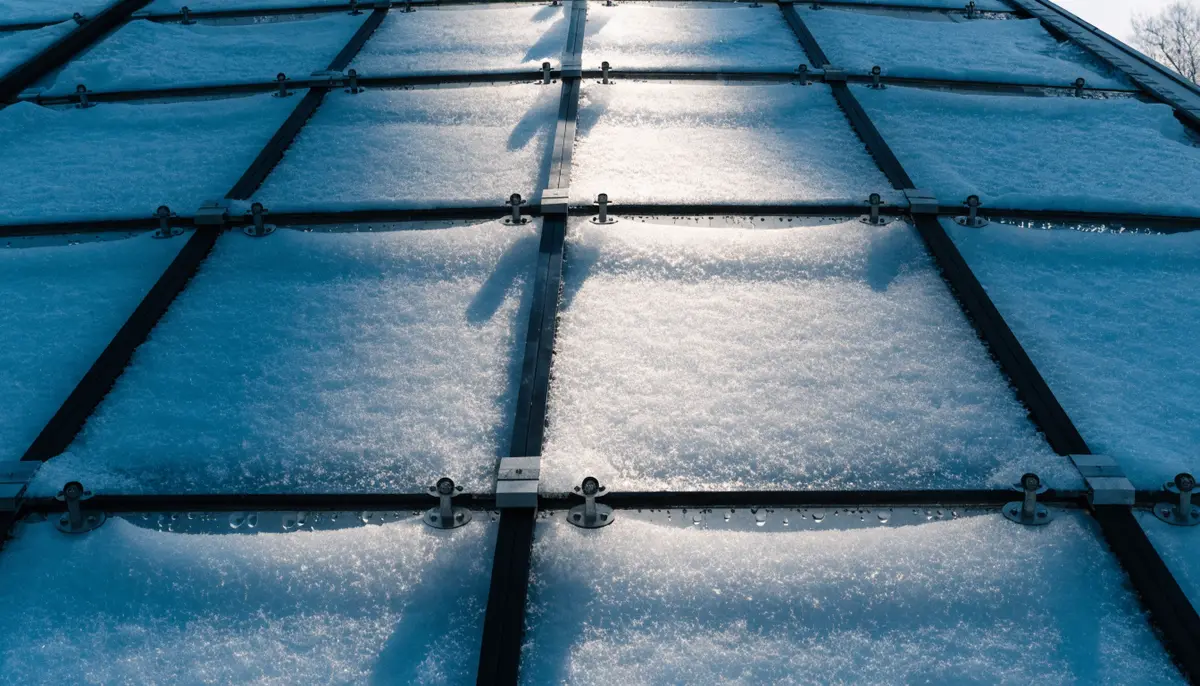 Glazing bars and profiled washers at every joint: the hardware that lets a panel move without leaking.
Cutting, cold bending and the side that faces the sun
Polycarbonate roof panels cut with ordinary site tools. Use a circular saw with an 80-tooth carbide blade or a jigsaw with a fine blade, fed at a steady pace so the blade never lingers and remelts the kerf. Score-and-snap does not work, because the material is too tough to fracture along a line, which is the whole reason you bought it. Our guide to cutting polycarbonate sheets walks through every method in detail.
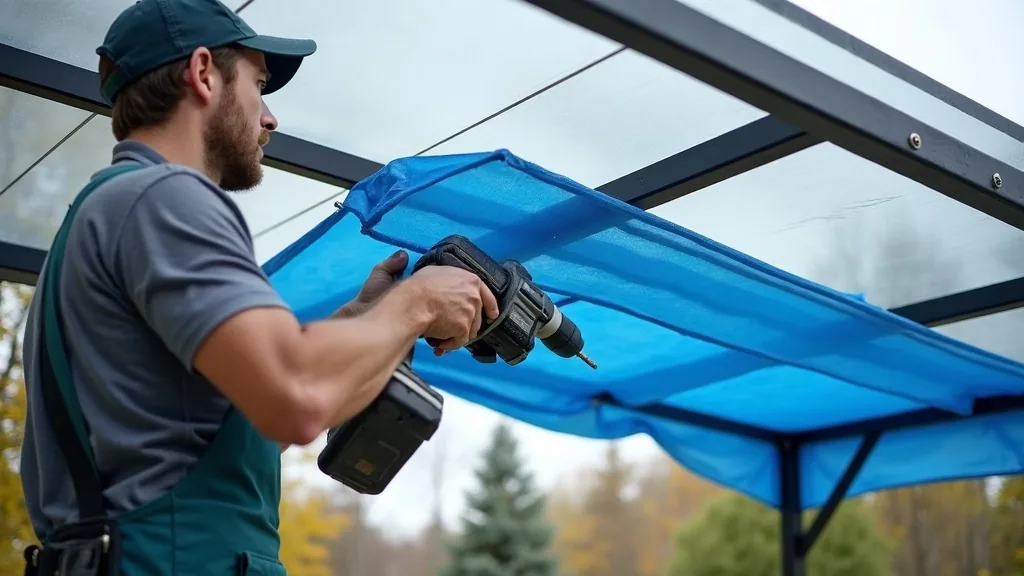 Keep the masking film on through cutting and drilling, and oversize every fastener hole.
Solid sheet brings one bonus to a roof: it cold-bends. The Makrolon guide puts the minimum cold bending radius at 150 times the sheet thickness, so a 3mm sheet takes roughly a 450mm radius and a 6mm sheet about 900mm, clamped into a frame with no heat and no oven. That is how curved canopies and barrel-vault roof lights get built on site. Avoid laser cutting polycarbonate, where the edges discolour and the fumes are aggressive, the opposite of acrylic; if you run acrylic work too, our laser cutting guide explains why the two materials behave so differently.
Then the rule that decides whether a roof lasts 3 years or 15: the UV side faces the sky. Quality sheet carries a co-extruded UV layer bonded into the surface during manufacturing, the protection the Lexan brand built its name on, and it is marked on the masking film. Install a panel upside down and you have bought unprotected polycarbonate at a protected price. Our Lexan polycarbonate guide covers why the spec matters more than the brand name.
Against the alternatives, polycarbonate earns a roof on two counts. Against glass it wins on impact and weight, taking hail and dropped tools that would shatter glass at less than half the mass, though glass stays clearer and more scratch-resistant over decades. Against metal roofing it wins only where the space needs daylight, because a patio, walkway or atrium is exactly what opaque steel cannot do. For a light-tight roof, metal is cheaper and lasts longer. If you are weighing polycarbonate against acrylic overhead, our acrylic vs. polycarbonate comparison goes application by application, and the short version for roofs is that acrylic is clearer and harder but cracks under impact and turns brittle in deep cold.
Prefer to talk it through? Call us at +1 (416) 857-7555 for real answers from the warehouse floor.
Where to buy polycarbonate roof panels in Canada
Buy from a supplier who will answer two questions in writing before you order: what is the thickness tolerance, and which side carries the co-extruded UV layer. If either answer is vague, the panel is a gamble whatever the film says. Our guide to choosing a plastic sheet distributor in Canada sets out the full red-flag list, and it reads the same for roofing.
FIDAR System stocks solid clear polycarbonate in all five thicknesses at our North York warehouse, alongside the full polycarbonate range, with warehouse pickup, same-week Ontario delivery and freight quotes for the rest of Canada. We do not warehouse multiwall or corrugated profiles, because those are best ordered to the exact run length a roof needs. Send us the project details and we will help you specify the right panel and quote what we can supply. Where clarity matters more than impact, we also stock cast clear acrylic as the optics-first alternative, and diffused white polycarbonate for backlit and light-spreading panels.

TORONTO WAREHOUSE Unit 29, 601 Magnetic Drive, North York, ON, M3J 3J2
Phone: +1 (416) 857-7555 Office: +1 (416) 726-2428 Email: info@fidarsystem.com
Frequently Asked Questions
Written by
B.Sc. Materials Engineering · 12 yrs industry experience
Sarah brings over 12 years of hands-on experience in Canada's plastics and composites industry. She specializes in material selection, industrial-grade specifications, and supply chain optimization for manufacturers, fabricators, and distributors across the country.
Reader Reviews
Loading reviews…