

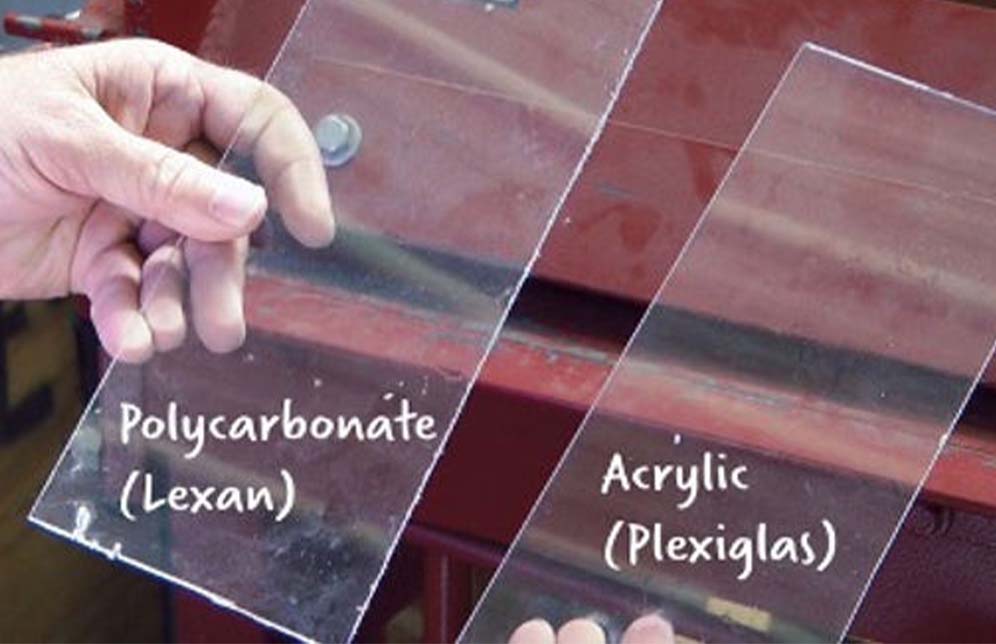
If you've ever priced out a project involving transparent plastic panels in Canada, you've almost certainly faced the acrylic-versus-polycarbonate decision. Both materials are clear, lightweight, and far more impact-resistant than glass. But the differences between them are significant enough that choosing the wrong one can mean a subpar installation, premature failure, or unnecessary cost.
This guide gives you a practical, detailed comparison (not just a spec table) so you can make the right call for your specific situation. If you're new to acrylic, our complete guide to buying acrylic sheets in Canada covers the broader purchasing decision first. If polycarbonate is already your preferred material, our polycarbonate sheets Canada complete guide covers grades, thickness selection, real pricing, and installation in depth. We deal with both materials every day at our North York warehouse, and the questions we hear most often from fabricators, contractors, and business owners consistently come back to the same core trade-offs.
The Core Difference: Clarity vs. Toughness
The fundamental trade-off between acrylic and polycarbonate is optical clarity versus impact resistance.
Acrylic (PMMA) transmits up to 92% of visible light, better than standard window glass and noticeably clearer than polycarbonate. The clarity isn't just a number on a spec sheet; it's visible to the naked eye. Side-by-side, acrylic looks like glass and polycarbonate looks slightly hazy or yellowish by comparison.
Polycarbonate, often known by the brand name Lexan (our Lexan sheets in Canada guide explains the naming), is essentially unbreakable in real-world conditions. You can strike it with a hammer and it will dent rather than shatter. Its impact resistance is rated at 250 times that of glass and roughly 30 times that of acrylic. For applications where physical impact is a real risk (security glazing, machine guards, skylight panels that someone might walk on) polycarbonate is the material that provides genuine protection.
Neither material is universally "better." The question is which properties matter most for your application.
Detailed Property Comparison
| Property | Acrylic (PMMA) | Polycarbonate (PC) |
|---|---|---|
| Light transmission | 92% | 87–89% |
| Impact resistance | 5–17× glass | 250× glass |
| Tensile strength | ~70 MPa | ~60 MPa |
| Flexibility | Rigid (brittle under impact) | Highly flexible |
| UV resistance | Excellent (UV-stabilized grades) | Moderate (requires UV coating) |
| Scratch resistance | Better | Poorer (scratches easily) |
| Max service temp | ~80°C | ~120°C |
| DIY workability | Excellent | Good (requires sharper blades) |
| Cost (relative) | Lower | 20–40% higher |
| Optical clarity | Superior | Good |
| Weight | Lower | Slightly higher |
| Chemical resistance | Good | Poor (many solvents attack PC) |
When to Use Acrylic in Canada
Retail signage and displays: Acrylic is the standard choice for any application where visual clarity matters. Backlit signs, edge-lit displays, illuminated logo panels, and display cases all benefit from acrylic's superior light transmission. Polycarbonate simply doesn't match acrylic for optical applications. For flat printed signage, though, the cheaper substrate is often PVC foam board, as our PVC foam board vs acrylic sheets for signs guide explains.
Indoor barriers and partitions: Sneeze guards, office dividers, and reception shields (anywhere the barrier won't be subjected to deliberate impact) are appropriate for acrylic. It's stiffer than polycarbonate, which means it stays flat in large-panel applications without bowing. Where the panel also has to obscure, frosted P95 acrylic is the grade to price, and it undercuts frosted polycarbonate by $93.62 a sheet at a quarter inch.
Furniture and decorative applications: Clear acrylic tables, shelving panels, and architectural features look and feel like glass. Polycarbonate has a slightly plastic appearance that doesn't work as well in design-conscious applications.
Laser cutting and precision fabrication: Acrylic (especially cast acrylic) is far easier to laser cut than polycarbonate. The laser produces flame-polished edges on acrylic that are optically clear; polycarbonate tends to produce rough, discolored edges and releases more harmful fumes during laser cutting.
Outdoor UV-exposed applications: UV-stabilized cast acrylic maintains its clarity for 15+ years outdoors. Polycarbonate without UV coating yellows significantly within 2–3 years; even with UV coating, it tends to degrade more noticeably than premium UV-stabilized acrylic over a decade.
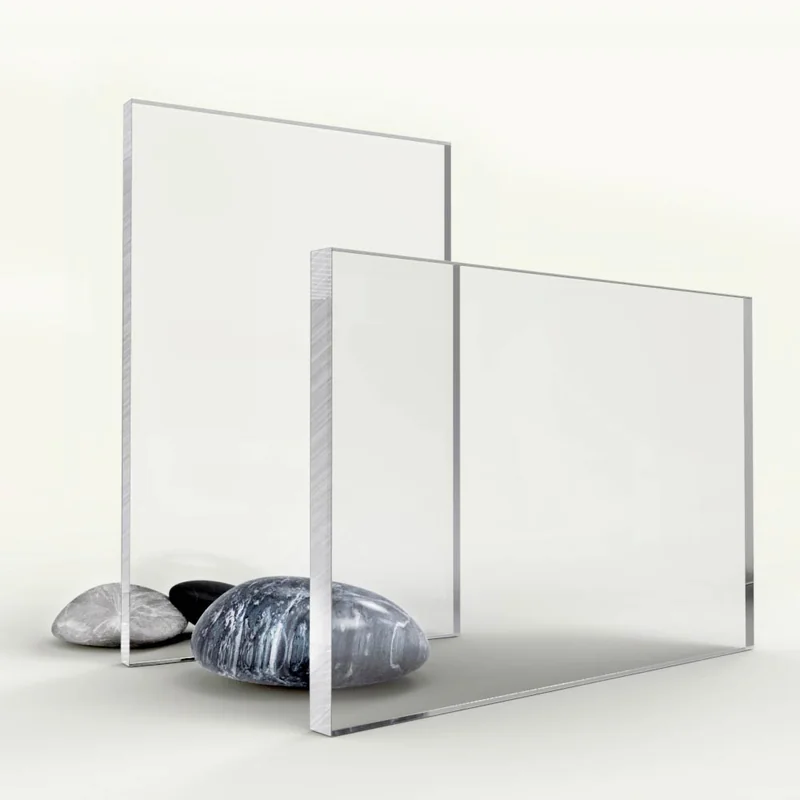
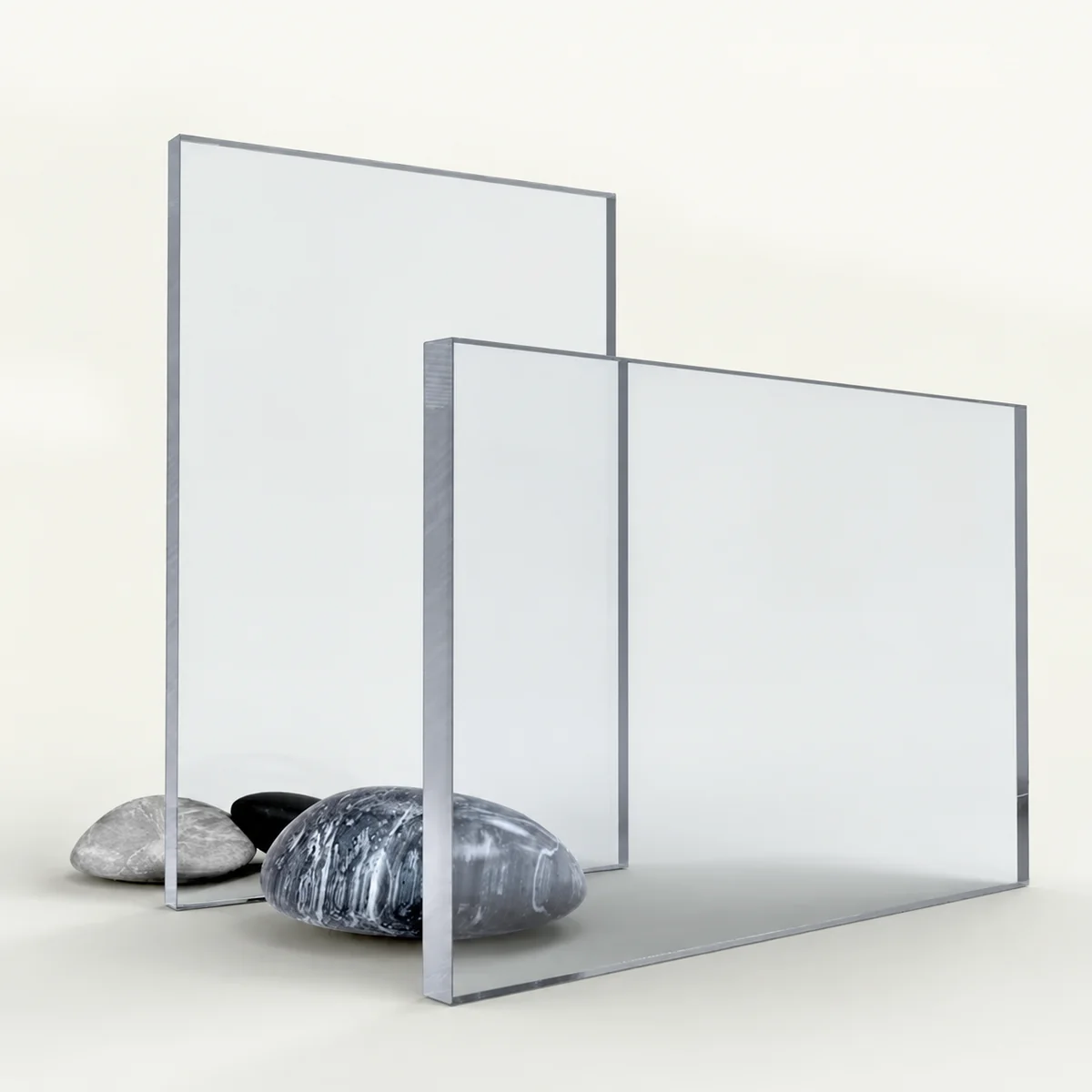
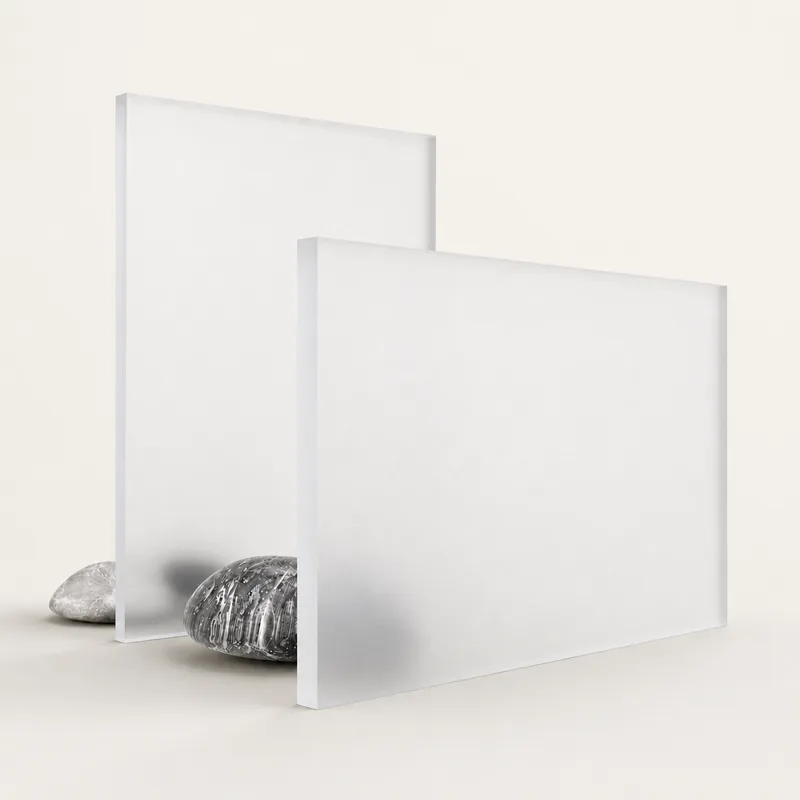
When to Use Polycarbonate in Canada
High-impact environments: Machine guards, security windows, sports facility glazing, and any application where the panel might be struck by an object or a person. Acrylic shatters under significant impact; polycarbonate deforms but stays intact.
Overhead and skylight applications with load concerns: Polycarbonate is the preferred material for many greenhouse and skylight applications because it can absorb the dynamic loads of hail, falling debris, or someone accidentally stepping on a panel without catastrophic failure. Cast acrylic is used in premium skylight applications, but polycarbonate is more forgiving for commercial greenhouse and agricultural structures. Our guide to polycarbonate roof panels in Canada breaks down the solid, multiwall, and corrugated choice for overhead glazing, including how snow load sets the thickness.
Cold weather flexibility: Polycarbonate maintains its impact resistance at temperatures down to -40°C. Acrylic becomes somewhat more brittle at very low temperatures, not unusably so, but something to consider for extreme-cold applications in northern Canada.
High-temperature applications: Polycarbonate's service temperature limit is around 120°C, compared to 80°C for acrylic. For applications near heat sources (machine guards around industrial equipment, covers over lighting fixtures) polycarbonate's higher temperature tolerance matters.
Ballistic and security applications: Polycarbonate is the basis for bullet-resistant and blast-resistant glazing. No version of acrylic approaches polycarbonate's performance in these applications.
How Canadian Applications Break Down
The data reflects typical purchasing patterns at Canadian fabrication suppliers. Acrylic dominates visual and design applications; polycarbonate takes over where impact performance is the primary driver.
Canadian Market Price Trend (2020–2025)
Post-pandemic supply chain disruptions caused significant price increases in 2021–2022 for both materials. Prices have since moderated but remain above pre-2020 levels. Polycarbonate has historically commanded a 20–40% premium over equivalent acrylic, a spread that has remained consistent through the cycle.
Fabrication and Cutting Differences
Acrylic cutting: Responds beautifully to laser cutting (cast grades produce flame-polished edges), table saw cutting, score-and-snap for thin sheets, and routing. The material cuts predictably and cleanly.
Polycarbonate cutting: Requires sharp, high-tooth-count blades to avoid melting or chipping. Score-and-snap doesn't work: polycarbonate is too flexible. Laser cutting is possible but produces poorer edge quality and more fumes. A jigsaw with a fine-tooth blade, or a circular saw with a high-tooth count, works well. Our guide to cutting polycarbonate sheets cleanly covers blade choice, feed rate, and edge finishing in detail.
Drilling: Both materials drill well with standard twist bits, but polycarbonate requires slower speeds and lighter pressure to avoid cracking at the drill entrance.
Bonding: Acrylic bonds cleanly with solvent-based cements (like Weld-On 3 or 4) that actually fuse the two pieces together at a molecular level, producing virtually invisible seams in clear applications. Polycarbonate requires different adhesives and doesn't produce as clean a bond.
Thermoforming: Both can be heat-formed, but polycarbonate tolerates a wider temperature range and is more forgiving of uneven heating. Acrylic requires more precise temperature control but produces crisper formed shapes.
Thickness Recommendations for Common Applications
| Application | Acrylic | Polycarbonate |
|---|---|---|
| Small signs, frames, displays | 2–5 mm | Not typical |
| Countertop barriers | 4–6 mm | 3–5 mm |
| Office partitions | 6–8 mm | 5–6 mm |
| Skylights (residential) | 10–16 mm | 6–10 mm |
| Machine guards | Not recommended | 5–10 mm |
| Security glazing | Not applicable | 12–38 mm |
The Budget Question
For any project where acrylic is technically appropriate, it's almost always the lower-cost option. A typical 4×8 sheet of 6 mm cast acrylic runs $80–$130 CAD at commercial prices; equivalent polycarbonate runs $110–$180. Over a large project, that difference adds up fast.
Don't buy polycarbonate "just to be safe" when acrylic is technically adequate. You're paying a premium for impact performance you don't need. Conversely, don't cheap out on acrylic in applications where polycarbonate's impact resistance is genuinely required for safety or code compliance.
Where to Buy Both Materials in Canada
FIDAR System stocks both acrylic (cast and extruded) and polycarbonate sheets in Toronto with across-Canada shipping. We can help you select the right grade and thickness for your specific application, and offer cut-to-size services for both materials.
TORONTO: Unit 29, 601 Magnetic Drive, North York, ON, M3J 3J2 Phone: +1 (416) 857-7555 Sales: +1 (416) 726-2428 Email: info@fidarsystem.com
Related Resources
Further reading from FIDAR System:
- Polycarbonate Sheets Canada: Complete Guide: grades, thickness selection, real CAD pricing, fabrication, and installation guide
- Complete Guide to Buying Acrylic Sheets in Canada: comprehensive specifications, pricing, and supplier guidance
- Top Uses for Plexiglass Sheets in Canada: application overview across construction, signage, and design
- Acrylic gauge and format guide: thickness by application, plus what a full 4x8 sheet costs in each gauge
- Honeycomb Composite Panels in Canada: when neither solid acrylic nor polycarbonate is stiff enough per kilogram for a large span
- Glass vs. Plexiglass for Residential Applications: a complementary material comparison for home projects
- PMMA for Aviation: why aviation specifies acrylic over polycarbonate for optical-critical applications
Standards and technical references:
- ASTM International: ASTM D4802 (acrylic sheet) and ASTM D3935 (polycarbonate sheet) material specifications
- Plastics Industry Association: North American plastics industry data, market reports, and material resources
Frequently Asked Questions
Written by
B.Sc. Materials Engineering · 12 yrs industry experience
Sarah brings over 12 years of hands-on experience in Canada's plastics and composites industry. She specializes in material selection, industrial-grade specifications, and supply chain optimization for manufacturers, fabricators, and distributors across the country.
Reader Reviews
Loading reviews…