

A pallet leaving our North York warehouse for the west coast covers about 4,400 km of road. That distance does not change what the sheet is worth. It changes which sheet is worth sending, and the plexiglass Vancouver buyers ask us about splits cleanly into two piles once you look at it the right way. One pile earns the trip. The other should be bought within an hour of your shop.
This guide is the sorting rule, the arithmetic behind it, and the point where we tell you to call someone else.
The number that decides a plexiglass Vancouver order
Long haul freight is billed on weight, not on what the load cost you. So the number that decides whether a sheet should travel is neither its price nor its thickness. It is how many dollars of sheet each kilogram is carrying.
Work that out and the whole catalogue reorders itself. Two sheets of the same size and the same gauge, sitting side by side on the same pallet, can differ threefold in how much freight you are paying for every dollar of material. Nobody prices it that way, and it is the single most useful thing a buyer 4,400 km away can know.
Swipe the chart sideways to see the full scale
Mass is calculated from the true 48 by 96 inch sheet at each material's published density, then divided into the sheet price. The multiple on the right is the best row's value per kilogram divided by that row's, so it holds at any freight rate: a sheet worth half as much per kilogram costs twice as much to ship per dollar of sheet. Prices are live FIDAR System stock figures for 4x8 ft sheets, read 22 September 2026. Densities are the published values used across this site: 1.19 for acrylic, 1.20 for polycarbonate, 0.55 for PVC foam board and 1.50 for ACM.
Read the right hand column. A dollar of ACM costs about 3.2 times as much to move as a dollar of mirror acrylic. A dollar of PVC foam board costs about 2.7 times as much. That ratio holds no matter what the carrier quotes, because it is fixed by the materials themselves, so you can use it before you have a freight number in hand.
A kilogram of sheet is not a kilogram of value
The two ends of that chart are worth naming, because they are the two ends of the decision.
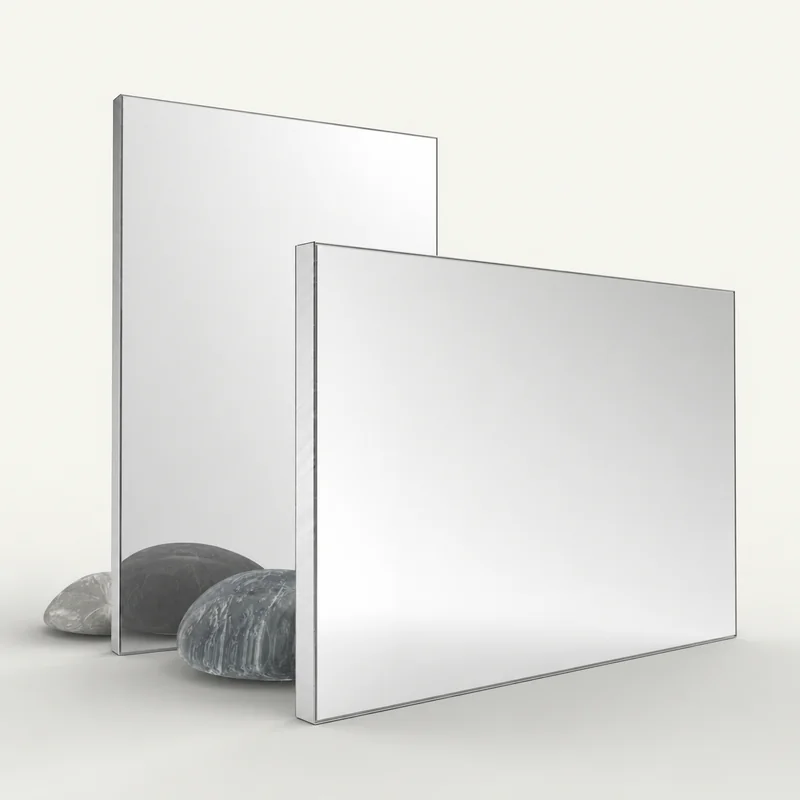
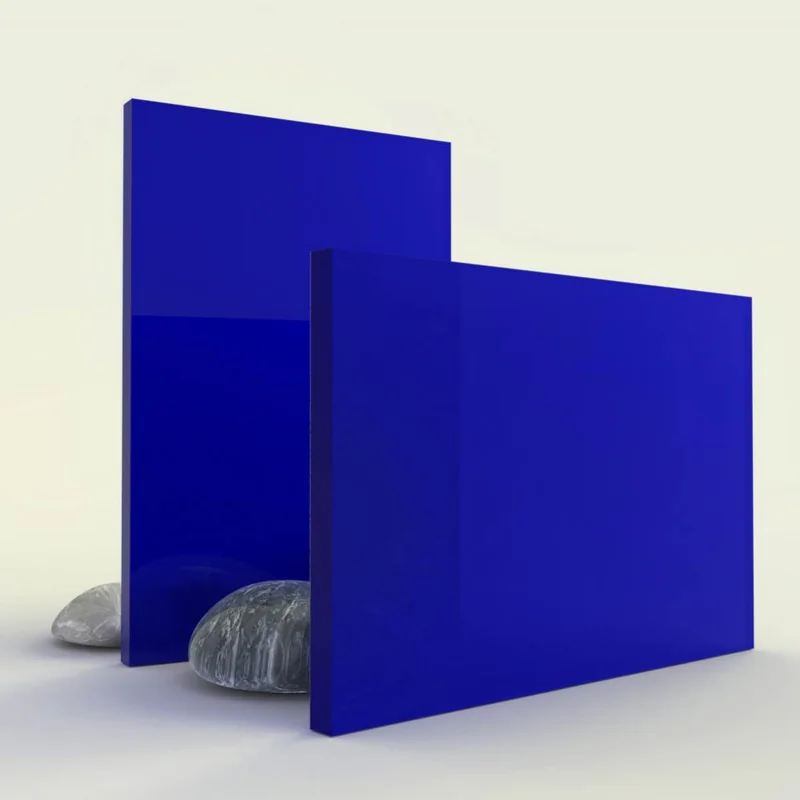
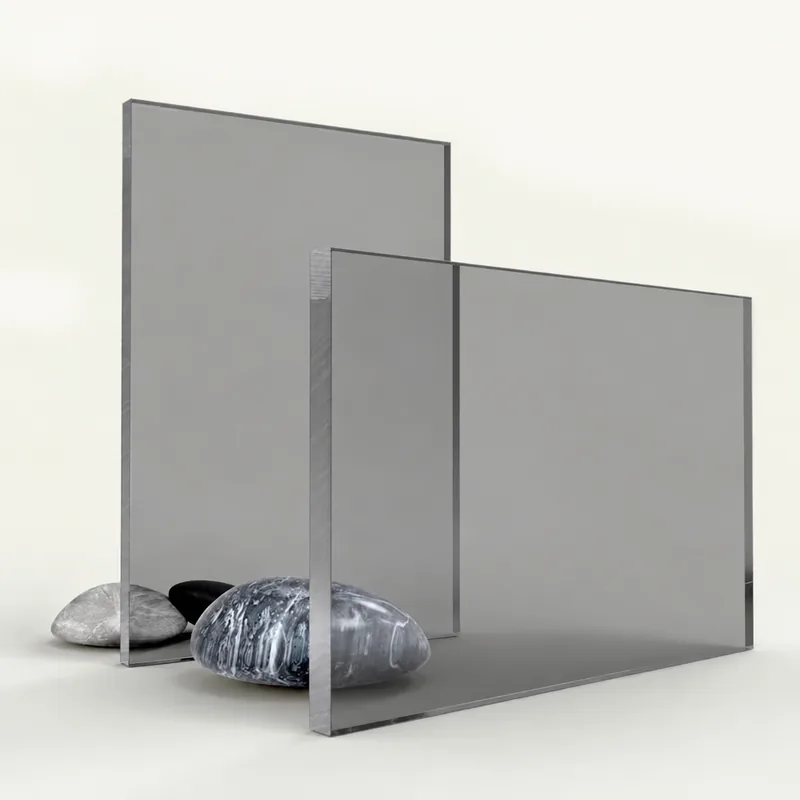
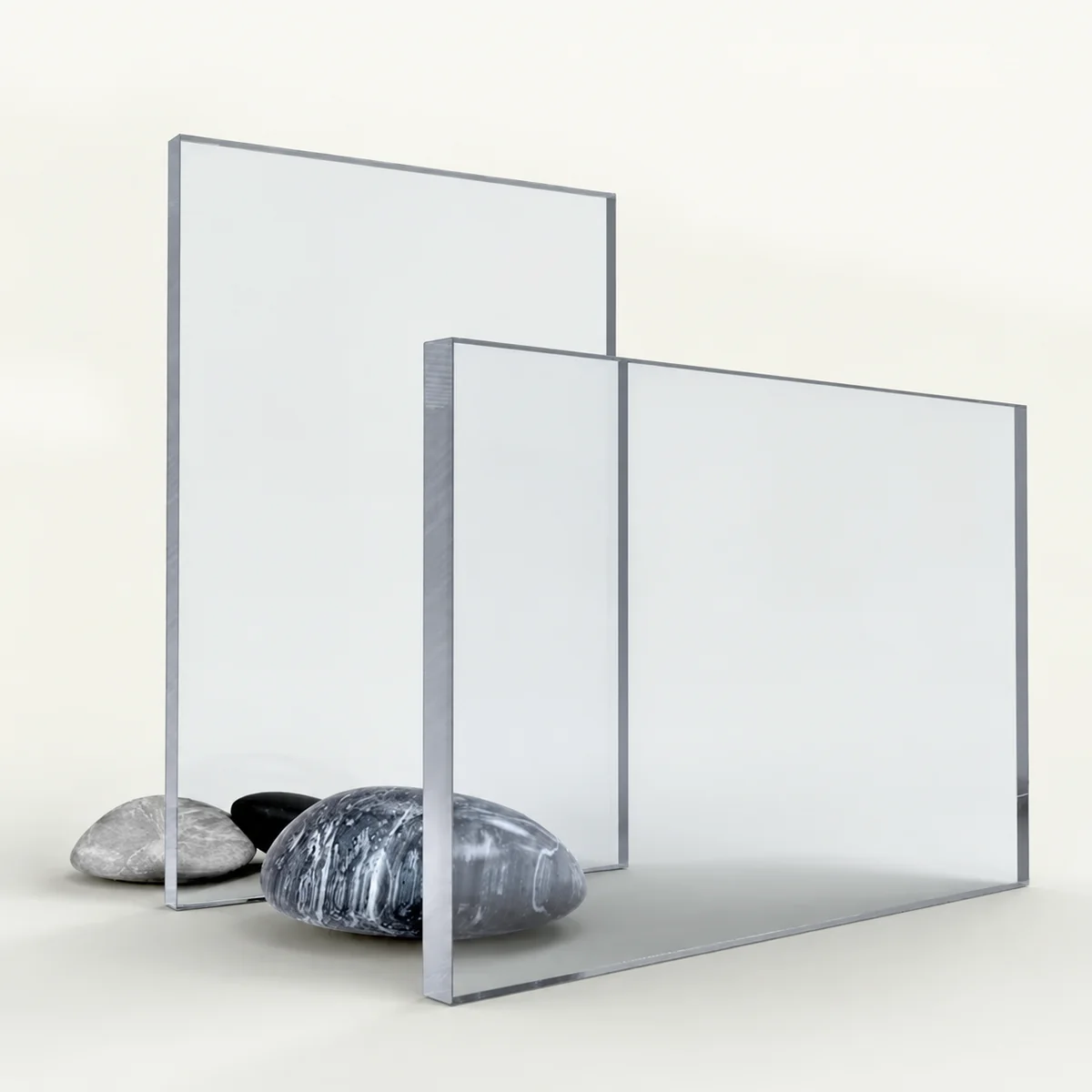
Mirror acrylic is the best traveller we stock. A 3mm silver sheet is 10.6 kg and $161.70, which is $15.24 of sheet in every kilogram. It is also the material a Vancouver buyer is least likely to find in the colour and finish they want on a shelf nearby, since mirror runs in specific tints and batches rather than as a commodity.
ACM is the worst traveller. A 3mm panel is 13.38 kg because of the aluminium skins, and it is $63.18, so each kilogram carries only $4.72. It is also the material most widely stocked across the country. Both facts point the same way.
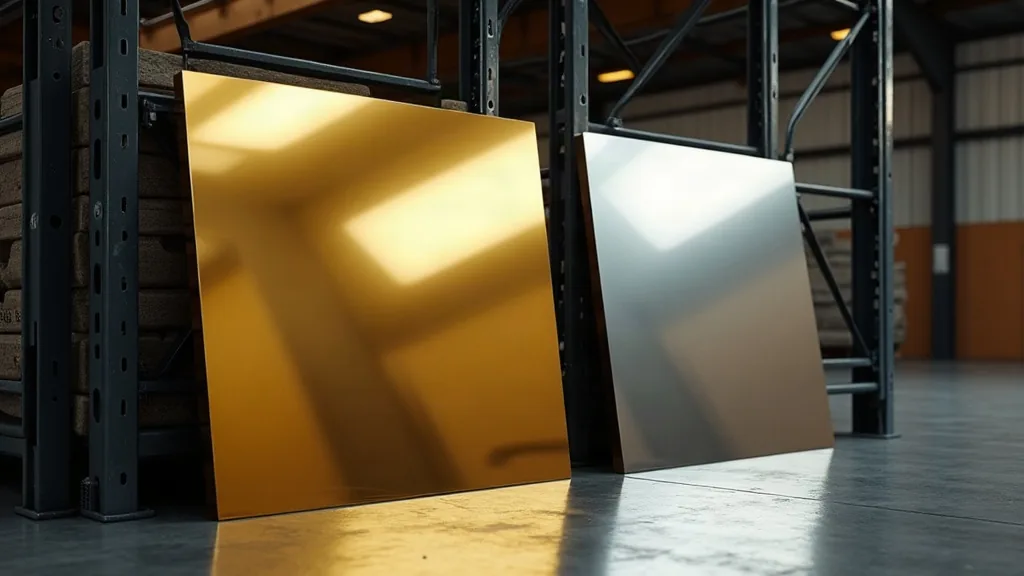
One thing the chart does not show, and it surprises people: thickness barely matters. Across the nine stocked gauges of cast clear acrylic from 2mm to 25mm, value per kilogram stays between $7.84 and $8.76. The 25mm sheet is twelve times the weight of the 2mm sheet and roughly twelve times the price. Ordering thicker does not make your freight worse. Ordering the wrong material does.
Ready to price out your project?
Volume pricing on 10+ sheets, cut-to-size service, and same-week Ontario delivery from our North York warehouse.
What earns its place on a westbound pallet
Four things justify the trip, and each for a reason you can check rather than take on trust.
- Mirror acrylic in a specific tint. Silver, gold, rose gold and brown run in batch tints, and matching an existing install matters more than saving on freight. Best value density we stock. See the mirror acrylic range.
- Coloured and pastel cast acrylic. Thirty colour codes between the two ranges, held as batch matched stock. A coloured sheet you can reorder in the same code next year is worth more than one you cannot.
- Thick clear cast, 12mm and up. Sold by fewer suppliers, and the gauge where sourcing gets thin. Prices are on the cast clear page.
- Anything cut to a drawing. The freight is on finished parts, not on sheet plus waste. More on that below.
The common thread is that none of these is a commodity. Where a material is genuinely interchangeable, the nearest shelf wins, and the honest answer is that we are not the nearest shelf.
What to buy in British Columbia instead
We would rather say this plainly than have a customer work it out after paying for a pallet.
Buy locally if your order is mostly PVC foam board or ACM panel. At roughly $4.72 to $5.73 of value per kilogram, these are the two materials on our shelves where cross country freight takes the biggest bite out of what you paid. A sign shop in Burnaby running white PVC for site boards should be buying it in Burnaby.
Buy locally if you need it this week and it is a standard clear sheet. A common gauge of clear acrylic is stocked almost everywhere. Waiting on a truck from Ontario for something a local counter has on the rack is a poor trade whatever the sheet price says.
Buy locally if the order is one or two sheets. Freight on a small shipment is charged against very little material, so the per sheet cost lands badly. That is arithmetic, not modesty.
Cut it in Toronto, or pay to ship the offcuts
Once a pallet is crossing the country, the case for cutting before it ships gets strong.
A full 4x8 ft sheet is 32 square feet. If your drawing needs 18 square feet of finished parts, shipping full sheets means paying freight on 14 square feet of material you intend to throw away, plus the labour to cut it in a Vancouver shop with a saw that may not be set up for acrylic.
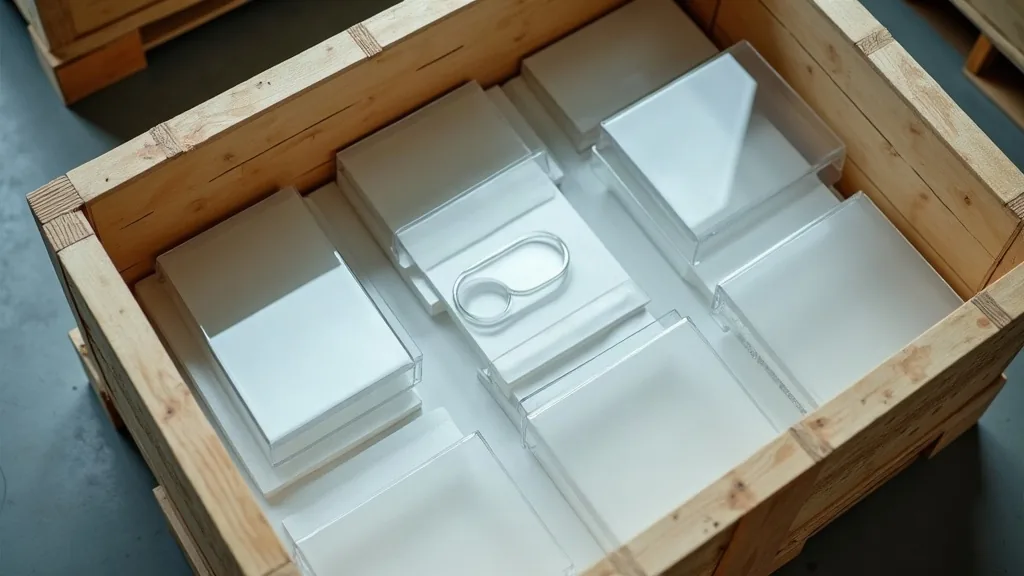
Our cut to size service prices each piece off the same engine the checkout uses, so the figure you see is the figure you pay. The saw holds plus or minus 1.5mm with a 4mm kerf. The laser works to a 1mm kerf and leaves a flame polished edge that needs no further finishing, which matters more when the finisher is 4,400 km from the machine. Volume tiers cut 10 percent at 50 pieces, 15 percent at 500 and 20 percent at 1000 of the same part.
For a fabricator planning to cut on arrival, our guide to cutting plexiglass and acrylic explains why the blade you already own is probably wrong, and why the crack shows up three weeks later rather than on the day.
2026 sheet prices, and what they work out to per square foot
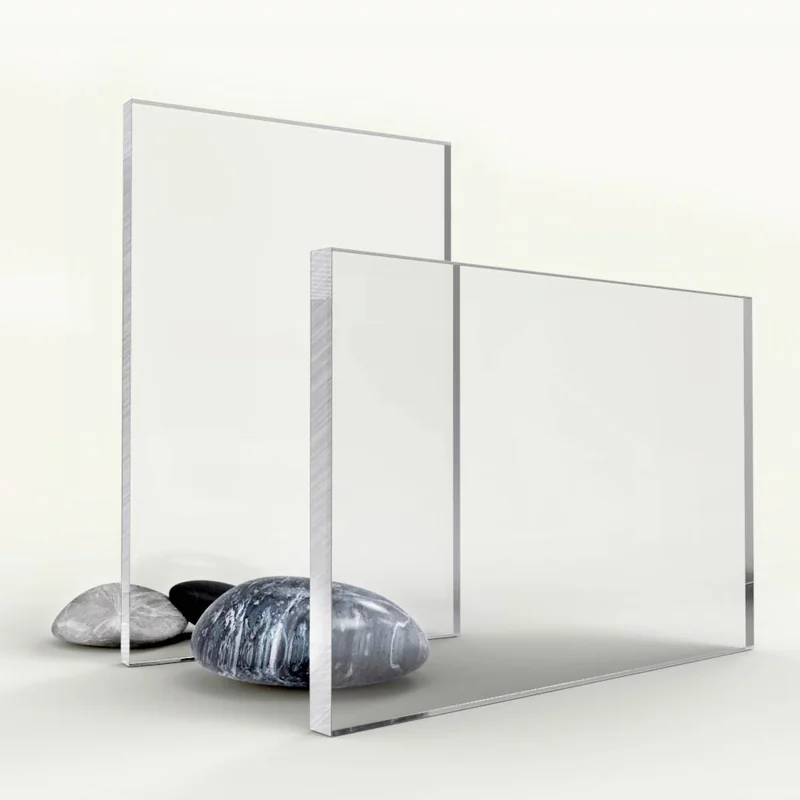
These are live warehouse figures for cast clear acrylic on a true 48 by 96 inch sheet, which is 32 square feet. Weight is calculated from a density of 1.19 g/cm3, the standard figure for cast PMMA, the material sold as PLEXIGLAS in Europe and ACRYLITE in the Americas, and the value used consistently across this site.
| Gauge | Price per 4x8 sheet | Per square foot | Weight | Value per kg |
|---|---|---|---|---|
| 2mm | $61.97 | $1.94 | 7.1 kg | $8.76 |
| 2.8mm | $80.27 | $2.51 | 9.9 kg | $8.10 |
| 4.3mm | $128.67 | $4.02 | 15.2 kg | $8.46 |
| 5.5mm | $160.57 | $5.02 | 19.5 kg | $8.25 |
| 9mm | $249.67 | $7.80 | 31.8 kg | $7.84 |
| 12mm | $334.37 | $10.45 | 42.5 kg | $7.88 |
| 18mm | $550.97 | $17.22 | 63.7 kg | $8.65 |
| 25mm | $759.97 | $23.75 | 88.4 kg | $8.59 |
The last column is the point. It hardly moves. A Vancouver buyer choosing between 5.5mm and 12mm is making a structural decision, not a shipping one. If you are unsure which gauge a span or an edge fixing needs, the sizes and thickness guide works through it, and the complete guide to buying acrylic sheets in Canada covers cast against extruded before you commit.
What a westbound pallet actually holds
Sheet ships flat, on a deck the same footprint as the sheet, so height is rarely what stops you loading more. Weight is.
There is a simple rule that comes straight out of the density, and it is worth carrying around. Every millimetre of acrylic stacked on a 4x8 ft footprint weighs about 3.5 kg. So 100mm of stacked sheet is roughly 354 kg, whatever mix of gauges makes up that 100mm. Fifty sheets of 2mm and eight sheets of 12mm come to nearly the same weight, because they come to nearly the same volume of the same plastic.
That has two consequences for a plexiglass Vancouver order.
- A mixed pallet costs you nothing in efficiency. Combining gauges, colours and clear on one deck loads exactly as well as a single item, so there is no freight reason to order one gauge at a time.
- Weight limits arrive before height limits. A stack that still looks low can already be heavy, which is why the quote is worked out on the actual list rather than on a sheet count.
PVC foam board is the exception that proves the rule, at 0.55 g/cm3 against acrylic's 1.19. It is genuinely light, which is why it is easy to handle and, unfortunately, also why so little value rides on each kilogram of it.
How a Vancouver order actually moves
Worth setting expectations, because our checkout will not do this for you.
- The cart now prices a BC address. Online delivery covers every Canadian address: our own fleet within 50 km of the warehouse, and live carrier rates everywhere else. A BC postal code returns real options with prices and transit times, packing and preparation included, rather than a prompt to contact us. The shipping policy sets out how it works.
- You send sizes and quantities. Through the quote form or by phone. Cut work needs a drawing or a part list.
- We quote the sheet and the freight together. Third party carrier, landed figure, confirmed before anything is picked.
- Stock leaves in one to two business days. Cut work adds machine time. Rush is available at half again the cut price.
- Transit is the long half. Several business days across the country depending on lane and carrier.
For anything repeating, a standing quote beats ordering sheet by sheet. Agree the gauges, the colours and a delivery cadence once, and consolidate onto full pallets.
Not sure which sheet fits your project?
Tell us the application and we will recommend the right material, thickness, and format. No obligation.
Get a free quoteCheck the pallet before you sign for it
This is the part of a long haul order that people skip, and it is the only moment when a damage claim is easy.
Sheet leaves us with the protective masking still on both faces. Leave it there. It is what stops handling marks between the truck and the install, and on a cast sheet it also keeps dust out of an edge you have paid to have polished. Peel it after the part is fitted, not before.
When the pallet arrives, look at the corners and the edges before the driver leaves, and note anything you find on the delivery receipt at that moment. A signature with no note is taken as a clean delivery by every carrier in the country, and a chipped corner discovered the next morning is a much harder conversation. Freight damage on sheet is almost always edge damage, so that is where to look first.
Two more things worth knowing for a plexiglass Vancouver delivery. Acrylic arriving in winter will be cold, and cold acrylic is more brittle, so let a pallet come up to shop temperature before cutting or drilling it. And if the load included cut parts, count them against the packing list while the crate is still open, because a missing small part is far easier to replace on the same freight lane as the rest of the order.
When to call a Vancouver supplier and not us
There is a real local trade on the coast, and some jobs belong to it. Not every plexiglass Vancouver enquiry should end with a truck from Ontario, and we would rather say which ones.
Marine work is one. Boat glazing on the BC coast wants a supplier who can look at the frame, and our acrylic for boat windows guide is written to help you specify it wherever you buy. Film and television is another. British Columbia runs a substantial production sector with its own film commission and tax credit programs through Creative BC, and set builds work to a same day timetable that a truck from Ontario cannot serve.
Anything structural or permanent should also be specified against the BC Building Code, not against Ontario practice. And if the choice is between acrylic and polycarbonate for exterior glazing in a wet coastal climate, the polycarbonate buyer's guide and the Environment and Climate Change Canada climate normals for the region are better starting points than any supplier's sales page.
Where plexiglass Vancouver buyers should start
Sort the order before you price it. Put the mirror, the batch matched colour, the thick cast and the cut parts in one pile, and everything commodity in another. Price the first pile with us and the second locally. That single split will save more than negotiating a sheet price ever does.
If the first pile is worth a pallet, send it through. We stock at Unit 29, 601 Magnetic Drive in North York and ship across the country on quoted freight, we cut to your drawing before it leaves, and we will tell you when a local counter is the better answer. Our Canada wide supplier guide covers the same ground for buyers outside British Columbia, and the frosted and privacy panel guide is the place to start if the job is office glazing rather than display work.

Prefer to talk it through? Call us at +1 (416) 857-7555 for real answers from the warehouse floor.
TORONTO WAREHOUSE Unit 29, 601 Magnetic Drive, North York, ON, M3J 3J2
Phone: +1 (416) 857-7555 Office: +1 (416) 726-2428 Email: info@fidarsystem.com
Frequently Asked Questions
Written by
B.Sc. Materials Engineering · 12 yrs industry experience
Sarah brings over 12 years of hands-on experience in Canada's plastics and composites industry. She specializes in material selection, industrial-grade specifications, and supply chain optimization for manufacturers, fabricators, and distributors across the country.
Reader Reviews
Loading reviews…